Security

Malik Haidar is a veteran of the cybersecurity trenches who bridges the gap between high-level business strategy and the granular mechanics of server infrastructure. With years of experience protecting multinational corporations from sophisticated threat actors, he understands that in the modern

Malik Haidar has spent years navigating the high-stakes "fog of war" that follows a major corporate security breach. As a cybersecurity expert with deep experience in multinational environments, he has seen firsthand how the first sixty minutes of a response can determine whether a
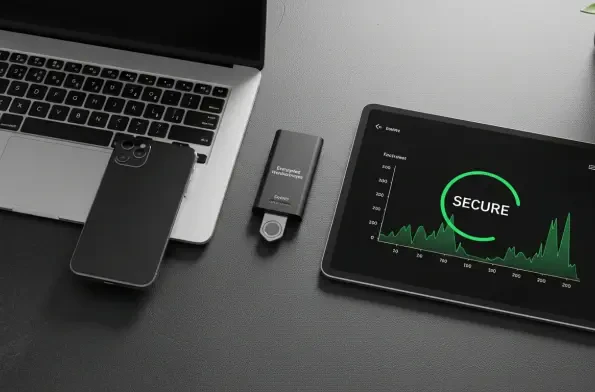
The recent deployment of Anthropic’s "Mythos" tool represents a fundamental shift in how the United States approaches cyber defense, moving from traditional protection to a model-driven reality. Federal officials from the White House and the Department of Defense emphasize that the native

Australian cybercrime reports are now occurring at a staggering frequency of once every six minutes according to the latest intelligence from the Australian Signals Directorate, forcing enterprises to abandon the outdated castle-and-moat security model in favor of a rigorous identity-centric

The rapid convergence of generative modeling and automated penetration testing has created a digital environment where traditional security perimeters are failing faster than manual teams can respond to incoming alerts. In light of this, the Information Commissioner’s Office (ICO) has published a d

Modern cybersecurity defenses often rely on the assumption that a user must take an action, like clicking a link or downloading a file, to trigger a malicious payload; however, the emergence of CVE-2026-40361 shatters this paradigm by enabling remote code execution through the mere act of
Read More