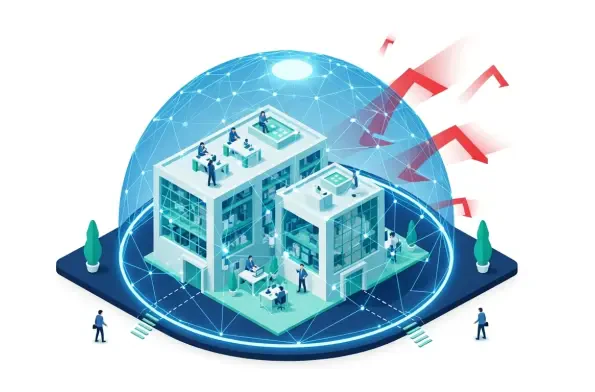
The rapid convergence of generative modeling and automated penetration testing has created a digital environment where traditional security perimeters are failing faster than manual teams can respond to incoming alerts. In light of this, the Information Commissioner’s Office (ICO) has published a detailed strategic directive designed to help organizations navigate the complexities of protecting personal data in an era dominated by artificial intelligence. This shift represents a fundamental move away from static, checklist-based security toward a dynamic, threat-informed defense model that prioritizes the mitigation of high-velocity attacks. As malicious actors leverage sophisticated machine learning algorithms to automate the discovery of system flaws, the regulator insists that maintaining public trust is no longer just about compliance but about active resilience. The new framework demands that entities reconsider their current posture, moving beyond basic firewalls to integrate intelligent monitoring systems capable of identifying anomalies that human analysts might overlook. This proactive stance is essential because the window between the discovery of a vulnerability and its exploitation has shrunk from days to mere seconds, requiring a complete overhaul of how data protection is viewed by boards and technical departments alike.
Analyzing the Sophistication of Modern Adversarial Intelligence
The Velocity: Machine-Speed Vulnerability Discovery
Modern cyber adversaries have moved far beyond the era of manual scripting, opting instead for sophisticated toolsets that utilize machine learning to map out organizational infrastructures with chilling efficiency. These automated vulnerability scanners can probe thousands of network endpoints simultaneously, identifying misconfigurations or unpatched software versions in real-time. This capability allows hackers to launch wide-scale attacks almost as soon as a zero-day vulnerability is announced, leaving organizations with a vanishingly small window to apply necessary security updates. Furthermore, the integration of AI into these scanning tools means they can learn from past failures, adjusting their probing techniques to evade signature-based detection systems that rely on known patterns of behavior. Consequently, defensive strategies must now account for an adversary that never sleeps and processes information at a rate that far exceeds human cognitive limits. The result is a persistent state of digital siege where the smallest oversight in a peripheral system can be exploited to gain full access to the core data repositories of an organization.
Beyond simple entry point discovery, the threat landscape now includes AI-powered malware that exhibits adaptive behaviors once inside a network. This type of software can autonomously navigate through segmented environments, identifying high-value targets like customer databases or intellectual property caches while remaining hidden from traditional antivirus solutions. By utilizing polymorphic code that changes its structure to bypass security filters, these threats maintain a persistent presence that is incredibly difficult to eradicate. Additionally, the regulator has warned about the growing risk of data poisoning, where attackers inject malicious information into the datasets used to train a company’s internal AI models. This can lead to corrupted outputs or the creation of secret backdoors that allow unauthorized access through seemingly legitimate channels. As organizations integrate more automated decision-making processes into their daily operations, the integrity of the underlying data becomes the most critical front in the battle for cybersecurity. Protecting these assets requires a deep understanding of how AI models function and where their logic can be subverted by an external actor seeking to disrupt services.
The Psychology: Synthetic Social Engineering and Human Risk
The human element remains the most vulnerable point in any security architecture, and AI has significantly magnified this weakness through the creation of highly convincing synthetic media. Deepfake technology allows attackers to generate realistic audio and video that can mimic the appearance and voice of high-level executives or trusted partners. These assets are then used in social engineering campaigns to trick employees into authorizing large financial transfers or revealing sensitive login credentials. The sophistication of these phishing attempts has increased to the point where even well-trained staff may find it impossible to distinguish between a legitimate request and a fraudulent one. Because these campaigns can be personalized at scale using data scraped from social media and professional networks, the success rate of such attacks has climbed dramatically. The ICO emphasizes that organizations must rethink their internal verification protocols, moving away from simple verbal or email confirmations toward multi-factor authentication and rigorous out-of-band communication methods to verify the identity of individuals before any sensitive action is taken or data is shared.
This surge in AI-enhanced deception also extends to the broader digital ecosystem, where synthetic personalities can be used to infiltrate professional communities and gain the trust of key personnel. By maintaining a plausible online presence across multiple platforms, these digital ghosts can engage in long-term reconnaissance, gathering intelligence on internal company cultures and security weaknesses before launching a targeted strike. This long-game approach is particularly dangerous because it bypasses technical filters by focusing on building a rapport with human targets who have legitimate access to secure systems. To combat this, the ICO advocates for continuous education programs that move beyond annual training sessions to foster a pervasive culture of skepticism and digital literacy. Employees must be taught to question the authenticity of every digital interaction, especially when it involves a sudden change in established procedures or an urgent request for sensitive information. As synthetic media becomes more accessible, the barrier to entry for complex social engineering falls, making it a standard tool for both individual hackers and state-sponsored groups looking to compromise national infrastructure or commercial secrets.
Strategic Framework for Organizational Resilience
The Tactics: Implementation of Enhanced Technical Layering
Establishing a baseline for digital security starts with the rigorous adoption of the Cyber Essentials scheme and the UK’s Cyber Governance Code of Practice, though these are now viewed as the bare minimum requirements. The ICO dictates that organizations must implement universal multi-factor authentication across every single access point, without exception for senior staff or legacy systems. Strong password policies must be combined with the principle of least privilege, ensuring that users only have access to the specific data necessary for their roles, thereby limiting the potential lateral movement of an attacker. However, the speed of AI-driven attacks means that static defenses are no longer sufficient on their own. Companies are expected to utilize AI-driven security tools themselves to monitor network traffic for subtle anomalies that indicate a breach in progress. These defensive systems can respond at the same machine speed as the threats they face, automatically isolating infected segments of the network or blocking suspicious traffic before it can do significant damage. This AI versus AI dynamic is becoming the central pillar of modern cybersecurity, where the success of a defense depends on the ability to process and react to threat intelligence in real-time.
Effective patch management has also evolved from a routine IT task into a critical security imperative that requires constant attention and rapid execution. The ICO guidelines stress that when a software update is released to fix a known vulnerability, it must be applied immediately to close the window for automated exploitation. In scenarios where an immediate patch is not feasible due to system complexity or vendor delays, organizations are required to conduct and document a formal risk assessment. This document must outline compensatory controls, such as enhanced monitoring or temporary network isolation, to mitigate the risk until a permanent fix can be implemented. Neglecting these updates is increasingly viewed as a failure of due diligence, potentially leading to regulatory penalties in the event of a data breach. Furthermore, the guidance encourages the use of automated patching systems that can streamline this process, reducing the burden on IT staff while ensuring that the organization remains protected against the latest known threats. By treating software maintenance as a core component of risk management, businesses can significantly reduce their attack surface and prevent the vast majority of opportunistic cyberattacks that rely on outdated and unpatched systems.
The Governance: Vigilance in Supply Chain and Data Minimization
Securing the internal network is only half the battle, as the ICO highlights the critical need for dynamic, threat-based vetting of all third-party vendors and supply chain partners. Organizations can no longer rely on one-time security questionnaires filled out at the start of a contract; instead, they must implement ongoing monitoring of their partners’ security postures. This includes auditing how vendors handle shared data and ensuring that their security protocols are commensurate with the sensitivity of the information they process. Any external access point provided to a supplier must be treated as a potential entry point for an attacker, requiring the same level of authentication and monitoring as internal systems. The rise of indirect prompt injection and other AI-specific attacks means that even the software tools used for business operations can become vectors for compromise. Consequently, supply chain security must be a collaborative effort, where transparency and shared standards become the norm rather than the exception. Organizations that fail to scrutinize their dependencies are effectively leaving their back door unlocked, regardless of how strong their own front-line defenses might be in the current digital landscape.
To ensure these strategies remained effective, leadership teams prioritized the integration of Data Protection Impact Assessments into every stage of AI deployment. It was recognized that managing risk required more than just technical fixes; it demanded a fundamental shift toward data minimization and the use of advanced encryption techniques. By only retaining essential information and pseudonymizing what was kept, organizations reduced the potential fallout from any security incident. Personnel training programs transitioned into immersive simulations that prepared staff for the psychological pressures of AI-driven social engineering. These proactive measures were not merely theoretical exercises but became the documented evidence required by regulators to prove that technical controls were commensurate with the heightened risk environment. Decision-makers learned that wait-and-see approaches invited disaster, choosing instead to invest in human oversight that validated AI-generated security outcomes. Ultimately, the focus shifted toward building a resilient culture where every employee understood their role in the broader defense strategy. This comprehensive alignment of technology, policy, and human awareness provided the only viable path forward for maintaining integrity in an increasingly automated world.