Standard mechanical lock systems often fail to meet the rigorous demands of modern facilities where a single lost key can compromise an entire perimeter and necessitate costly rekeying operations. This vulnerability creates a constant administrative burden for security teams who must balance physical accessibility with strict oversight. The CLIQ digital access ecosystem emerges as a sophisticated response to these challenges, providing a bridge between traditional locksmithing and high-tech electronic control.
Evaluating the Impact of CLIQ Digital Access on Enterprise Security
The value proposition of the CLIQ ecosystem lies in its ability to transform a passive mechanical door into an active data point within a security network. Organizations today require more than just a physical barrier; they need the capability to audit access and revoke privileges instantly. By implementing this technology, a facility effectively eliminates the risks associated with lost keys, as a misplaced credential can be deactivated in the management software without replacing any physical hardware.
Investing in electromechanical technology represent a significant shift from traditional locking mechanisms. While the initial capital expenditure for CLIQ components is higher than standard brass cylinders, the long-term return on investment is found in reduced maintenance costs and heightened security posture. This system allows for a granular level of control that mechanical keys simply cannot replicate, making it a viable choice for organizations prioritizing risk mitigation.
Core Features and System Architecture
The ASSA ABLOY CLIQ ecosystem is positioned as a specialized solution that caters to both small businesses and large-scale industrial sites. It operates primarily through two hardware platforms: eCLIQ and PROTEC2 CLIQ. Both platforms rely on a unique architecture where the power source is located within the key itself, rather than the cylinder. This design ensures that the locking points remain functional even during power outages, as the key provides the necessary energy to complete the electronic handshake.
Hardware Innovation: The CLIQ Reader and Updater
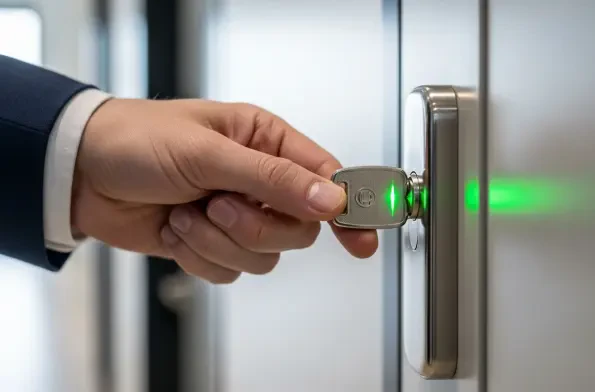
A significant advancement in this ecosystem is the CLIQ Reader, which utilizes a contact-based design to facilitate communication between the key and the system. Unlike traditional locks that require a physical turn to engage, this reader often functions through simple key insertion, using clear LED signals to communicate status. This interface provides immediate visual confirmation for the user, indicating whether access is granted or if the key requires an update.
The Updater plays a critical role in credential management by serving as the physical link between the centralized software and the user keys. It facilitates the transfer of access rights and tracks battery status, ensuring that every key in circulation is accounted for and operating with the latest permissions. This proactive approach to key maintenance prevents the common issue of users being locked out due to expired credentials or dead batteries.
Integration and Software Management
Management of the system is handled through the CLIQ Web Manager or the CLIQ Go mobile application, offering flexibility for various administrative needs. These software tools allow for the remote programming of keys and the scheduling of specific access windows for contractors or employees. Moreover, the system is designed to integrate seamlessly with a wide array of third-party devices, extending its utility beyond simple door entry to more complex facility requirements.
Third-Party Interoperability: Connecting the Ecosystem
The use of specialized modules allows the CLIQ system to communicate with external hardware such as the DoorBird intercom system. This interoperability ensures that security protocols remain consistent across different types of entry points, including revolving doors and motorized gates. By unifying these disparate systems under a single management umbrella, facility managers can achieve a more cohesive and responsive security environment.
Performance Evaluation in High-Demand Environments
In high-demand environments, the mechanical reliability of the system is paramount. The “key insertion” model proves superior to traditional “key turning” models in terms of longevity, as it minimizes the friction and mechanical stress placed on the internal components. This design choice is particularly beneficial for high-traffic entry points where frequent use would typically lead to accelerated wear and tear on standard mechanical locks.
Durability and Environmental Resistance
The Outdoor Reader is specifically engineered to withstand extreme weather conditions, making it an essential component for exterior security. With IP65 and IK09 certifications, the hardware is resistant to water ingress, dust, and physical vandalism. This level of durability ensures that the security perimeter remains intact even in the most unforgiving environments, providing peace of mind for facilities with extensive outdoor infrastructure.
Installation and Network Flexibility
Deployment timelines are significantly improved by the system’s flexible installation requirements. The 200-meter range for interior-to-exterior cabling allows for the Updater to be placed in convenient locations without necessitating a complete overhaul of the existing network. Because the system does not require complex network configurations at every door, the transition from a traditional setup to a digital one is remarkably efficient.
Advantages and Disadvantages of the CLIQ System
Facility managers must weigh the primary strengths of the CLIQ system against its specific operational requirements. One of the most significant advantages is the mechanical longevity afforded by the contact-based reader design. Additionally, the availability of both flush and surface-mounted configurations allows the system to be installed across diverse infrastructure types without compromising the aesthetic or structural integrity of the building.
Key Strengths and Use Cases
The flexibility of the CLIQ ecosystem makes it ideal for utilities, healthcare facilities, and educational institutions where access needs change frequently. Its ability to provide detailed audit trails and time-limited access rights is a major benefit for managing large numbers of employees and external vendors. The reduced mechanical wear ensures that the system remains operational for years, even in the most demanding settings.
Potential Limitations and Considerations
There are, however, certain limitations to consider, such as the dependency on specific updater hardware for refreshing key rights. While the system is highly secure, users must periodically visit an Updater to sync their credentials, which may be viewed as a minor inconvenience in a fully wireless world. Additionally, the initial learning curve for the CLIQ Web Manager can be steep for staff accustomed to simpler, non-digital security protocols.
Final Assessment and Strategic Recommendation
The hardware durability and software integration capabilities of the CLIQ system established it as a premier choice for modern enterprise security. The technical synthesis between the robust physical components and the versatile management software created a reliable framework for controlling access in complex environments. This system successfully met the high standards required for sophisticated facility management by providing both granular control and operational efficiency.
Concluding Opinion for Security Professionals
The transition to a digital access system like CLIQ represented a strategic move toward future-proofing an organization’s physical security. Facility managers who implemented this technology found that the long-term ROI was realized through enhanced oversight and the elimination of traditional key management headaches. The ideal organization for this implementation was one with multiple entry points and a high volume of credential turnover. Ultimately, the CLIQ ecosystem provided a balanced solution that addressed the immediate needs of security professionals while offering the scalability required for long-term growth.