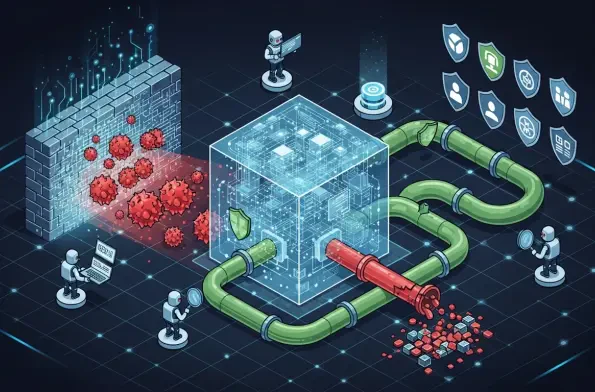
Modern cybersecurity defenses often rely on the assumption that a user must take an action, like clicking a link or downloading a file, to trigger a malicious payload; however, the emergence of CVE-2026-40361 shatters this paradigm by enabling remote code execution through the mere act of previewing an email. This flaw represents a sophisticated evolution in exploit delivery, moving beyond the traditional social engineering tactics that security teams have spent years training employees to recognize. Its emergence marks a critical turning point where the simple receipt of information becomes a direct threat to system integrity.
Understanding the Zero-Click Threat Landscape
This vulnerability emerged within a massive update cycle, highlighting a persistent weakness in ubiquitous business tools that organizations rely on daily. By targeting the fundamental ways applications process incoming data, it creates a silent entry point that requires no human error or misplaced trust to succeed. This shift in the technological landscape suggests that perimeter-based security is no longer sufficient when the core applications themselves can be weaponized against the user.
The context of this evolution is rooted in the increasing complexity of document rendering within communication platforms. As email clients have evolved to handle richer, more dynamic content, the underlying code has become more susceptible to sophisticated memory-based attacks. This specific vulnerability underscores the high stakes of modern software development, where a single oversight in a shared component can compromise millions of endpoints simultaneously.
Technical Analysis of CVE-2026-40361
Shared Architecture and DLL Integration
The vulnerability stems from a shared dynamic link library used by both Microsoft Word and Outlook for content rendering. This unified architecture, while efficient for software development and resource management, creates a singular point of failure that compromises the entire productivity suite once breached. Because both applications rely on the same engine to display text and graphics, an exploit designed for one automatically becomes a threat to the other, doubling the potential attack surface for any organization.
Use-After-Free Memory Corruption
At its technical core, the exploit utilizes a use-after-free memory corruption flaw within the application’s memory management system. When the software fails to properly clear or reassign memory pointers after an object is deleted, a threat actor can inject malicious code into that vacated space. This allows for unauthorized code execution with the same privileges as the user, effectively turning a standard email preview into a gateway for a full system takeover without leaving a trace.
Trends in Modern Exploitation Tactics
Recent shifts in the threat landscape show a clear move toward zero-click delivery as a way to bypass increasingly effective endpoint detection and user awareness programs. Threat actors are no longer content with deceptive links or suspicious attachments that might be flagged by a vigilant employee. Instead, they seek direct access through the background processes of essential corporate software, making the attack invisible to the victim until the damage is already done.
Moreover, there is a growing trend of state-sponsored and sophisticated criminal groups targeting productivity software to gain deep, persistent access to corporate networks. By exploiting the tools that are most essential to business operations, these actors ensure that their delivery mechanism is always permitted through standard security filters. This strategic focus on the “path of least resistance” within trusted software represents a significant escalation in global cyber warfare tactics.
Real-World Security Implications
The “Enterprise Killer” scenario is particularly dangerous for high-profile targets like corporate executives who regularly handle sensitive, high-value data. The exploit bypasses traditional perimeter defenses such as firewalls and secure web gateways, landing directly in a user’s inbox where it executes as soon as the message is rendered. This direct-delivery vector makes it nearly impossible for legacy security tools to intercept the malicious payload before it reaches its destination.
In practical terms, this means that even the most secure environments are vulnerable if they rely on standard email clients. Industries such as finance, healthcare, and government, where rapid communication is vital, face the highest risk. The ability for an attacker to compromise a device simply by sending an email that is never even clicked creates a massive liability for any organization that prioritizes connectivity and real-time collaboration.
Challenges in Mitigation and Patch Management
Mitigation remains exceptionally difficult because the flaw resides deep within the rendering engine, making comprehensive patching the only truly reliable solution. While some administrators have explored forcing Outlook to display emails in plain text as a temporary fallback, this approach significantly degrades the user experience and breaks many legitimate business workflows. It highlights the tension between maintaining modern functionality and ensuring absolute security in a hostile digital environment.
Ongoing development efforts are focused on creating more resilient rendering processes, but the complexity of legacy codebases remains a major hurdle. Organizations often struggle with the speed of patch deployment, especially when updates involve critical components that could impact software stability. This delay creates a window of opportunity for attackers to exploit the gap between the discovery of a flaw and the implementation of a fix.
The Future of Productivity Software Security
Looking ahead, the industry is moving toward hardening shared software components and exploring memory-safe languages for future rendering engines. The goal is to eliminate entire classes of vulnerabilities, such as use-after-free errors, by design rather than relying on reactive patching. This transition toward more robust architectural standards will be essential for protecting the next generation of productivity tools from silent, zero-click exploits.
Future developments will likely include more advanced proactive threat detection that monitors memory allocation in real time. By identifying the tell-tale signs of memory corruption as they occur, security software may eventually be able to block zero-click attacks before they can execute their payloads. This shift from signature-based defense to behavioral monitoring represents the long-term path toward a more secure global cybersecurity standard.
Final Assessment and Review Summary
The discovery of this vulnerability served as a stark reminder that even the most trusted software could harbor catastrophic flaws. Organizations were urged to prioritize immediate patch deployment to secure their networks against this formidable threat. The consensus among experts was that the severity of the flaw necessitated a shift in how enterprises viewed application security and user interaction.
Ultimately, this incident demonstrated that zero-click vulnerabilities remained the ultimate weapon for sophisticated actors seeking persistent enterprise access. The technical review of the exploit revealed a high level of sophistication that challenged existing defense models. Moving forward, the focus shifted toward architectural hardening and memory safety as the primary means of preventing similar occurrences in a landscape where traditional security training was no longer a sufficient shield.