The persistent gap between the introduction of a vulnerable dependency and its eventual discovery in a staging environment remains one of the most significant bottlenecks in contemporary software engineering workflows. While traditional security orchestration focuses on centralized pipelines, the emergence of the CVE Lite CLI demonstrates a profound shift toward decentralized, developer-centric security models. By embedding vulnerability assessment directly into the local terminal, this tool fundamentally alters the economics of bug fixing, transforming a potentially disruptive late-stage audit into a manageable, real-time feedback loop. This proactive strategy ensures that security is no longer an external gatekeeper but an intrinsic component of the development cycle. As teams strive for faster delivery speeds, the ability to identify risks at the point of origin becomes a critical differentiator in maintaining high-velocity output without sacrificing the integrity of the application.
Transforming the Feedback Loop Through Local Execution
The traditional security model often forces developers to context-switch between active feature development and the remediation of historical vulnerabilities discovered by remote scanners. When a vulnerability report arrives hours or even days after a pull request is submitted, the developer has likely moved on to a different task, necessitating a taxing mental reconstruction of the original project state. CVE Lite CLI eliminates this friction by providing instantaneous feedback the moment a dependency is added or modified locally. This immediacy allows for a “shift left” approach where security posture is evaluated in parallel with feature implementation. By receiving clear, actionable fix plans while the code is still fresh in their minds, developers can resolve issues in seconds rather than waiting for an automated bot to flag the problem in a distant repository.
This reduction in cognitive load is not merely a matter of convenience; it is a vital strategy for minimizing technical debt across complex JavaScript and TypeScript ecosystems. Because the tool operates within the developer’s native environment, it integrates seamlessly with existing command-line habits, making security checks as routine as running a test suite. Instead of navigating complex web dashboards or deciphering sprawling PDF reports generated by enterprise tools, the user receives prioritized results directly in the shell. This streamlined interaction model fosters a culture of ownership, where developers feel empowered to address security risks before they ever reach a shared branch. Consequently, the volume of noise within the Continuous Integration pipeline is drastically reduced, allowing teams to focus on more complex architectural security concerns rather than repetitive dependency management.
Leveraging Lockfile Parsing and Global Advisory Data
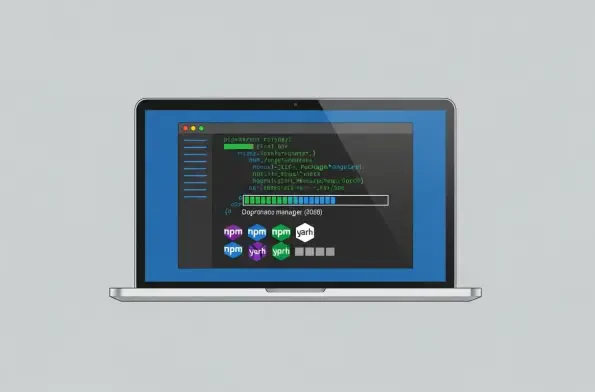
Technical precision in vulnerability management is predicated on the ability to understand the intricate relationships within a modern dependency tree. CVE Lite CLI achieves this by meticulously parsing project lockfiles from dominant package managers such as npm, pnpm, Yarn, and Bun. These files represent the ground truth of an application’s environment, documenting every specific version of every library currently in use. By querying the Open Source Vulnerabilities (OSV) database, the CLI maps these recorded versions against a vast repository of known threats. This method ensures that the tool is not guessing based on high-level manifests but is instead conducting a granular analysis of the actual artifacts that will be deployed, providing a level of accuracy that is often missing from more generalized scanning solutions.
A critical aspect of this analysis is the tool’s ability to distinguish between direct dependencies and those deep within the transitive hierarchy. Identifying a vulnerability in a secondary or tertiary dependency is only half the battle; the real challenge lies in determining how to resolve it without breaking the top-level application. CVE Lite CLI provides intelligent remediation guidance by identifying which parent packages need to be updated to pull in a secure version of a nested library. For instance, if a sub-dependency is flagged, the tool might suggest a specific update command for a primary package that facilitates the resolution. This level of insight prevents developers from wasting time on manual “trial and error” updates, ensuring that the dependency graph remains stable while the underlying security flaws are systematically mitigated.
Prioritizing Speed, Privacy, and Offline Performance
Data sovereignty and operational privacy have become paramount concerns for organizations handling sensitive intellectual property or operating under strict regulatory frameworks. Unlike many contemporary security platforms that require a cloud connection or a registered user account, CVE Lite CLI operates with a strict local-first philosophy. No source code, dependency lists, or proprietary metadata ever leaves the developer’s machine during a standard scan. This architectural choice not only mitigates the risk of data leakage but also eliminates the bureaucratic hurdles often associated with onboarding new cloud-based vendors. For enterprises with air-gapped environments or secure internal networks, this tool offers a robust alternative that maintains the highest levels of security without compromising on the utility of modern scanning.
Performance is another area where this CLI outperforms traditional enterprise scanners, which can often be slow and resource-intensive. The tool is engineered for extreme efficiency, utilizing a cached version of the advisory database to perform lookups in near-real-time. It can sync an entire repository of over 217,000 vulnerability records in under nine seconds, a feat that ensures security checks never become a frustrating bottleneck in the daily coding routine. This speed is particularly beneficial for large-scale monorepos where dependency graphs can be massive and complex. By providing a dedicated offline mode, the tool guarantees that developers can maintain a high-security posture even when working in low-connectivity environments or on secure, isolated hardware, ensuring that the development process remains uninterrupted regardless of the physical location.
Integrating Security Across the Development Lifecycle
The true value of a security tool is measured by its flexibility and how well it adapts to the specific needs of a diverse engineering team. CVE Lite CLI is designed to be highly customizable, allowing it to be triggered manually during active development, embedded into Git hooks for pre-commit verification, or included in automated scripts. For teams that require a centralized record of security findings, the tool supports the Static Analysis Results Interchange Format (SARIF). This compatibility allows local scan results to be uploaded to platforms like GitHub Code Scanning, where they appear as inline annotations within pull requests. This bridge between local execution and centralized reporting ensures that while developers have the tools to fix issues early, the organization still maintains a comprehensive view of the project’s overall security health.
Furthermore, the integration of CVE Lite CLI with AI-powered coding assistants represents a significant leap forward in automated remediation. By generating specific “skill files” for tools like GitHub Copilot, Claude Code, and Gemini, the CLI enables these AI models to ingest scan results directly. This means that instead of a developer manually researching a fix, the AI assistant can interpret the vulnerability data and automatically propose the necessary code changes or dependency updates. This synergy between traditional vulnerability scanning and generative artificial intelligence creates an accelerated fix cycle that was previously unattainable. By automating the most tedious parts of the remediation process, teams can redirect their creative energy toward building new features while maintaining a robust defense against emerging security threats.
The transition toward local, developer-first vulnerability management represents a fundamental maturation of the software supply chain security landscape. By adopting CVE Lite CLI, organizations successfully moved the burden of security away from the final stages of production and into the hands of those best equipped to handle it—the developers. This shift not only reduced the lifecycle of a vulnerability from days to seconds but also fostered a more collaborative relationship between security and engineering departments. Looking ahead, the focus must remain on refining these local tools to support even broader ecosystems while continuing to leverage artificial intelligence for automated patching. This proactive stance ensured that as the complexity of modern software continued to grow, the mechanisms used to protect it remained fast, private, and exceptionally precise.