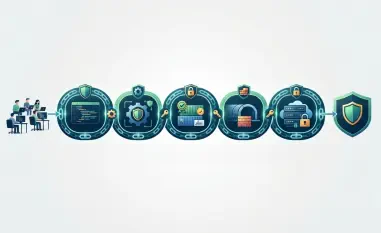
Cyber Risk Management

The global life sciences landscape has evolved into an interconnected ecosystem where the security of a single pharmaceutical entity is inextricably linked to the cyber resilience of its smallest third-party vendor. As digital transformation continues to integrate advanced technologies like

The complexity of modern software supply chains means a single flaw in a foundational compression library like Brotli can destabilize a wide array of global technologies. The vulnerability known as HTTP2Shell, tracked as CVE-2026-111497, emerged as a significant threat to digital infrastructure.
On-chain data reveals that approximately 40 separate TRON addresses were compromised on October 21, 2026, leading to a massive unauthorized transfer of stablecoins. This security breach involved the draining of approximately 15.99 million USDT from accounts that the exchange later described as

Small businesses are currently facing a predatory threat landscape where automated scanning tools and artificial intelligence treat every accessible IP address as a prime opportunity for high-stakes extortion and data theft. Recent statistical analysis shows that approximately forty-six percent of

Standard software updates are insufficient for the quantum transition, which demands a fundamental overhaul of how digital certificates are issued and managed. For decades, Public Key Infrastructure has functioned as the silent guardian of the internet, but the rapid advancement of quantum

Cybersecurity leaders like George Kurtz of CrowdStrike emphasize that smaller entities are struggling to maintain visibility within increasingly compressed exploitation windows. This observation has defined the narrative of 2026, a year where the digital defense landscape moved from reactive

Read More