Identity & Access Management
The persistent inability of the Department of Veterans Affairs to secure a clean bill of health regarding its digital infrastructure has become a predictable fixture in annual oversight reports. While other federal agencies have made significant strides toward modernizing their security posture,

The modern enterprise perimeter has dissolved into a sprawling web of cloud instances, ephemeral containers, and autonomous AI agents that require constant authentication to function effectively. As these digital environments become increasingly complex, the volume of persistent permissions granted

The traditional notion of a secure perimeter has effectively vanished as corporate networks expand into a complex web of cloud services, remote endpoints, and global data centers. In this environment, the legacy "castle and moat" strategy no longer provides adequate protection against

The sophistication of social engineering tactics has reached a point where traditional algorithmic defenses often struggle to distinguish between legitimate communication and malicious intent. Digital asset platforms remain primary targets for these deceptive maneuvers, necessitating a shift from

The rapid proliferation of hyper-realistic generative artificial intelligence has fundamentally eroded the foundational trust required for digital communication between corporate leaders and their stakeholders. As deepfake technology becomes increasingly accessible, distinguishing a genuine video
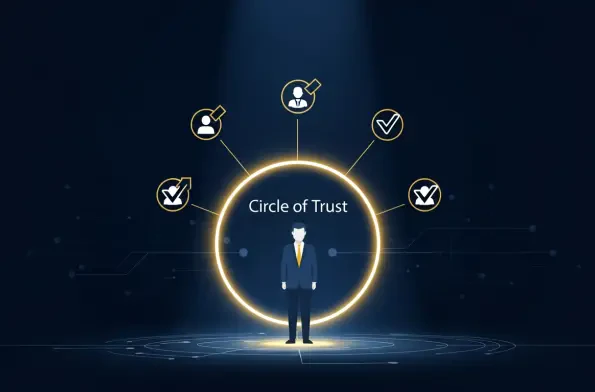
The traditional enterprise perimeter has not simply evolved; it has completely fractured into a million different pieces, each representing an individual user or a single cloud instance. For decades, security architects operated under the assumption that an organization’s most valuable assets lived

Read More