Malik Haidar is a seasoned cybersecurity authority who has spent years navigating the high-stakes world of digital defense for multinational corporations. His career is defined by a unique ability to blend hard-core technical analytics with high-level business intelligence, ensuring that security is never just a technical hurdle but a strategic asset. By bridging the gap between physical safety and digital resilience, he has become a leading voice in how we protect the increasingly complex networks that power our modern world. In this discussion, we explore the evolution of urban infrastructure and the critical role that cloud-native, AI-driven platforms play in securing the cities of tomorrow.
The conversation centers on the seismic shift from isolated, perimeter-based security to unified, interconnected urban ecosystems. We delve into the operational headaches caused by fragmented legacy systems and how the move toward centralized cloud management is solving these complexities. A significant portion of our dialogue focuses on the rise of agentic AI and the importance of open, AI-friendly APIs that allow for rapid integration. By examining real-world applications in flexible workspaces, we highlight how modern security suites are no longer just about locking doors, but about fostering efficiency, scalability, and a seamless occupant experience across vast, distributed environments.
The traditional idea of a physical perimeter is rapidly dissolving as our buildings and transit networks become part of shared digital platforms. How is this narrowing gap between physical and digital infrastructure changing the fundamental way we think about city-wide security?
We are witnessing a profound transformation where the concrete walls of a building are no longer the primary boundary of the enterprise. In a smart city, a high-rise isn’t just a standalone structure; it is an active node in a massive web that includes energy grids, public transit networks, and even airports that integrate surveillance and facility operations into a single control platform. This interconnectedness means that a vulnerability in a physical access point can now manifest as a digital threat to the entire urban network, creating a high-pressure environment for security teams. We have to stop thinking about security as a series of isolated locks and start viewing it as a living, breathing digital fabric that requires constant, unified oversight. It is a shift from reactive monitoring to proactive orchestration, where the goal is to maintain a resilient flow across both the tangible and the virtual realms of urban life.
In high-traffic, mixed-use developments where residents, employees, and contractors are constantly moving in and out, what are the primary risks associated with sticking to legacy, fragmented security systems?
The operational complexity of a modern mixed-use site—comprising apartments, gyms, and offices—is simply too much for old-school, siloed systems to handle. When you have access control, video surveillance, and visitor management running on separate networks with different workflows, you create dangerous blind spots that slow down incident response times. Imagine the frustration of a building operator trying to manage temporary permissions for a delivery provider while toggling between three different screens, none of which talk to each other. These fragmented environments are not just inefficient; they are a cybersecurity nightmare because every disconnected piece of hardware is a potential entry point for a breach. As occupants increasingly demand mobile-first experiences and app-based services, those relying on aging, site-by-site administration will find themselves unable to keep up with the sheer speed of modern urban movement.
Organizations are increasingly abandoning on-premises hardware for cloud-native platforms to achieve better scalability. How does this centralized model empower humans to work more effectively alongside new agentic-AI orchestrators?
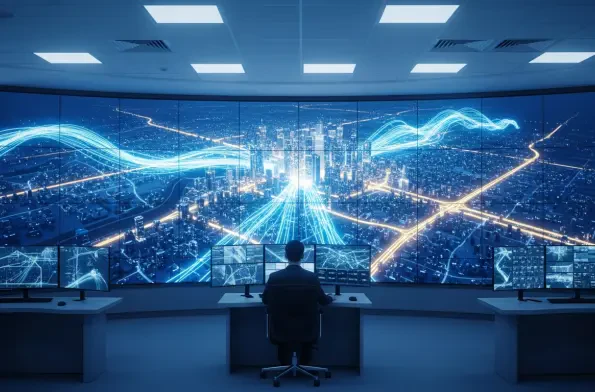
The beauty of a cloud-native architecture lies in its ability to take a thousand different data points from across a city and distill them into a single, unified interface for a human operator. By moving away from local servers, we can standardize security policies and deploy updates across multiple facilities simultaneously, ensuring that every location is running the most secure version of the software. This centralized foundation is the only way for next-generation agentic-AI orchestrators to function effectively, as these AI agents require real-time intelligence and automation at scale to support human decision-making. We are moving toward a model where the AI handles the heavy lifting of identifying unusual activity patterns and filtering out false alarms, while the human remains “in the loop” to provide the final approval and operational control. It creates a sense of calm and precision in the control room, replacing the chaotic sensory overload of traditional monitoring with a streamlined, intelligent workflow.
The shift toward unified platforms is often sold as a way to improve “occupant experience,” but what does that look like in practice for the people who actually live and work in these connected environments?
Occupant experience is about removing friction from the daily routine, replacing the jingle of heavy key rings or the search for a lost plastic badge with the seamless tap of a smartphone. In these modern environments, mobile credentials have become the gold standard, providing secure and contactless access that feels almost invisible to the user. For a resident or an employee, it means receiving a mobile alert when a guest arrives or having their office lights and climate control adjust automatically because the security platform recognized their arrival. This level of convenience is only possible when access control systems are deeply integrated with building automation and cloud-based analytics. It changes the atmosphere of a building from a restricted fortress to a welcoming, responsive space that understands and anticipates the needs of its inhabitants.
You’ve mentioned that the future of security depends on APIs being “AI-friendly.” Could you elaborate on how this specific technological shift changes the cost and speed of developing smart city infrastructure?
This is truly a ground-breaking innovation because it shatters the traditional timelines we’ve lived with for decades in the security industry. In the past, creating a custom integration between an access control system and a third-party property management tool could take many months of painstaking development and a significant financial investment. With an open, AI-friendly API, those same integrations can now be accomplished in just a few hours, allowing for unlimited and economical expansion of a city’s digital ecosystem. This speed allows organizations to be agile, connecting security operations with wider property technology in ways that were previously cost-prohibitive. It turns the security platform into a foundation for innovation, where new services and automations can be layered on top without the fear of hitting a technical dead end.
Looking at the success of companies like SpaceMade, which managed to slash site onboarding time and administrative hours, what is your forecast for how this technology will redefine the business of property management?
I believe we are entering an era where property management will be defined by its ability to scale through automation rather than through hiring more administrative staff. When you look at the SpaceMade example, they were able to decrease the time it takes to onboard a new site from four or five days down to a mere one or two hours, while simultaneously saving over 400 administrative hours annually. That is a staggering increase in efficiency that allows a company to grow its portfolio rapidly without losing control or compromising on security. My forecast is that we will see a widespread move toward these unified operational ecosystems where physical security is no longer a cost center, but a driver of resilience and profitability. As more property operators realize they can monitor incidents and coordinate responses across multiple cities from a single interface, the old model of heavily centralized hardware and extensive on-site cabling will finally become a relic of the past.