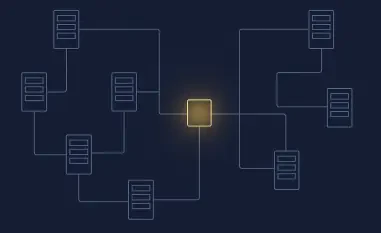
The meteoric rise of autonomous agents and large language models has fundamentally altered the corporate landscape by introducing a complex layer of machine-driven communication that often operates beyond the reach of conventional security protocols. As enterprises aggressively integrate generative AI into their core workflows, the volume of model-to-model traffic and automated prompt exchanges has surpassed traditional human-generated data patterns. This shift created a critical vulnerability where sensitive proprietary data could be transmitted through unmonitored channels, leaving IT departments blind to the specific risks inherent in modern AI ecosystems. To address these emerging threats, Check Point Software Technologies recently introduced the R82.20 software update, which features the industry’s first purpose-built AI Network Firewall. This solution enables businesses to secure their AI-driven transformations without the necessity of expensive hardware upgrades, effectively embedding intelligence into the network fabric itself to maintain control.
Visibility Gaps: Identifying and Securing Specialized Protocols
The proliferation of unapproved AI applications, commonly referred to as “Shadow AI,” presents a significant threat to corporate data integrity because employees frequently input sensitive information into public models without organizational oversight. Traditional security tools were never designed to parse the semantics of a large language model prompt or distinguish between a benign query and a high-risk data exfiltration attempt. This lack of granular visibility means that many IT departments are currently operating with a blind spot that encompasses nearly half of their total AI-related traffic. By the middle of 2026, the volume of this “hidden” data exchange is expected to grow exponentially as more departments experiment with autonomous agents for internal process automation. Check Point’s AI Network Firewall addresses this by transforming the network into an active governance layer that can identify and categorize every interaction with an AI model, ensuring that administrators can see exactly how these tools are utilized.
As AI systems become increasingly sophisticated, they rely on specialized frameworks like the Model Context Protocol (MCP) to facilitate seamless communication between diverse data sources and large language models. However, this increased connectivity has inadvertently opened new attack vectors, as many servers utilizing these protocols were found to have inherent security weaknesses that could be exploited by external actors. These vulnerabilities often allow unauthorized parties to intercept model-to-model calls or manipulate the data being fed into an AI system, potentially leading to the corruption of the model’s outputs or the theft of confidential datasets. Check Point’s firewall solution addresses this by monitoring these specific protocol links, acting as a secure gateway that validates every connection attempt. This ensures that the integration between an organization’s internal data and its AI agents remains strictly confined to authorized parameters, effectively shielding the underlying architecture from potential exploitation.
Adversarial Attacks: Defeating Threats and Centralizing Management
Simultaneously, the rise of adversarial AI techniques such as prompt injection has necessitated a shift toward a more proactive defense mechanism that can analyze the logic of incoming requests. Attackers have developed sophisticated methods to “jailbreak” language models by embedding hidden instructions within seemingly harmless inputs, forcing the AI to bypass its safety filters and reveal restricted information. The AI Network Firewall utilizes specialized detection logic to scan incoming payloads for these malicious patterns, blocking the injection attempt before it reaches the target model. This active defense is particularly crucial for organizations deploying internal AI agents that have access to sensitive databases or administrative functions. By neutralizing these threats at the network level, the firewall protects the integrity of the organization’s AI investments and ensures that the technology remains a tool for innovation rather than a liability, providing a robust barrier against threats that standard antivirus cannot stop.
Organizations that successfully navigated the transition to an AI-driven environment prioritized the integration of security directly into their core network fabric. They recognized that the network was the most logical point for enforcement because it served as the intersection where every AI prompt and agent interaction converged. The transition toward a unified defense plane allowed these businesses to maintain a rigorous security posture while accelerating their adoption of autonomous technologies. Moving forward, IT leaders focused on establishing clear governance frameworks that defined the acceptable use of AI agents. They also implemented continuous monitoring strategies to detect evolving adversarial techniques before they could impact production environments. By centralizing management and automating threat detection, these enterprises transformed security from a bottleneck into a foundational enabler of their long-term digital strategy. This strategic shift ensured that innovation remained unhindered by the persistent threats associated with generative models.