Advancing public safety through coordinated artificial intelligence depends on the ability to provide clear, accurate data during the most critical seconds of a threat. The modern security landscape requires a definitive shift from passive observation toward active, intelligent monitoring that can accurately distinguish between mundane daily activities and genuine emergencies. The strategic partnership between Veritone and ZeroEyes addresses this necessity by weaving together two distinct but highly complementary technological domains. This collaboration does not merely offer another software tool; it creates an integrated ecosystem designed to protect schools, commercial centers, and government facilities through a unified defense strategy. By bridging the gap between immediate threat detection and the complex, data-heavy requirements of forensic review, these companies are establishing a new standard for public safety infrastructure. This initiative signals a move toward an environment where technology acts as a vigilant guardian, providing first responders with the precise situational awareness needed to act decisively and save lives in real-world scenarios.
Real-Time Detection: The Proactive Role of ZeroEyes
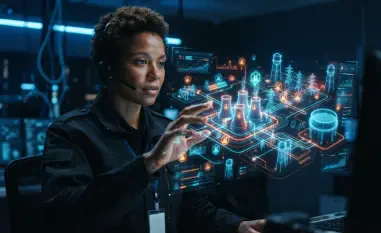
ZeroEyes provides a proactive component to this partnership by transforming existing digital security camera infrastructure into an active threat intelligence platform. Unlike traditional security systems that often serve a purely forensic purpose—recording events for review long after an incident has concluded—the ZeroEyes platform monitors video feeds in real-time to identify visibly brandished weapons. This capability is essential for modern security environments where every second matters, and the speed of detection can be the difference between a prevented crime and a tragedy. By utilizing advanced computer vision models, the software recognizes firearms and knives with high precision, ensuring that security teams receive alerts at the very onset of a threat. This transition from a reactive posture to a proactive one allows organizations to reclaim the initiative during an active assailant event, moving away from a reliance on eye-witness accounts that can often be fragmented or delayed during a crisis situation.
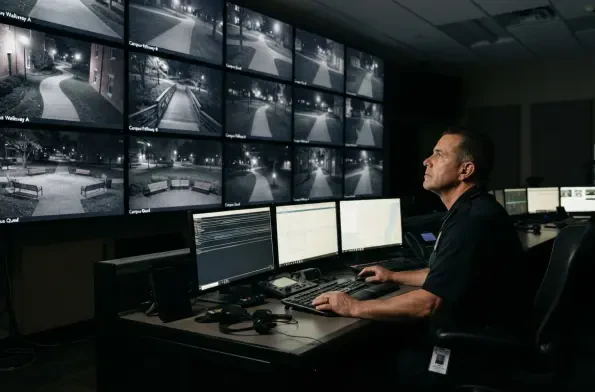
A critical differentiator in the system is the human-in-the-loop verification process, which significantly reduces the risk of false positives that often plague fully automated systems. When the artificial intelligence identifies a potential weapon, the imagery is immediately transmitted to the ZeroEyes Operations Center. This facility is a dedicated, United States-based hub staffed twenty-four hours a day by highly trained military and law enforcement veterans who specialize in threat assessment. These experts verify the detection in real-time, ensuring that only confirmed threats trigger a response from local authorities and site administrators. Once a threat is validated, the system dispatches actionable intelligence, including visual suspect descriptions and exact locations, within seconds. This rapid communication ensures that responders are not walking into an unknown situation blindly but are instead equipped with the specific data they need to neutralize a threat efficiently while minimizing risk to bystanders and staff members.
Post-Event Efficiency: Leveraging Veritone for Data Management
While the immediate crisis is handled by real-time detection, Veritone provides the technical infrastructure necessary for the intensive investigative phase that follows a security event. Veritone is recognized for its enterprise AI platform, aiWARE, which orchestrates an expansive ecosystem of machine learning models designed to transform unstructured data into actionable intelligence. In the context of public safety, this means the platform can ingest massive volumes of audio and video recordings from various sources, such as body cameras and fixed surveillance feeds, and organize them for rapid analysis. Law enforcement agencies frequently struggle with the sheer scale of digital evidence generated during an incident, often spending hundreds of hours manually reviewing footage. Veritone’s AI solutions simplify this data management by automating the identification of key moments, individuals, or specific objects within the feeds, thereby allowing investigators to focus on high-value tasks rather than tedious data sorting.
The efficiency of the aiWARE platform extends to the judicial and internal review processes, which are often the most time-consuming aspects of any public safety operation. By accelerating the processing of digital evidence, Veritone enables agencies to run more efficiently and significantly shorten the timeline for closing cases. The technology allows for the creation of searchable databases where investigators can locate specific evidence through descriptive queries, much like a search engine for video content. This capability is particularly useful in complex multi-site investigations where linking evidence across different locations is crucial. Ensuring that the transition from an active threat to a closed case is handled with such technological sophistication not only aids in the pursuit of justice but also builds public trust in the capabilities of local law enforcement. The ability to produce clear, undeniable evidence in a timely manner is a cornerstone of modern judicial standards, and this partnership provides the tools necessary to meet those rigorous demands.
Strategic Outlook: Advancing Public Safety Standards
The partnership between Veritone and ZeroEyes established a definitive model for how organizations approached the lifecycle of public safety threats. Security professionals discovered that combining real-time alerts with advanced forensic analysis provided the necessary clarity to manage incidents from start to finish. Organizations successfully moved away from siloed data systems and adopted unified frameworks that prioritized both immediate response and long-term evidentiary integrity. This transition allowed for a more comprehensive understanding of security vulnerabilities, leading to the implementation of more effective deterrents and faster judicial outcomes. The synthesis of hardware and software capabilities ensured that every second of an active threat was accounted for and every byte of data was utilized to its fullest potential. By focusing on human-in-the-loop systems, the partnership proved that technology could enhance rather than replace the critical judgment of experienced safety personnel during high-stress situations.
The successful deployment of these integrated solutions demonstrated that the next phase of public safety relied on interoperability between specialized AI engines. Stakeholders who adopted these multi-layered systems experienced a streamlined workflow that reduced the administrative burden on first responders and investigative teams. Future strategic shifts focused on the inclusion of more environmental sensors and the refinement of edge computing to process data even closer to the source of detection. This evolution encouraged a proactive culture within security management, where the focus remained on preventing incidents before they escalated while maintaining a rigorous chain of custody for all digital evidence. The partnership ultimately validated the idea that human expertise, when augmented by high-fidelity artificial intelligence, created a safer and more transparent society. These actionable steps paved the way for more resilient cities and established a benchmark for the responsible use of surveillance technology in the modern age of 2026.