A Breach That Started With a Build
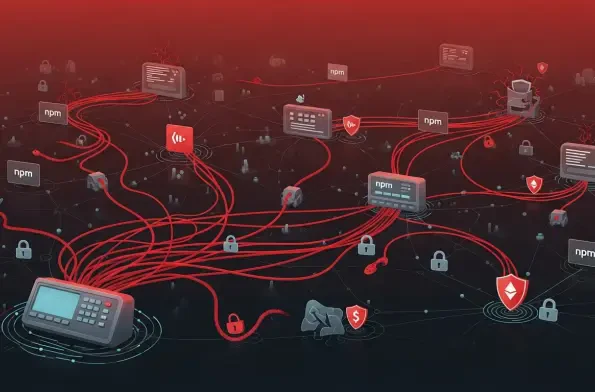
One routine command at a terminal—npm install—had quietly become a launchpad for theft, persistence, and lateral movement that traveled farther than most developers ever expected their tools could carry.
Researchers at Socket reported a live campaign hiding inside npm packages, notably multiple versions of @automagik/genie and pgserve, that executed on install and pulled credentials directly from developer machines. The code did more than pry open .npmrc files and SSH keys; it also reached into browser profiles and crypto wallets such as MetaMask and Phantom, aiming to turn local convenience into global leverage.
Why This Story Mattered
This campaign underscored a stark truth: developer credentials multiplied attacker power at machine speed. With one compromised maintainer account, malicious code could be republished across widely used packages, turning healthy dependency graphs into delivery systems.
Moreover, the attackers chose install-time scripts as their choke point. By running before most audits or human reviews, the malware stripped away the delay that often saved teams. Decentralized command-and-control, including Internet Computer Protocol (ICP) canisters, further pushed takedown costs beyond the reach of routine response.
Anatomy of a Worm-Style Playbook
The packages’ on-install payloads sifted through environment variables, shell histories, cloud configuration, CI/CD tokens, and local project artifacts. In parallel, they searched Chrome profiles and extensions, signaling a clear interest in the financial and session layers that developers frequently kept within reach to move fast.
Exfiltration favored reliability over flair. HTTPS webhooks served as the primary lane, while ICP endpoints offered a resilient backstop. Where crypto worked, the code used AES-256 or RSA; when it failed, plaintext fallback ensured data still moved out. The point was not elegance but certainty.
Self-propagation made the campaign feel worm-like. After lifting npm tokens, the malware enumerated packages the victim could publish, injected malicious changes, and pushed new releases. Each republish turned existing trust into distribution. If Python credentials were present, the malware pivoted to PyPI, using .pth-based execution to trigger code on install and extend reach across ecosystems.
Signals hinted that not all activity came from throwaway accounts. Discrepancies between npm releases and Git tags suggested hijacks of legitimate projects, some with thousands of weekly downloads. That volume transformed a single breach into a system-wide tremor. Though the patterns echoed earlier waves linked by observers to blockchain or ICP-backed command-and-control, firm attribution remained elusive, as did the initial intrusion vector.
Researchers emphasized that the mechanics were plain yet potent: post-install hooks, credential theft, dual exfiltration channels, and republishing workflows. Community chatter from maintainers described baffling diffs and sudden ownership changes that did not align with public repositories. Attempts to stamp out packages ran into the practical reality that decentralized endpoints were harder to erase than ordinary infrastructure.
What the Pattern Said About the Ecosystem
If attackers viewed developers as the shortest path to production, this campaign validated the strategy. Publish rights and CI secrets provided leverage that few perimeter defenses could match. Download counts for even mid-tier packages amplified exposure well beyond the original maintainer’s circle.
At the same time, the malware’s choice to strike during installation highlighted a structural blind spot. Many teams still allowed post-install scripts to run in CI and on laptops with broad network access, trusting that package provenance would catch issues upstream. That trust lagged behind attacker tradecraft.
The cross-ecosystem jump into Python showed how porous boundaries had become. Credentials for one registry often lived beside those for another, and developers moved between stacks daily. With that rhythm, a breach on JavaScript projects could nudge open doors across data science and automation pipelines without raising alarms.
What Should Happen Next
Defensive momentum favored concrete steps: rotate npm and PyPI tokens, enforce short-lived and scoped credentials with OIDC where possible, and require maintainer 2FA alongside tighter publish roles. Teams also benefited from turning off or gating post-install scripts in CI, isolating builds in constrained containers, and restricting egress during installation. Provenance signals and version pinning added friction that slowed republishing chains.
On the detection side, monitoring for outbound traffic to suspicious webhooks or ICP canisters, secret scanning for .npmrc, SSH, and cloud keys, and endpoint telemetry for install-time file access proved valuable. When compromise surfaced, rapid unpublishing, clean republishing, advisory notices, and a comparison of npm releases against Git tags helped restore integrity. Looking forward, security reviewers who hunted for .pth abuse in Python environments and backdoored install scripts across repos raised the bar. The campaign had revealed how much power install-time trust carried—and how quickly that trust needed to be right-sized.