Traditional security infrastructures consisting of isolated alarms and disconnected video cameras are rapidly becoming obsolete as the industry transitions toward unified digital environments. This evolution is driven by the necessity for real-time awareness and the integration of diverse security technologies into a cohesive operational framework. As the modern business landscape grows increasingly complex, the reliance on reactive measures—where incidents are recorded but not prevented—no longer suffices for enterprise-grade protection. Instead, a proactive stance is emerging, one that utilizes a connected ecosystem to transform security from a peripheral utility into a central pillar of organizational strategy. This transformation, highlighted in recent industry analyses, underscores a fundamental move toward intelligent automation and data-driven decision-making. By breaking down the barriers between physical security and digital intelligence, organizations are finding new ways to secure their assets while simultaneously improving overall operational efficiency and business resilience in an era defined by rapid technological advancement and changing risk profiles.
Transitioning From Silos to Unified Intelligence
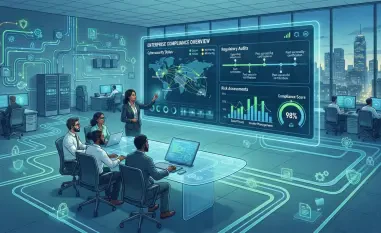
Historically, security departments operated with standalone systems that required labor-intensive manual effort to correlate information across different platforms. This fragmented approach often led to delayed responses and critical oversights, as security personnel had to pivot between disparate video feeds, access logs, and alarm notifications. Today, the focus has shifted toward centralized visibility, where these once-isolated functions are consolidated into a single, intuitive interface. This unification eliminates the information silos that previously hindered organizational agility, allowing security leaders to maintain a comprehensive operational picture across multiple global sites simultaneously. By creating a unified digital environment, businesses can ensure that every sensor and camera contributes to a collective intelligence, making it possible to identify patterns and anomalies that would be invisible in a siloed model. This synchronization is the cornerstone of modern security infrastructure.
Furthermore, this move toward unified intelligence reflects a significant change in how security is perceived within the corporate hierarchy, transitioning from a necessary expense to a strategic asset. When security platforms provide actionable data rather than just raw footage, they become essential tools for supporting business continuity and operational resilience. For instance, integrated systems can offer insights into occupancy trends, foot traffic, and space utilization, which inform broader management decisions beyond simple protection. This evolution allows security departments to function as strategic partners, aligning their technical capabilities with the overarching goals of the organization. As these systems become more sophisticated, the focus remains on leveraging the synergy between different technologies to create a safer environment that also drives measurable business value. Consequently, the role of security is no longer confined to the perimeter but is deeply embedded in the daily operations that ensure long-term success.
Cloud Infrastructure: The Primary Engine of Transformation
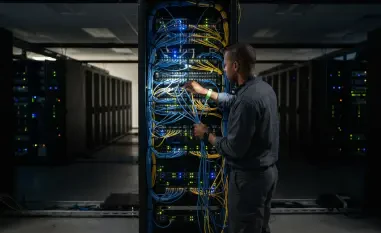
Cloud technology has emerged as the definitive engine behind the current metamorphosis of the security industry, providing the essential scalability and flexibility required for modern global operations. Unlike traditional on-premises hardware that is limited by physical capacity and local maintenance requirements, cloud-native platforms offer a dynamic infrastructure that can expand or contract based on the needs of the business. This transition allows security teams to centralize their management functions, overseeing complex installations across various continents through a single, secure interface. By moving core processing and storage to the cloud, organizations reduce the burden of managing local servers while gaining access to high-performance computing capabilities. This shift facilitates real-time system health monitoring and seamless software updates, ensuring that the entire security network remains optimized and protected against emerging cyber threats. This foundational change in how data is handled is what enables the next level of integration.
Beyond providing a storage and management framework, cloud environments serve as the deployment theater for advanced analytical tools and physical artificial intelligence. The 2027 Global Technology Outlook Report emphasizes that these platforms make complex security data more intuitive through the application of generative AI and natural language processing. Security leaders are now utilizing specialized tools that act as a connective layer, translating vast amounts of raw data into simplified, actionable insights that stakeholders across the enterprise can understand. This democratization of information ensures that security intelligence is not restricted to technical specialists but is accessible to executive leadership for high-level risk assessment. Moreover, the integration of intelligent automation within the cloud allows for the predictive analysis of threats, enabling organizations to mitigate risks before they escalate into significant incidents. This proactive capability is only possible when data is centralized in the cloud.
Physical AI: Practical Applications as Force Multipliers
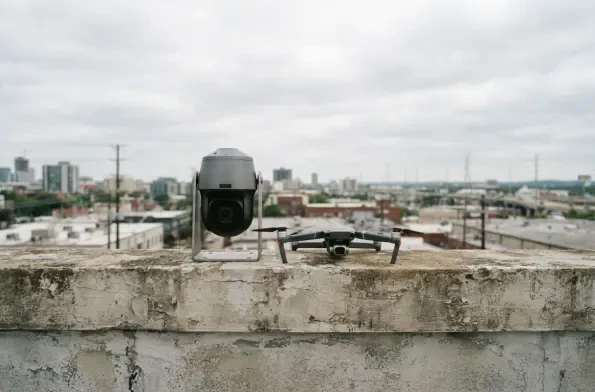
Physical AI, represented by the deployment of autonomous drones and robotics, has transitioned from a conceptual novelty to a practical, daily component of the modern security ecosystem. These technologies are not designed to replace human security officers but rather to serve as powerful force multipliers that extend the reach and effectiveness of traditional patrol operations. Drones provide a dynamic aerial perspective that fixed camera systems cannot achieve, allowing for the rapid inspection of large perimeters or hard-to-reach rooftops during a security event. Similarly, ground-based robots can handle repetitive patrol duties, environmental sensing, and thermal monitoring, freeing up human personnel to focus on complex problem-solving and high-level strategy. By automating these routine observation tasks, organizations can achieve a higher level of coverage and consistency while reducing the fatigue and risks associated with manual patrols. This synergy between human judgment and robotic persistence creates a more reliable posture.
In addition to routine monitoring, autonomous units play a critical role in managing security within hazardous or high-risk environments where human safety might be compromised. Deploying a robot to investigate a potential chemical leak or sending a drone into a restricted area after an alarm trigger allows security teams to gather essential information without putting personnel in harm’s way. These machines are equipped with sophisticated sensors and high-definition cameras that provide real-time data to operators, enabling them to make informed decisions from a safe distance. This capability is particularly vital for industrial sites, energy infrastructure, and large-scale manufacturing facilities where the physical environment can be unpredictable. By integrating these autonomous technologies into the broader security network, businesses can maintain rigorous oversight in areas that were previously difficult or dangerous to monitor. The result is a resilient framework where technology handles the physical risks of data collection, while humans provide context.
The Future: Professional Evolution and Actionable Steps
As intelligent automation and connected ecosystems become the norm, the day-to-day responsibilities of the security professional are undergoing a profound evolution toward high-level orchestration. The modern security leader is moving away from the manual operation of individual hardware devices and is instead focusing on managing a complex network of integrated digital and physical assets. This shift requires a new skill set that prioritizes the interpretation of AI-driven intelligence over simple observation. Professionals must now possess the analytical capability to understand the insights provided by predictive data, using them to anticipate security risks before they manifest as physical incidents. This transition from a reactive stance to a proactive, strategic role is essential for navigating the challenges of a data-rich environment. By mastering these new tools, security experts can transform their operations into a source of competitive advantage, providing the foresight needed to protect the organization against varied global threats.
To capitalize on this shift, organizations began prioritizing the migration of legacy hardware to cloud-native platforms, which served as the first step in building a resilient security architecture. The release of the 2027 Global Technology Outlook Report provided a clear roadmap for businesses to move beyond the constraints of standalone systems and embrace a more connected, proactive future. Stakeholders focused on conducting comprehensive audits of their current digital infrastructure to identify gaps that hinder system interoperability and real-time data sharing. Investing in training programs that bridge the gap between traditional security skills and data literacy emerged as an essential measure for ensuring that staff could effectively manage AI-driven tools. Furthermore, organizations looked toward integrating physical AI into their daily workflows to enhance coverage and safety in high-risk areas. By taking these actionable steps, leaders transformed their security programs into robust engines of operational value, navigating the complexities of a technology-led environment.