A single unsecured entrance in a multi-story office complex can compromise the integrity of an entire organization, leaving sensitive data and physical assets vulnerable to anyone who happens to walk through an unmonitored door. Physical security is no longer just about heavy locks and watchful guards; it is a sophisticated discipline that blends hardware engineering with digital intelligence. In the current landscape of 2026, the necessity of a robust access control system has moved from a luxury for high-security facilities to a standard requirement for any commercial infrastructure. This roundup examines how modern systems function, the hardware that anchors them, and the strategies required to keep them operational in an increasingly complex environment.
The Evolution of Physical Security in Modern Business Environments
The transition from mechanical keys to electronic oversight represents a fundamental shift in how businesses perceive their physical boundaries. In the past, a lost master key necessitated a complete and expensive re-keying of an entire facility, but the current paradigm relies on digital identities that can be revoked or modified in a matter of seconds. Security specialists recognize that commercial buildings are now dynamic environments where employees, contractors, and visitors move at different rhythms, requiring a system that is as flexible as it is secure. By 2026, the objective has shifted toward creating a “frictionless” entry experience that does not sacrifice the rigorous verification needed to protect intellectual property and human safety.
This evolution is significant because the threats facing commercial properties have become more varied and sophisticated. Modern security is not just about stopping a literal intruder; it is about managing the flow of people to prevent “tailgating” and ensuring that only authorized personnel enter high-value areas like server rooms or executive suites. The following sections will explore the intricate layers of these systems, starting with the physical hardware and moving toward the sophisticated software logic that serves as the brain of the entire operation. As the building blocks of security continue to evolve, the integration of these components becomes the primary defense against both physical and cyber-based unauthorized entry.
The significance of these systems is further amplified by the shift in workforce management patterns. With the rise of flexible schedules and distributed teams, commercial buildings must accommodate people at all hours without maintaining a constant security presence at every door. This roundup provides a comprehensive look at the tools and strategies that make this possible, offering a roadmap for property managers and business owners to navigate the complexities of 2026-era security standards. The goal is to provide a clear understanding of how these systems work in harmony to create a safe, efficient, and modern workspace.
Architectural Components and Operational Mechanics
Deconstructing the Hardware Ecosystem of Managed Entry
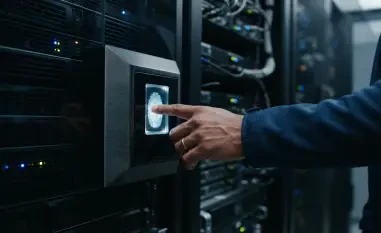
At the physical edge of every access control system lies the hardware, a collection of readers, controllers, and locking mechanisms that perform the literal heavy lifting of security. Industry leaders emphasize that the reader is the first point of interaction, serving as the bridge between the user’s credential and the system’s intelligence. Whether it is a proximity card reader, a keypad, or a sophisticated biometric scanner, this device must be durable enough to withstand environmental wear while remaining secure against skimming or tampering. Many modern facilities have moved toward the Open Supervised Device Protocol (OSDP) because it offers encrypted communication between the reader and the controller, closing a long-standing vulnerability found in older, unencrypted systems.
The decision-making process occurs at the controller, a hidden panel that stores the local database of authorized users. This decentralization is a critical aspect of system design, as it ensures that doors remain operational even if the connection to a central server is lost. When a credential is authenticated, the controller sends a signal to the locking hardware. The choice of lock—be it an electric strike, a magnetic lock (maglock), or an electrified mortise set—depends heavily on the specific needs of the door and local fire codes. There is a persistent debate regarding fail-safe versus fail-secure hardware; fail-safe locks release when power is lost to ensure a clear exit path during emergencies, whereas fail-secure locks remain locked during power outages to maintain building integrity.
Supporting this ecosystem requires a commitment to high-quality installation and regular maintenance. Data indicates that hardware failure is often the result of improper alignment or environmental factors rather than internal electronic flaws. For instance, a magnetic lock that is slightly misaligned may not provide its full holding force, making it susceptible to forced entry. Similarly, outdoor readers must be rated for the specific climate they occupy to prevent moisture ingress from shorting out the circuitry. Understanding these mechanical nuances is vital for anyone tasked with overseeing a commercial security program, as even the best software cannot compensate for a physical lock that fails to engage.
The Digital Brain: Software Administration and Permission Logic
If hardware provides the muscle, the software administration platform provides the logic and memory required to manage a modern facility. Security professionals view this software as a centralized dashboard where user roles are defined, schedules are set, and access events are recorded in real time. The logic used in these platforms has shifted toward Role-Based Access Control (RBAC), which assigns permissions to specific job functions rather than individual people. For example, a member of the maintenance crew might have access to mechanical rooms and loading docks from 2026 to 2028, but their access would automatically expire or change if their role within the company shifted.
Real-world applications of this logic are particularly evident in multi-tenant buildings where different companies share common areas but require private suites. The software allows a building manager to grant a tenant access to the main lobby and the gym while restricting them from other floors or the loading bay. This granular control also extends to time-based permissions; an office might be open to all staff during business hours but require secondary authorization or “two-man rule” verification for late-night entry. The risk, however, lies in the complexity of these permissions; without regular audits, “permission drift” can occur, where employees retain access to areas they no longer need, creating unnecessary security gaps.
Furthermore, the shift toward cloud-based administration has introduced new opportunities for remote management. Instead of requiring a dedicated server on-site, administrators can now manage multiple locations from a single web interface or mobile application. This model allows for instant updates and eliminates the need for manual software patches on local machines. However, it also introduces a cyber-security layer that must be managed with extreme care. Experts suggest that any cloud-integrated access system must utilize multi-factor authentication (MFA) for administrative accounts and end-to-end encryption to prevent hackers from remotely unlocking doors or altering the user database.
Emerging Frontiers in Biometrics and Mobile Credentialing
The most disruptive innovation in the current security environment is the rapid adoption of mobile credentials and high-accuracy biometrics. Industry dynamics suggest that the traditional plastic key card is becoming an endangered species as smartphones take over the role of the primary credential. By leveraging Bluetooth Low Energy (BLE) and Near Field Communication (NFC), a smartphone can communicate with a door reader without the user even having to remove the device from their pocket. This “frictionless” entry is not just a convenience; it significantly reduces the cost associated with printing, distributing, and replacing physical cards that are easily lost or shared among employees.
Biometric technology has also reached a level of reliability and speed that was previously unattainable. Facial recognition, iris scanning, and fingerprint analysis are now used to ensure that the person holding the credential is actually the person authorized to enter. While common assumptions once held that biometrics were slow or prone to “false rejects,” the latest generation of sensors can process a face in under half a second, even while the person is moving. This is particularly valuable in high-security zones where the risk of a stolen phone or card is too high to tolerate. However, these advancements come with significant privacy considerations, requiring businesses to be transparent about how biometric templates are stored and protected from data breaches.
Regional differences in privacy law often dictate how these technologies are deployed. In some jurisdictions, the storage of biometric data is strictly regulated, leading to a “privacy-by-design” approach where the biometric template is stored only on the user’s personal device rather than in a central database. This decentralized model satisfies both the need for high-security verification and the legal requirement for data privacy. As we look toward the remainder of the 2026 to 2030 period, it is likely that “multi-modal” biometrics—which combine two different physical markers—will become the gold standard for high-value commercial infrastructure, providing a level of certainty that no physical key could ever offer.
System Interoperability: Merging Access with CCTV and HVAC
A modern access control system does not exist in a vacuum; it is increasingly integrated with other building systems to create a cohesive operational environment. Industry leaders point to the “video-verified access” trend as one of the most effective ways to enhance security. When a person presents a credential at a door, a nearby CCTV camera automatically captures a high-resolution clip and links it to the access event in the log. This allows security teams to quickly verify that the person using the card matches the identity on file, making it nearly impossible for an unauthorized person to use a found or stolen credential without being noticed.
Beyond security, the integration of access control with building management systems (BMS) is driving significant improvements in energy efficiency. When the access system detects that the last person has left a specific zone or floor, it can send a signal to the HVAC and lighting systems to enter an economy mode. This data-driven approach to building management allows commercial properties to reduce their carbon footprint while lowering operational costs. Experts suggest that the interoperability of these systems is a key competitive factor for modern office buildings, as tenants increasingly prioritize both high-tech security and sustainable infrastructure in their leasing decisions.
The speculative future of this interoperability involves the use of artificial intelligence to predict and respond to building needs. For example, if a large group of people is scheduled to attend a meeting in a specific conference room, the access system can communicate with the HVAC system to pre-cool the space before their arrival. Similarly, if the system detects an unusual pattern of entries that suggests a security threat, it could automatically put the building into a “lockdown” state while notifying the local authorities and adjusting the elevator logic to prevent unauthorized movement. This level of synchronization turns a building from a passive shell into an active participant in the safety and comfort of its occupants.
Strategic Implementation and Troubleshooting Frameworks
Implementing a commercial access control system requires a strategic approach that balances security needs with operational realities. Industry best practices suggest beginning with a comprehensive site audit that identifies every potential entry point and the specific risks associated with each. It is not enough to simply secure the front door; secondary entrances, loading docks, and even roof hatches must be included in the security perimeter. A common mistake in the implementation phase is failing to involve all stakeholders, including IT, facility management, and human resources, which can lead to system configurations that are technically sound but practically unworkable for the staff who use them daily.
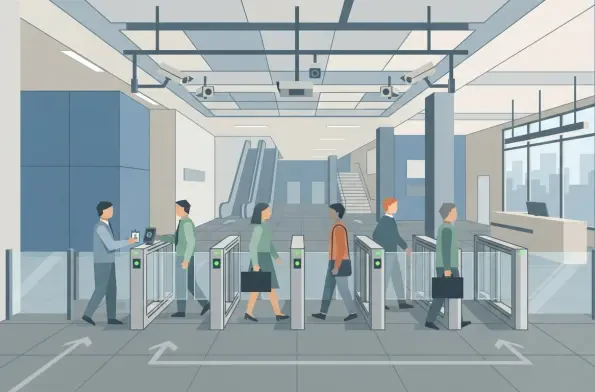
Once a system is in place, the focus shifts toward maintenance and troubleshooting. One of the most frequent challenges is “tailgating,” where an unauthorized person follows an authorized user through a door. While technology like turnstiles and optical sensors can help, the most effective solution is often a combination of hardware and employee training. Staff must be educated on the importance of not holding doors open for strangers, and security teams should regularly review access logs to identify patterns that might indicate a breach. Additionally, regular hardware checks—such as testing backup batteries and checking the alignment of door strikes—are essential to prevent system failures during critical moments.
For businesses looking to apply this knowledge effectively, the focus should be on scalability and future-proofing. A system installed in 2026 should be capable of expanding as the company grows or as new technologies emerge. This means choosing platforms that support open standards and can integrate with a wide range of third-party hardware. Furthermore, the use of audit trails and automated reporting can help businesses stay compliant with industry regulations and provide a clear record of activity in the event of an incident. By treating access control as an ongoing process rather than a one-time installation, organizations can maintain a high level of security that evolves alongside their changing needs.
Securing the Future of Commercial Infrastructure
The transition toward fully automated and integrated security environments demonstrated that the traditional reliance on physical barriers was insufficient for the complexities of the modern world. The industry shifted its focus from simple locking mechanisms to comprehensive identity management systems that prioritized both speed and accuracy. These advancements allowed property managers to gain unprecedented visibility into the movement of people within their facilities, which in turn fostered a safer and more efficient environment for all occupants. The successful deployment of these technologies proved that a well-designed access control system could serve as the foundation for a wider smart-building strategy, linking security directly to operational goals.
As the path forward was established, the importance of maintaining a balance between technological innovation and human-centric design became clear. The most effective systems were those that integrated seamlessly into the daily workflows of employees without creating unnecessary barriers to productivity. The lessons learned during the mid-2020s highlighted that the strongest security programs were not just about the most advanced hardware, but about the culture of safety and the precision of the logic governing those systems. The realization that physical security is an extension of digital identity management fundamentally changed how new commercial projects were planned and executed.
The ongoing management of these systems will require a proactive mindset that anticipates threats before they manifest. Property owners and security directors should consider the next logical step to be the implementation of predictive analytics, which can identify anomalies in access patterns that might signal an internal or external threat. By shifting from a reactive posture to a proactive one, the commercial sector can ensure that its infrastructure remains resilient against the evolving challenges of the next decade. The strategic takeaway is that security is never a finished product; it is a continuous commitment to the protection of people, property, and the data that drives modern commerce.