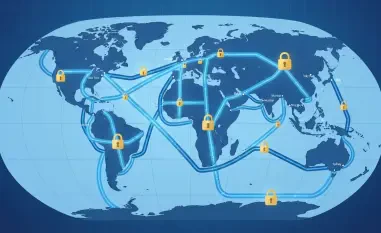
By unifying data from over seventy different integrations, organizations can finally achieve a holistic view of their entire security landscape. For years, security operations centers have been drowning in a sea of telemetry, where each individual alert provides only a narrow glimpse into a potential threat. A vulnerability on a specific server might seem minor in isolation, but when viewed through the lens of its connection to a high-privileged identity or a customer-facing database, the risk profile shifts dramatically. The emergence of Northstar Security and its recent seven million dollar seed funding round highlights a pivotal shift toward solving this persistent fragmentation. Led by Wing Venture Capital and supported by industry veterans from companies like Qualys and AppDynamics, this initiative seeks to move beyond siloed monitoring toward a model of intelligence that understands the web of digital systems. By grounding AI agents in business context, the industry is attempting to bridge the gap between detection and meaningful action in a way dashboards never can.
The Problem: Data Fragmentation and Tool Silos
The current state of enterprise security is defined by an overwhelming abundance of data that ironically leads to a deficit of actionable insight. Most modern firms utilize dozens of specialized tools, ranging from cloud security posture management to identity and access governance, yet these systems rarely communicate effectively with one another. This lack of interoperability creates “toxic combinations,” where several low-priority issues across different domains coalesce into a critical security hole. For example, a misconfigured S3 bucket might not be flagged as a high priority if it contains non-sensitive data, but if that bucket is accessible via a service account with over-privileged permissions, the risk becomes existential. Manually tracing these connections is an exhausting process that demands hours of cross-referencing between different management consoles and spreadsheets. This operational friction has historically given attackers an advantage, as they only need to find one overlooked pathway while defenders must secure every connection.
Traditional security architectures have prioritized the breadth of detection over the depth of understanding, leading to “alert fatigue” that paralyzes even the most sophisticated response teams. When every tool generates its own set of high-priority warnings without considering the broader environment, the true signal is often buried under noise. This environment necessitates a shift from a tool-centric philosophy to a data-centric one, where the focus is on the relationship between assets rather than the assets themselves. Without a unified layer to interpret how a vulnerability in a development environment could potentially impact a production database, security professionals remain trapped in a perpetual cycle of firefighting. The industry has reached a breaking point where human capacity to synthesize this information has been surpassed by the complexity of modern infrastructures. Consequently, the push for agentic security is a necessary strategy for organizations navigating the increasingly volatile digital landscape of the current decade.
The Evolution: From Dashboards to Agentic Security
To solve the context problem, Northstar Security has introduced the Security Context Graph, a dynamic mapping technology that visualizes the interconnected nature of identities, assets, and vulnerabilities. This graph serves as a foundational layer that translates raw technical data into a business-centric map of risk. By integrating with core services such as AWS, Okta, and Workday, the platform can identify how a change in a personnel record might affect access rights across a global cloud footprint. This level of visibility allows for the prioritization of remediation efforts based on actual business impact rather than arbitrary severity scores. Instead of fixing every “critical” vulnerability, teams can focus on the specific vulnerabilities that reside on paths leading to sensitive intellectual property or financial data. This methodology transforms the security team from a technical gatekeeper into a strategic partner that understands the flow of value within the enterprise. The context graph provides the missing link that enables security logic to finally align with organizational priorities.
Organizations that successfully closed the context gap adopted a disciplined approach to data hygiene and integrated automated remediation cycles where AI agents handled the initial analysis of threats. This evolution allowed human analysts to focus on high-level strategy and complex incident response rather than mundane data entry. They prioritized building trust in these systems by starting with “read-only” agents before granting them the authority to execute live changes. Managers began conducting regular audits of the Security Context Graph to ensure that automated decisions remained aligned with changing business objectives. They also invested in cross-training security and engineering teams to better manage the intersection of identity and cloud infrastructure. By the end of this implementation phase, these firms significantly reduced their mean time to resolution and established a more resilient defensive posture. Moving forward, the focus shifted to the continuous refinement of these AI agents to ensure they operated within safe parameters while maintaining speed and accuracy.