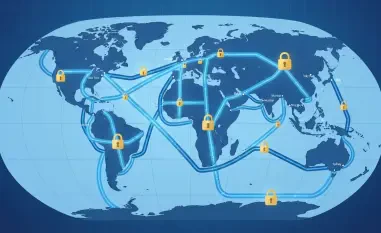
Under the stringent requirements of the Digital Operational Resilience Act, financial institutions must now maintain auditable proof that their internal identity and access management systems are secure and continuously monitored. This shift marks a fundamental departure from traditional IT practices where managing user permissions within complex business software was often treated as a backend technical task. For years, these processes were relegated to the bottom of the priority list, managed through informal requests and basic system roles that rarely underwent rigorous scrutiny. However, the introduction of comprehensive European Union cybersecurity mandates has elevated access control to a critical legal obligation, transforming it into a cornerstone of corporate governance and regulatory compliance. This change necessitates a complete re-evaluation of how organizations protect their core data repositories. By 2026, the transition from voluntary security standards to legally enforceable mandates has redefined the operational landscape for every major enterprise operating within the European market.
Navigating the Legal Framework: NIS2 and DORA
The primary catalysts for this regulatory transformation are the NIS2 Directive and the Digital Operational Resilience Act, which work in tandem to secure the digital economy. NIS2 significantly expands the scope of cybersecurity requirements, bringing sectors such as manufacturing, food production, and waste management under the same intense scrutiny as traditional energy and transport providers. Organizations classified as essential or important entities are now legally compelled to implement rigorous risk management measures, with a specific focus on demonstrating transparent access control and robust system monitoring to satisfy authorities. This expansion ensures that supply chain vulnerabilities are addressed across the entire economic ecosystem, rather than just at the infrastructure level. The directive requires a proactive approach to threat detection and incident reporting, forcing companies to move beyond superficial compliance and toward a model where every user interaction with sensitive data is logged and verifiable.
In parallel with these broad industrial changes, DORA sets an exceptionally high bar for operational resilience specifically within the financial sector and its technology service providers. This act requires financial institutions to maintain strict, auditable oversight of identity and access management across all digital platforms to prevent systemic failures. The common thread between these two regulations is the demand for absolute transparency; businesses must move beyond “best effort” security and provide verifiable, data-driven proof that their internal systems are subject to regular, documented reviews. This is particularly challenging for institutions that rely on legacy systems integrated with modern cloud services, as they must ensure consistent policy enforcement across diverse environments. Compliance is no longer about checking a box during an annual audit; it is about maintaining a continuous state of readiness that can be demonstrated to regulators at any given moment to avoid severe penalties.
The Challenge: ERP Complexity and Shared Responsibility
At the center of this compliance storm lies the Enterprise Resource Planning platform, which houses an organization’s most sensitive financial and operational data. For companies utilizing cloud-based solutions like Microsoft Dynamics 365 Business Central, the shared responsibility model presents a unique challenge that many executives are still struggling to fully grasp. While the cloud provider secures the underlying physical and digital infrastructure, the customer remains entirely responsible for managing user roles, granular data-level permissions, and internal access configurations. This means that even if a platform is technically secure from external intrusion, internal oversight remains the most vulnerable link in the security chain. Regulatory bodies have made it clear that failures in user permission management are the sole responsibility of the enterprise, regardless of the security certifications held by the software vendor or the hosting provider, making internal control a top priority.
The inherent complexity of modern ERP systems makes them particularly susceptible to permission creep and misconfiguration, which are now major areas of concern for auditors. These systems often feature hundreds of native permission sets and custom roles, creating a landscape where a single user might inadvertently gain the authority to both initiate and approve financial transactions without any oversight. Such conflicts of interest are difficult to track manually as employees change roles or projects over time, leading to an accumulation of access rights that exceed their current needs. Under the new EU mandates, these vulnerabilities are no longer viewed as minor internal audit findings that can be addressed later; they are considered significant violations of law that require immediate mitigation. Companies must now implement granular controls that can prevent these overlaps at the database level, ensuring that no single individual possesses excessive authority over critical business processes.
Strategic Outlook: Moving Toward Continuous Compliance
Modern regulatory environments have rendered traditional, manual methods of oversight completely obsolete in the face of persistent digital threats. In the past, companies often relied on static spreadsheets and periodic manual reviews to track user permissions, but these records frequently became outdated as quickly as they were created due to the fast-paced nature of modern business. NIS2 and DORA demand a level of continuous monitoring that manual processes simply cannot provide, requiring organizations to adopt a more dynamic and persistent approach to system security. The reliance on human memory or physical documentation has been replaced by a requirement for automated logs that record every change in user status and permission levels in real time. This shift is driven by the need for high-frequency reporting, where an organization must be able to pull a comprehensive access report at a moment’s notice to prove that their security posture remains intact despite daily personnel changes.
The shift toward automated, auditable access management was achieved by organizations that recognized the convergence of security and law early in the process. Successful leaders implemented specialized authorization software that integrated directly with their ERP systems, providing the real-time visibility required by regulators. They moved away from fragmented, manual spreadsheets and established a centralized source of truth for all user permissions. This transition allowed businesses to not only meet the mandates of NIS2 and DORA but also to improve their overall operational efficiency by reducing the risk of internal fraud. To maintain this standard, enterprises conducted regular gap analyses and automated their Segregation of Duties checks to ensure continuous compliance. By prioritizing these technological investments, they secured their digital infrastructure against both internal and external threats. These proactive steps ensured that their organizations were prepared for the rigorous audit cycles that have become the standard for the modern economy.