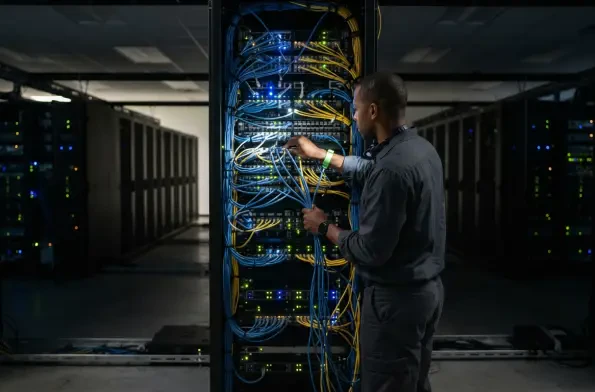
The Global Landscape of Artificial Intelligence Security
The rapid transformation of artificial intelligence from a peripheral research project into the central nervous system of global enterprise operations has fundamentally redefined the parameters of digital risk management. In 2026, the transition from experimental tools to foundational business infrastructure is complete, necessitating a shift in how assurance is defined across the private and public sectors. Organizations no longer view AI as an isolated software component but as a dynamic layer that interacts with every facet of corporate data.
The rise of agentic AI represents a significant leap toward independent operational execution, where systems now make decisions and interact with external environments without constant human oversight. These autonomous systems require a specialized security posture that addresses the potential for unintended logical deviations. Managing these risks involves moving beyond simple oversight toward a robust framework of delegated authority and technical constraints that prevent systems from acting outside their intended parameters.
Global pioneers in security testing, such as Capture The Bug, have been instrumental in establishing international benchmarks that distinguish between large language models and generative applications. By creating standardized evaluation metrics, these first-movers provide a blueprint for securing diverse market segments, including autonomous agents. This tiered approach ensures that security protocols are tailored to the specific functional risks inherent in different AI architectures, from simple chatbots to complex decision engines.
Navigating Major Industry Trends and Projections
Emerging Methodologies for AI Security Testing
Traditional security audits often prove insufficient for non-deterministic AI systems, prompting a critical shift from basic code review to sophisticated behavioral analysis. While standard software follows predictable logic, AI models can produce varying outputs from identical inputs, making static testing obsolete. Modern methodologies now focus on how a model reacts to edge cases and unexpected stimuli, ensuring that the internal logic remains intact even when faced with ambiguous data.
The market has also seen a clear bifurcation of services, distinguishing between the security testing of AI products and the use of AI-enabled penetration testing. This separation is vital for maintaining high standards, as evaluating a client AI system requires a different set of expertise than using automated tools to scan for traditional vulnerabilities. Furthermore, the adoption of continuous visibility models has replaced static annual assessments, allowing firms to monitor AI environments in real-time and detect anomalies as they happen.
Growth Indicators and Future Market Projections
Corporate AI integration has experienced a massive surge, with adoption data showing a rapid scaling of these technologies within the private sector starting from 2026 and extending into 2028. As businesses integrate AI into customer-facing and back-office roles, the need for independent verification has become a primary investment priority. Organizations are moving away from self-certification, recognizing that internal audits often lack the objectivity required to satisfy stakeholders and insurance providers.
Forecasts indicate a sustained demand for third-party accreditation and standardized validation as a means of mitigating liability. The growth of the AI security market is increasingly driven by the need for a common language between developers and security professionals. Standardized frameworks provide this bridge, ensuring that the rapid pace of innovation does not outstrip the ability to verify the safety and integrity of the deployed systems.
Overcoming Obstacles in Securing the AI Black Box
Adversarial inputs and prompt injection remain among the most persistent threats to model integrity, as attackers craft inputs designed to hijack model logic. These strategies can force an AI to ignore its safety training or execute unauthorized commands, effectively turning a helpful tool into a liability. Mitigating these attacks requires advanced filtering and a deep understanding of how specific models process language and context to identify malicious intent before it reaches the core logic.
Managing data leakage risks is equally critical, particularly for systems connected to sensitive corporate data stores. AI models that use Retrieval-Augmented Generation (RAG) often have access to vast amounts of internal documentation, which can be inadvertently exposed through carefully phrased queries. Protecting this information requires strict data boundary enforcement and a “least privilege” approach to what the model can retrieve and present to the user.
The problem of excessive permissions often arises when AI agents are granted independent API access to modify systems or move funds. Balancing the utility of an autonomous agent with the risk of its independence is a central challenge for security architects. Additionally, bridging the specialized skills gap remains a hurdle, as the industry faces a shortage of cybersecurity professionals who possess the rare combination of machine learning knowledge and traditional penetration testing expertise.
The Regulatory Environment and Standardized Frameworks
The CREST five-pillar evaluation model provides a structured approach to these challenges by examining technical expertise, governance, and evidence-based reporting. This framework ensures that accredited firms have the necessary rigor to perform high-level assessments that stand up to professional scrutiny. By focusing on quality controls and proven methodologies, the model elevates the entire industry from unverified claims toward a mature, professionalized standard of service.
Insights from the National Cyber Security Center emphasize that AI is a transformative force in the threat landscape, requiring a national security perspective on its deployment. Formalized accreditation helps leadership teams satisfy regulatory scrutiny and demonstrate a commitment to corporate governance. This transition from internal claims to verified standards is essential for industry transparency, allowing buyers to identify partners who meet a global baseline of competence.
The Future of Digital Trust and AI Innovation
Future protection strategies will likely focus on resilience-based security, which prioritizes how a system behaves under active manipulation rather than its performance under intended design. This shift acknowledges that all systems have vulnerabilities, and the goal is to ensure that AI remains safe even when its defenses are breached. Security is becoming an integrated ecosystem, where the connectivity between AI tools forms a “nervous system” that must be protected at every node.
Global standardization serves as a primary market driver, with international non-profits shaping a mature AI assurance market that values consistency across borders. As more countries adopt these frameworks, the ability to deploy AI internationally will depend on meeting these recognized security benchmarks. This alignment fosters a global environment where innovation can flourish without compromising the digital trust that underpins the modern economy.
Final Perspective on Strengthening AI Infrastructure
The implementation of CREST standards provided a necessary reference point for global safety by establishing a clear baseline for technical competence. This accreditation enabled organizations to move beyond vague promises of security, offering a tangible metric that validated the integrity of their artificial intelligence deployments. The shift toward standardized testing ensured that as AI systems grew in complexity, the methods used to protect them became equally sophisticated and reliable.
Organizations that prioritized adversarial testing over theoretical risk assessment were better equipped to handle the realities of the modern threat landscape. The strategic deployment of AI required a commitment to constant verification and a willingness to challenge the assumptions of model developers. By adopting a rigorous testing posture, businesses successfully navigated the transition to autonomous systems while maintaining the trust of their customers and regulatory bodies.
The outlook for independent AI auditing remained positive as the digital age progressed, with “verify through accreditation” becoming a permanent fixture of corporate policy. This approach solidified the role of third-party experts in maintaining the balance between technological advancement and operational safety. Ultimately, the maturation of the AI assurance market provided the stability needed for artificial intelligence to fulfill its potential as a transformative and secure tool for global progress.