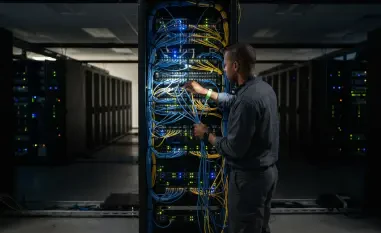
While organizations typically prioritize expensive industrial controllers, a single compromised ten-dollar sensor can provide a permanent foothold for sophisticated network attackers. This reality defines the current struggle within the industrial Internet of Things, where the sheer scale of deployment has outpaced traditional methods of digital protection. As industries move toward total automation, the focus often lands on high-profile assets—the massive robotic arms, the intricate logic controllers, and the primary data hubs. However, the connectivity that drives this efficiency also introduces a labyrinth of vulnerabilities that remain largely invisible to the untrained eye. The transition from a static security model, where a device is considered safe once it leaves the factory floor, to a lifecycle-security model is no longer optional. This shift requires a fundamental reassessment of how hardware is maintained over a lifespan that can stretch across two decades. In this environment, the durability of security protocols must match the physical durability of the hardware itself, ensuring that a sensor installed today remains resilient against the sophisticated threats of the next twenty years.
Reshaping Management: The Challenge of Hardware Endurance
The tendency to focus security budgets on high-value industrial controllers is a natural consequence of resource allocation, yet it creates a blind spot that sophisticated attackers are eager to exploit. These high-value brains of the factory or infrastructure are monitored with precision, but they are often surrounded by a sea of low-cost, peripheral devices that have been forgotten by the IT department. A sensor that monitors temperature in a remote warehouse or a vibration detector on a secondary assembly line may seem inconsequential due to its low unit price. However, hackers do not evaluate hardware by its market value; they evaluate it by its connectivity. Once a single peripheral device is compromised, it acts as a silent bridge, allowing an attacker to bypass perimeter defenses and move laterally into more sensitive sectors of the corporate network. This underscores a vital trend: the necessity of maintaining absolute visibility over the entire fleet of devices, regardless of how small or inexpensive an individual unit might be. Security must transition from a checklist completed at installation to a dynamic, ongoing surveillance operation that accounts for every node in the system.
Visibility: Monitoring the Entire Device Fleet
Active management throughout the operational life of the hardware is the only viable path forward for maintaining a secure industrial ecosystem. Historically, many organizations treated IoT deployment as a set-it-and-forget-it endeavor, assuming that if a device functioned correctly, it remained secure. In the modern threat landscape, this assumption is dangerous, as vulnerabilities are discovered daily in legacy code and aging communication protocols. Maintaining a secure environment requires a constant security pulse—a system of automated checks and balances that monitors the health and integrity of every node. This involves not only software patches but also the ability to decommission devices that can no longer meet modern security standards. As hardware ages, the cost of securing it may rise, but the cost of a breach through an unpatched legacy sensor is infinitely higher. Organizations must adopt a strategy that treats every sensor as a critical endpoint, ensuring that even the most basic components receive the same level of architectural scrutiny as the primary servers they support.
Resilience: Strategic Planning for Long-Term Assets
Building resilience into an IoT ecosystem requires a deep understanding of the physical and digital decay that affects hardware over a twenty-year span. Hardware components that are exposed to extreme temperatures, moisture, or vibration in industrial settings can experience degradation that impacts their ability to process complex security tasks. Furthermore, the software environment evolves much faster than the hardware can be replaced, leading to a situation where a perfectly functional physical device becomes a security liability because its internal processor cannot handle modern encryption algorithms. To mitigate this, developers are increasingly turning to lightweight, modular security architectures that allow for the incremental updating of defensive protocols without requiring a full system overhaul. By designing devices with extra processing overhead and updatable security modules, companies can extend the secure life of their assets. This foresight is critical for infrastructure projects where the cost of physical replacement is prohibitive, making digital adaptability the most valuable feature of any long-term industrial installation.
Compliance: The Impact of the Cyber Resilience Act
The introduction of the EU Cyber Resilience Act marked a definitive turning point for manufacturers, ending the era where cybersecurity could be sidelined in favor of lower production costs. For years, the race to minimize time-to-market led to the release of hardware with hard-coded passwords, unpatchable firmware, and nonexistent encryption. The CRA shifts the burden of responsibility back to the producers, mandating that they provide security updates and vulnerability management throughout the expected lifetime of the product. This regulatory shift is not merely a legal hurdle; it is a fundamental restructuring of the business model for IoT hardware. Manufacturers are now required to prove that their devices are secure by design and that they have the infrastructure in place to respond to new threats as they emerge. This pushes companies toward a design philosophy where security features can be updated independently of the core device functions. By standardizing these requirements, the global market is beginning to see a ripple effect where higher security standards become the baseline for all products, regardless of their final destination.
Logistics: Managing Updates in Harsh Environments
Fulfilling these regulatory mandates presents an immense logistical challenge, especially when hardware is expected to function in the field for fifteen to twenty years. A device deployed today might still be in operation long after the original software libraries have become obsolete. This necessitates a robust long-term support infrastructure capable of delivering over-the-air updates to devices located in harsh, remote, or inaccessible environments. For example, a sensor embedded in a deep-sea pipeline or a smart meter installed in a subterranean utility vault cannot be easily replaced or manually updated. Manufacturers must therefore design their systems with high-level abstraction layers that allow for cryptographic agility and firmware updates over low-bandwidth connections. Partnerships between hardware manufacturers and specialized security firms are becoming the industry norm, as few companies possess the internal resources to manage twenty years of cybersecurity evolution. This long-term commitment transforms the relationship between the vendor and the client from a one-time transaction into a decades-long service agreement focused on resilience and trust.
Technical Innovation: Patterns and Future Resilience
The digital age is defined by a constant tension between the need for intrusive security monitoring and the fundamental right to data privacy. As IoT devices infiltrate every aspect of industrial and personal life, the volume of sensitive data being transmitted has reached unprecedented levels. While deep packet inspection can provide detailed security insights, it often violates privacy protocols and requires significant processing power that many small devices lack. A sophisticated middle ground has emerged in the form of communication pattern analysis, which focuses on metadata rather than the contents of the data payload. By examining the timing, destination, frequency, and volume of transmissions, network operators can build a behavioral fingerprint for every device. This approach allows for high-level security monitoring without needing to decrypt the actual messages, preserving the confidentiality of user data while still maintaining oversight. It acknowledges that while encryption is a vital tool for privacy, it should not serve as a shield that hides malicious activity from the network providers responsible for maintaining the integrity of the system.
Privacy: Intelligence Through Metadata Analysis
Implementing pattern-based intelligence allows for the rapid identification of compromised devices that might otherwise go unnoticed for months. For instance, if a simple moisture sensor that typically communicates with a local gateway once every twelve hours suddenly begins transmitting large bursts of data to an unknown international IP address at midnight, the system can flag it as a clear sign of compromise. This type of anomaly detection does not require the network to know what the sensor is saying; it only needs to know that the sensor is behaving in a way that deviates from its established baseline. This method is particularly effective for resource-constrained IoT devices that do not have the battery life or processing capability to run complex on-device antivirus software. By moving the analytical burden to the network edge or the cloud, organizations can protect thousands of simple sensors simultaneously. This strategy provides a scalable, privacy-conscious solution that addresses the reality of the diverse and often underpowered IoT landscape, ensuring that even the smallest node can be defended against sophisticated external intrusion.
Anomaly: Identifying Threats in Real-Time
Real-time threat detection in an industrial context requires a shift from reactive patching to proactive behavioral modeling. In complex environments like a smart factory, thousands of devices interact in a choreographed sequence that follows a predictable rhythm. When an attacker gains access to a single component, they must alter that rhythm to achieve their goals, whether that involves stealing data, altering production parameters, or sabotaging equipment. These subtle shifts in the digital heartbeat of the facility are the first indicators of a breach. By utilizing machine learning algorithms that understand the normal operational baseline of an entire facility, operators can identify micro-deviations that precede a full-scale attack. This early warning system allows for the isolation of infected segments of the network before the malware can spread to critical controllers. The ability to detect these anomalies in real-time transforms the network from a passive transport layer into an active defensive shield, providing a level of security that evolves alongside the threats it faces.
Security: Mitigation of Post-Quantum Risks
Perhaps the most forward-looking challenge in the lifecycle of an IoT device is the looming shadow of quantum computing and its impact on traditional encryption. While a functional, large-scale quantum computer may still be several years away, the threat it poses to long-term data confidentiality is immediate. Malicious actors are currently engaged in harvest-now, decrypt-later strategies, where they intercept and store encrypted data today with the intention of breaking the encryption once quantum technology matures. For an industrial device expected to remain operational for twenty years, the data it transmits today must remain secure well into the future. If a sensor is providing critical data for a power grid or a manufacturing plant, that information could remain sensitive for decades. Waiting for the quantum threat to arrive before updating security protocols is a recipe for disaster, as the data collected now could be used to compromise systems in the future. Consequently, the industry is seeing a rapid shift toward post-quantum cryptography, integrating quantum-resistant algorithms into devices long before the threat becomes a physical reality.
Resilience: Threshold Trust and Multi-Path Delivery
To combat these advanced threats, researchers are developing innovative methods such as threshold-based trust establishment and multi-path secret sharing. This approach involves splitting cryptographic secrets into multiple fragments and transmitting them across diverse communication paths, such as combining terrestrial cellular networks with low-Earth-orbit satellite links. By distributing security-critical information across different physical and digital channels, the system becomes significantly more resilient against interception. An attacker who manages to harvest data from a single cellular tower would only possess a useless fragment of the secret, making it impossible to reconstruct the full key or decrypt the transmission even with a quantum computer. This methodology is particularly valuable for resource-constrained devices because it shifts the cryptographic heavy lifting away from the sensor processor and into the architecture of the network itself. By baking this level of resilience into the connectivity layer, organizations can ensure that their long-lived assets remain secure against future technological shifts, effectively future-proofing the infrastructure against the next generation of cryptographic challenges.
Strategic Vision: A Holistic Framework for Industrial Security
The evolution of IoT security demonstrated that a holistic, long-term vision was the only way to safeguard a connected global infrastructure. Leaders in the field realized that security could not be treated as a static feature, but rather as a continuous lifecycle that required constant adaptation and proactive management. By addressing the vulnerabilities of low-cost sensors and embracing the mandates of new regulatory frameworks like the CRA, organizations moved beyond the set-it-and-forget-it mentality that previously plagued the industry. The successful integration of pattern-based monitoring and post-quantum resilience proved that privacy and security could coexist through clever architectural design. Moving forward, the focus shifted toward establishing digital sovereignty by gaining total transparency over the supply chain and maintaining control over every technical dependency. These actions ensured that the connected world remained not only efficient and productive but also inherently trustworthy. For any organization looking to secure its future, the lesson was clear: prioritize the longevity of protection as much as the longevity of the hardware itself, ensuring that every node in the network was accounted for, monitored, and resilient for its entire functional life.