Relying on sophisticated security tools often creates integration dependencies that fail if the underlying identity platform or cloud infrastructure goes offline. This reality underscores the central paradox facing digital enterprises today: the very mechanisms designed to protect assets often introduce new, unforeseen avenues for systemic collapse. In the 2026 landscape, the modern cybersecurity environment no longer resembles a static fortress but is instead a volatile and unpredictable game of Chutes and Ladders. Every technological breakthrough, from generative AI to deep cloud integration, represents a potential ladder toward unprecedented operational efficiency. Conversely, every hidden vulnerability or infrastructure failure serves as a dangerous chute that can reset years of progress in an instant. As organizations strive for digital sophistication, they inadvertently create a fragile architecture where the sheer complexity of interconnected systems expands the potential failure surface beyond the control of any single internal team.
The Hidden Risks of Shared Digital Infrastructure
The Fragility of the Shared Fate Model
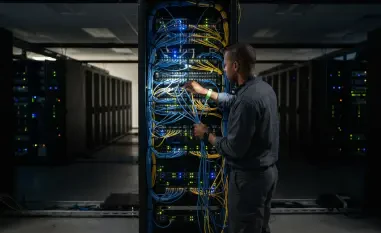
Modern enterprises now operate within a restrictive shared fate model, where business continuity is tied directly to the health of a few massive, dominant service providers. Major outages observed throughout late 2026 have provided stark evidence that stability is often an illusion. For instance, the widespread Microsoft 365 disruption that occurred in November 2026 serves as a benchmark for understanding these vulnerabilities. This event was not triggered by a malicious external cyberattack but was the result of a technical infrastructure failure that crippled essential communication tools like Outlook and Teams globally. Such incidents demonstrate that when a primary service provider stumbles, thousands of dependent organizations fall with them, regardless of their own internal security posture. This shift means that traditional cybersecurity perimeters have effectively vanished, replaced by a deep reliance on the uptime of third-party vendors who manage the world’s most critical data flows.
Ripple Effects of Localized Cloud Failures
The ripple effects of these dependencies extend far beyond simple productivity losses, often impacting the core functionality of essential global services. During the October 2026 Google Cloud outage, which was triggered by a localized power event in London, high-profile financial institutions like Revolut and HSBC found their digital operations severely hampered. These events emphasize a growing consensus among technology experts that digital transformation has created a landscape where a single point of failure in a shared environment can lead to immediate global consequences. Individual security measures, while necessary, are fundamentally insufficient if they do not explicitly account for the operational reliability of the underlying cloud infrastructure. Companies must therefore acknowledge that their resilience is no longer an isolated internal metric but is inextricably linked to the geographic and technical stability of their providers. Navigating this environment requires a move toward contingency planning.
Balancing the Double-Edged Sword of Artificial Intelligence
The Shrinking Window of Exploit Remediation
Artificial Intelligence has officially initiated a high-stakes arms race between defenders and attackers, acting as both a critical ladder for remediation and a sharp weapon for exploitation. While defensive AI assists security teams in prioritizing code fixes and identifying patterns of anomalous behavior, it simultaneously empowers bad actors to automate reconnaissance at an unprecedented scale. This dynamic has led to a shrinking window of protection, where the time elapsed between the discovery of a software flaw and its active weaponization has been reduced from days to mere hours. In this 2026 environment, attackers use machine learning to scan for vulnerabilities across vast networks with lightning speed, leaving human-led security operations struggling to keep pace with necessary patching cycles. The complexity is further compounded by the reality that as security tools become smarter, they also become more opaque, making it difficult for administrators to verify decisions.
Managing the Proliferation of Shadow AI
Beyond organized external threats, the rise of Shadow AI and autonomous agents introduces internal layers of complexity that traditional governance frameworks are currently ill-equipped to manage. Throughout 2026, employees across various departments have increasingly implemented unauthorized AI tools to streamline workflows, unintentionally creating new vulnerabilities through unmanaged machine identities and insecure API connections. These autonomous agents often operate with elevated privileges, bypassing standard security protocols and expanding the organization’s attack surface in ways that are difficult to detect via traditional monitoring. The challenge for modern leadership is to establish a governance model that encourages innovation while maintaining strict oversight of how these tools interact with sensitive corporate data. Without a centralized strategy for managing machine-to-machine communications, the risks associated with autonomous systems will continue to outpace the defensive capabilities of the enterprise.
Transforming Leadership Through Strategic Resilience Frameworks
Redefining the CISO as a Resilience Architect
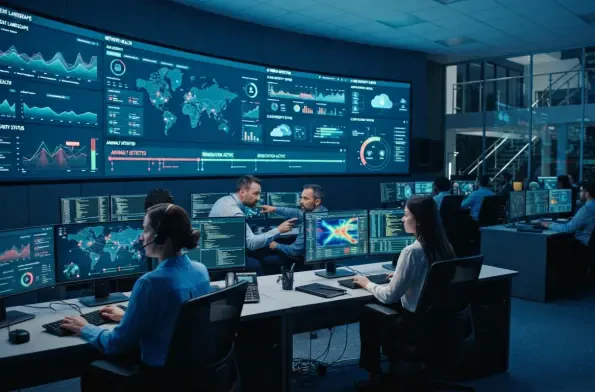
Bridging the resilience paradox requires a fundamental redefinition of the Chief Information Security Officer role, moving away from being a technical gatekeeper to becoming a strategic resilience architect. In the current corporate climate, leadership must transcend the habit of monitoring isolated alerts and instead focus on a deep understanding of business dependencies. This evolution demands that boards of directors engage with security through the lens of operational survivability rather than just compliance. Critical questions must be addressed, such as how quickly the organization can remediate vulnerabilities accelerated by AI and whether the business can maintain core functions if a major productivity provider suffers a total failure. Strategic readiness is now measured by the ability to pivot and recover, rather than the ability to maintain a perfect, impenetrable defense. By treating cybersecurity as a core business risk, organizations ensure that investment is directed toward initiatives that actually reduce downtime.
Achieving Stability Through Intentional System Simplicity
The journey toward bridging the cybersecurity paradox ultimately demanded a move beyond the pursuit of perfect protection toward the mastery of rapid recovery. Leaders who successfully navigated the challenges of 2026 prioritized the simplification of their digital environments and recognized that total provider independence was a necessary safeguard. These organizations implemented rigorous stress testing that simulated concurrent supplier failures and security breaches, ensuring that personnel knew exactly how to maintain operations manually if required. They focused on building an antifragile infrastructure that grew stronger by learning from every minor outage and near-miss event. By shifting the focus from preventing hits to surviving them, the most resilient enterprises decoupled their business success from the inevitable fluctuations of the broader digital landscape. Actionable steps involved auditing all third-party dependencies and establishing clear boundaries for autonomous AI agents. This ensured stability.