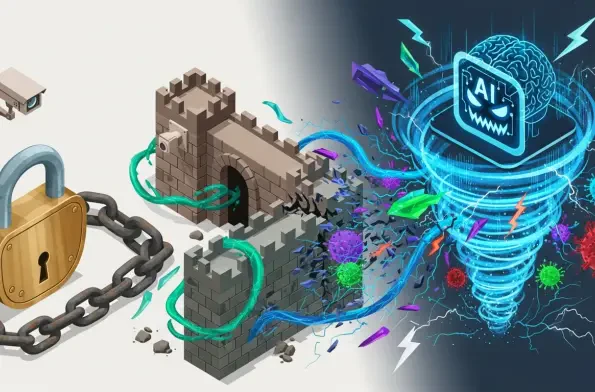
The rapid proliferation of autonomous systems has pushed the global cybersecurity landscape into a state of permanent volatility where human intervention is no longer the primary factor in a successful breach. Organizations are witnessing a fundamental shift in how adversaries operate, moving from manual, labor-intensive hacking to sophisticated, machine-led campaigns that execute in milliseconds. While defensive teams used to have days or even weeks to identify and patch a critical vulnerability, the window of opportunity has shrunk to mere minutes as advanced artificial intelligence models scan for weaknesses with unrelenting persistence. This digital arms race has created a massive discrepancy between the velocity of incoming attacks and the bureaucratic reality of standard enterprise defense mechanisms. The sheer volume of automated probing makes it nearly impossible for traditional security operations centers to maintain a solid perimeter without embracing the very technologies that are currently being weaponized against them. As these machine-driven threats become more accessible to low-level actors, the threshold for causing significant disruption has dropped, forcing a total reconsideration of modern risk management strategies and infrastructure resilience.
The Disparity Between Human Response and Machine Execution
A significant challenge facing modern enterprises is the dramatic compression of the attack lifecycle, which has effectively rendered traditional, schedule-based patching cycles obsolete. In the current environment, an AI-powered adversary can perform reconnaissance, identify a chain of exploitable misconfigurations, and deploy a customized payload across a global network in a fraction of the time it takes for a human analyst to verify a single alert. Most organizations still rely on weekly or monthly remediation windows, creating a dangerous “readiness gap” where systems remain exposed long after a threat has been weaponized. This mismatch in speed means that even the most diligent security teams are often fighting a losing battle against scripts that do not sleep, do not make fatigue-driven errors, and can pivot through a network with surgical precision. The reality is that waiting for a manual review before authorizing a critical update is now a luxury that the modern digital landscape simply cannot afford if it hopes to maintain any semblance of operational integrity.
Building on this foundation of speed, the complexity of modern exploits has evolved to a point where they can bypass traditional signature-based detection systems with relative ease. Machine learning models are now capable of generating polymorphic code that changes its signature every time it attempts to infect a new endpoint, effectively blinding legacy antivirus solutions that rely on known patterns of malicious behavior. This creates a scenario where the initial breach is almost invisible, allowing the attacker to establish a persistent foothold within the environment while security tools report that everything is functioning normally. By the time a human operator notices an anomaly in data egress or system performance, the automated attacker has likely already exfiltrated sensitive information or encrypted the core database. This shift from static to dynamic threats necessitates a move toward behavioral analysis and real-time observability, as the old method of looking for specific “bad” files is no longer sufficient to stop an adversary that can rewrite its own DNA on the fly.
Public Sector Vulnerabilities and the Legacy Burden
Public sector entities, including government departments, healthcare providers, and local municipalities, find themselves in a uniquely precarious position due to their reliance on sprawling and often fragmented IT environments. These organizations frequently manage a complex patchwork of legacy hardware, unsupported proprietary software, and modern cloud services, creating a massive attack surface that is difficult to monitor effectively. Because these agencies handle vast amounts of sensitive citizen data and provide critical infrastructure services, they are high-value targets for AI-driven ransomware and state-sponsored espionage. The lack of a unified view across these heterogeneous environments means that a vulnerability in a single, forgotten server at a satellite office can serve as an entry point for an automated script to compromise the entire central network. Without real-time visibility into every asset, public sector leaders are left guessing about their actual risk posture while sophisticated threats move through their systems with impunity and devastating speed.
Furthermore, the introduction of unauthorized AI tools by well-meaning employees—a phenomenon often referred to as “Shadow AI”—has created a new layer of governance risk that many public institutions are unprepared to handle. Staff members seeking to increase efficiency may use external coding assistants or generative AI platforms to process internal documents, inadvertently leaking sensitive information or introducing unvetted code into the organizational workflow. These tools often bypass existing security frameworks entirely, as they reside outside the visibility of standard IT monitoring solutions, creating hidden gaps that attackers can eventually find and exploit. For organizations that must adhere to strict data sovereignty and privacy regulations, the presence of unmanaged AI creates a liability that extends beyond simple technical failure into the realm of legal and ethical catastrophe. The challenge lies in balancing the undeniable productivity benefits of these technologies with the absolute necessity of maintaining a secure, controlled, and visible digital perimeter that protects the public interest.
Shifting Toward Continuous Exposure Management
Survival in this hostile digital climate requires a complete paradigm shift away from reactive, periodic security audits toward a model of continuous exposure management and automated remediation. Traditional security strategies often treat vulnerability management as a checklist item to be completed every few months, but this static approach fails to account for the fluid nature of modern threats. To close the window of opportunity for AI-driven attackers, organizations must implement systems that provide instantaneous visibility into asset health and the ability to deploy patches across thousands of endpoints simultaneously. This requires the deep integration of security and operations teams, breaking down the silos that have historically slowed down the response to critical threats. By automating the mundane aspects of system maintenance and vulnerability discovery, human experts can focus their energy on high-level strategic defense and incident response, while the software handles the high-velocity task of keeping the digital gates locked against automated intruders.
The path forward centers on the adoption of proactive defense strategies that match the speed and scale of modern adversaries by leveraging automation as a core defensive pillar. Rather than waiting for a breach to occur, organizations must utilize predictive modeling and automated red-teaming to identify and close gaps before they can be exploited by external actors. This transition involves moving away from the “castle and moat” mentality and toward a zero-trust architecture where every connection is continuously verified and every asset is monitored in real time. Investing in platforms that can remediate vulnerabilities at machine speed is no longer an optional upgrade but a fundamental requirement for business continuity and national security. The focus had shifted from merely preventing a breach to ensuring that when an attempt is made, the system can automatically adapt, isolate the threat, and heal itself without requiring a manual intervention that would arrive too late to make a difference. These steps represented the only viable way to maintain a resilient defense in an age of automated warfare.