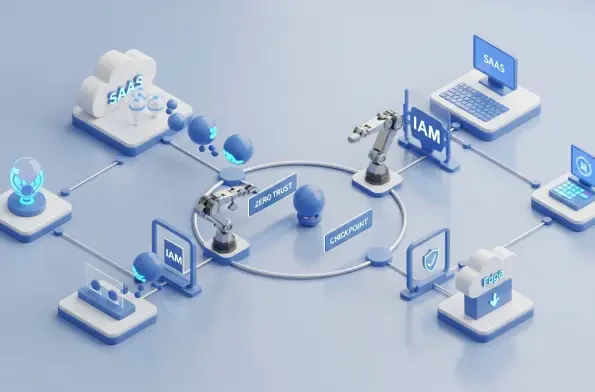
Seconds now decide outcomes as AI-enabled intrusions fan out across cloud, SaaS, and edge while defenders juggle exploding non-human identities, compressed detection windows, and demands for provable governance that still lets the business move fast.
The Rise of AI-Native Security: Scope, Stakeholders, and Strategic Significance
Agentic defense reframes security as AI-first: autonomous detection, response, and governance wired into the operational core. Controls ship as code, telemetry is continuous, and remediation loops close without waiting for a queue.
Threats speed up the clock and widen the terrain. Cloud sprawl, SaaS entanglements, and edge devices create seams where automated adversaries thrive; human-paced playbooks cannot cover the angles in time.
The ecosystem has grown dense. Enterprises, hyperscalers and incident responders, consultancies, security vendors, regulators, and standards bodies all shape design choices and accountability.
Functional segments are clarifying. Agent identity and access, autonomous detection and response, continuous control validation, vulnerability management, and policy-as-code now define the stack.
Industry forces pull in the same direction. Digital transformation and generative AI raise productivity and risk, while adversarial AI pressures the defender’s cycle time.
Rules start to steer deployment. AI risk frameworks, identity standards, sectoral mandates, and data protection regimes influence how agents are authorized, observed, and audited.
Momentum Shifts: Trends, Signals, and the Data Behind AI-Driven Defense
Cultural posture is changing from gatekeeping to enablement. Policies increasingly aim for speed with safety, not delay by default.
Alliances expand reach and discipline. Partnerships such as PwC–Google Cloud seek to scale secure AI rollout and common guardrails across industries.
From Human-Paced Playbooks to Machine-Speed Security
SOC workflows are accelerating. AI now assists triage, investigations, and containment, shrinking manual toil while preserving analyst judgment.
Shadow AI surfaces new exposure. Employees spin up agents outside oversight, birthing non-human identities that require full lifecycle governance and behavioral control.
Validation grows continuous. AI-augmented purple teaming and control testing probe gaps in near real time, closing assurance loops once run quarterly.
What the Numbers Suggest: Windows of Exposure and Investment Patterns
Time-to-compromise has crashed. Findings from frontline responders describe windows measured in seconds or minutes, not days, demanding automated counter-moves.
Adoption tilts toward agents. Enterprises report rising counts of NHIs per workload and broader automation coverage across common incident classes.
Performance lifts are material. MTTR falls as AI routes cases and executes safe actions; patch latency narrows as prioritization aligns to exploitability evidence.
Budgets follow the shift. Spend rises on AI-native controls, agent governance, and autonomous remediation, with pilots moving into production backstopped by guardrails.
Friction Points and Failure Modes: Complexity, Risk, and Practical Constraints
New risks ride along. Prompt injection, data poisoning, and misconfiguration threaten models and pipelines, while careless agent wiring can leak sensitive data.
Governance gaps widen. Unmanaged agent sprawl, weak identity binding, thin baselines, and limited auditability erode trust and stall scale.
Operations feel the strain. Legacy integrations, skill shortages, alert quality, and unclear automation efficacy slow momentum and mask value.
Mitigation patterns harden. Zero trust for agents, safety-by-design, rich telemetry, rigorous red teaming, and rollback-safe automation keep blast radius small.
Change management carries weight. Policies are rewritten to accelerate delivery with embedded guardrails, aligning security, IT, and the business.
Guardrails at Machine Speed: The Evolving Regulatory and Standards Terrain
Frameworks set the floor. AI risk management, sectoral rules, privacy laws, and emerging AI safety guidance inform architecture and control depth.
Identity standards extend to NHIs. IAM, secrets handling, attestation, and runtime verification adapt so autonomous agents can earn—and keep—least privilege.
Compliance shifts left and runs continuous. Policy-as-code, immutable audit trails, and explainability requirements move from aspiration to design inputs.
Expect new obligations. Provenance for models and data, supply chain security, and incident reporting for AI systems push for deeper traceability.
Building the Edge: Where Agentic Defense Goes Next
Technology arcs toward autonomy. Closed-loop remediation, agent swarms for detection and response, and integrated purple/blue automation tighten defenses.
Markets consolidate. AI-native security platforms absorb point tools, while DevSecOps converges with agent governance to reduce seams.
Users expect defaults that deliver. Routine incidents resolve automatically, guardrails stay transparent, and risk reduction is measured, fast, and repeatable.
Growth concentrates in governance. Agent identity controls, real-time policy orchestration, validation-as-a-service, and secure AI enablement consulting expand.
External forces nudge cadence. Macroeconomics, tighter regulation, and cross-industry intel sharing set the tempo for adoption and scale.
Speed with Discipline: Strategic Takeaways and Actionable Next Steps
The core finding held that manual security had become obsolete at attacker speed, making AI-native operations mandatory for parity and advantage.
Immediate moves were clear: inventory and govern NHIs, implement policy-as-code, and deploy AI-assisted detection, investigation, and remediation with safety checks.
Operating models blended automation with human oversight, tracked MTTD, MTTR, and patch latency, and iterated controls through continuous validation.
Partnerships provided leverage through shared governance patterns, threat intelligence, and repeatable deployment blueprints.
Investment favored platforms unifying agent governance, telemetry, and autonomous response to lock in a durable defender edge.