Emerging Threats

Recent security data indicates that peak bandwidth for cyber assaults has reached a staggering two point three terabits per second, marking an eighty-five percent increase over previous records. While the total number of incidents has paradoxically begun to decline, the force and tactical

The rapid evolution of high-capacity reasoning models has reached a critical juncture where the line between productive automation and automated warfare is becoming increasingly blurred for modern enterprises. As the industry moves toward autonomous agentic capabilities, the focus is shifting from

The fallout from the Rhysida group’s breach of Berlin’s digital infrastructure signals a definitive end to the age where simple data encryption was the primary goal of cybercriminals. In this new landscape, the locking of files has become a secondary concern compared to the strategic weaponization o

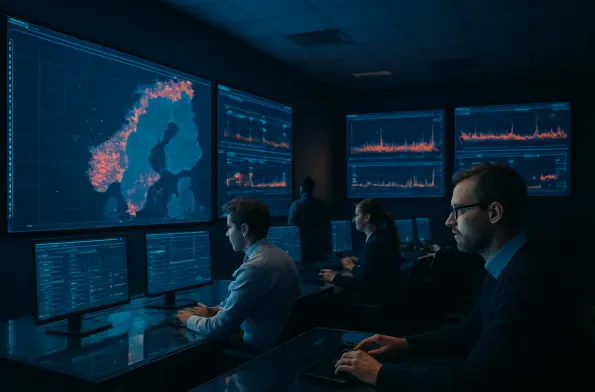
A silent digital blockade recently descended upon Norway, leaving millions of citizens unable to access essential government portals or verify their identities for critical daily transactions. On August 25, the nation experienced a jarring halt as ID-porten and the Altinn portal flickered and
The Dawn of the Quantum-Secure Era The digital landscape stands on the precipice of a cryptographic shift so profound that it renders decades of standard security protocols entirely obsolete within the next several years. This looming "Quantum Apocalypse" is no longer a theoretical script

The recent identification of a sophisticated four-day offensive launched against Taiwanese infrastructure marks the first documented instance of a cyberattack executed entirely by autonomous software entities. This operation signals a fundamental paradigm shift away from traditional, human-led

Read More