The long-standing conflict between the flexibility of wireless hardware and the uncompromising demand for real-time security has finally reached a definitive resolution. For years, facility managers have operated within a binary system where they could choose either the high-performance responsiveness of wired infrastructure or the cost-efficient, yet significantly delayed, nature of offline wireless locks. The introduction of Allegion’s RealSync technology within the Schlage XE360 Series serves as a market catalyst, bridging this gap by enabling persistent, real-time communication over standard Wi-Fi networks. This innovation removes the traditional “wake-up” cycles that once hindered wireless security, providing instantaneous remote control and monitoring. This analysis explores how the technology is reshaping the commercial security landscape by offering a sophisticated blend of hardware modularity and cloud-based connectivity.
The Evolution: Overcoming the Connectivity Barrier
To grasp the market impact of RealSync, one must examine the historical constraints that limited wireless locking systems for decades. Traditionally, Wi-Fi-enabled locks were forced to prioritize battery longevity over constant connectivity, resulting in a “heartbeat” model where devices only checked in every 12 to 24 hours. While this preserved power, it created a dangerous security lag where a lost keycard could not be revoked instantly, and emergency lockdowns were impossible to implement remotely. These background factors meant that high-security zones remained tethered to expensive, labor-intensive hard-wired installations.
The current transition in the commercial sector signifies a departure from these limitations. Industry patterns show that property owners are no longer willing to accept delayed responses as a trade-off for wireless convenience. This shift is driven by a growing expectation for “always-on” functionality in every aspect of building management. RealSync addresses this foundational flaw by proving that persistent connectivity is achievable without the excessive infrastructure traditionally required for wired systems, marking a new era where wireless hardware matches the performance metrics of its wired predecessors.
Redefining Security: The Impact of Persistent Communication
The Breakthrough: Achieving Always-On Wi-Fi
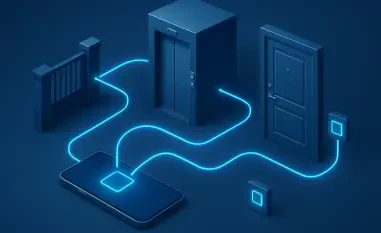
The core innovation of RealSync lies in its sophisticated cloud-to-cloud communication protocol, which maintains a persistent link between the lock and the management software. Unlike previous generations that required proprietary gateways or specialized hubs to bridge the gap between the door and the network, RealSync utilizes a building’s existing Wi-Fi infrastructure. This allows for instantaneous remote commands—such as locking or unlocking a door from a smartphone—and immediate credential updates. By removing the latency inherent in “wake-up” schedules, RealSync provides the level of oversight typically reserved for wired systems. However, the challenge of this approach has always been power consumption. Allegion has overcome this by optimizing how the hardware handles data, ensuring the lock remains responsive without draining its power source in a matter of weeks.
Future-Proofing: The Versatility of the FleX Module
A critical aspect of the XE360 Series’ depth is its commitment to modularity through the FleX Module. This interchangeable hardware core serves as the communication engine of the lock, allowing for seamless technology transitions. For building owners, this modularity solves a common industry headache: technology obsolescence. If a facility initially installed offline versions of the hardware, they do not need to replace the entire lock housing to upgrade to real-time capabilities. By simply swapping the module, administrators can transition from offline to RealSync-enabled functionality. This approach protects initial capital investments and aligns with modern sustainability goals by significantly reducing electronic waste as security requirements evolve over time.
Operational Sustainability: Efficiency Beyond the Door
Beyond immediate security benefits, the system addresses the “hidden costs” of wireless access control, specifically maintenance and battery management. Despite maintaining a constant connection, the system is engineered to achieve over one year of battery life using just four standard AA batteries. This is a significant leap in efficiency that reduces the frequency of manual battery changes across large campuses. Furthermore, the integration of over-the-air firmware updates ensures that security patches and feature enhancements are deployed remotely. This eliminates the need for technicians to physically visit every door, a task that is often incredibly costly and time-consuming in large-scale environments like student housing or senior living facilities.
Market Dynamics: Moving Toward Integrated Ecosystems
As the industry moves away from isolated hardware, the future of access control is being shaped by integrated, cloud-based ecosystems. RealSync is at the forefront of this trend by prioritizing compatibility with leading Physical Access Control Software providers. The collaboration with partners like Brivo signifies a shift where hardware is no longer a standalone purchase but part of a unified digital environment. We can expect future innovations to focus on deeper data analytics, where “always-on” locks provide insights into space utilization and traffic patterns in real-time. Additionally, as Wi-Fi standards continue to improve, the barrier for small-to-medium businesses to adopt enterprise-grade security will continue to drop, leading to a democratization of high-end access control.
Implementation Strategies: Maximizing Operational Value
For professionals looking to implement this technology, the transition to real-time wireless control requires a strategic approach. First, it is essential to ensure that the building’s Wi-Fi network is robust and secure, as the locks now rely on this infrastructure for their primary functionality. Second, facility managers should leverage the modular nature of the hardware to phase in upgrades, starting with high-traffic or high-security areas before expanding campus-wide. Finally, by integrating these hardware solutions with a cloud-based management platform, businesses can streamline their operations and reduce the need for physical keys. These best practices allow organizations to maximize their return on investment while significantly enhancing the safety of their tenants and assets.
Final Assessment: The New Benchmark for Commercial Access
The shift from hardware-centric to software-defined security models occurred with remarkable speed once the barrier of persistent connectivity was broken. The XE360 Series demonstrated that facility managers no longer viewed wireless locks as second-tier solutions. The industry moved toward a philosophy where every door provided real-time data, allowing for more proactive building management. Organizations that adopted these modular systems gained a distinct advantage in both cost control and tenant safety. The focus then transitioned to how this data could be used to optimize energy consumption and space utilization across entire portfolios. Looking ahead, the focus must remain on network resilience and the continuous integration of emerging Wi-Fi standards to maintain this newfound level of security.