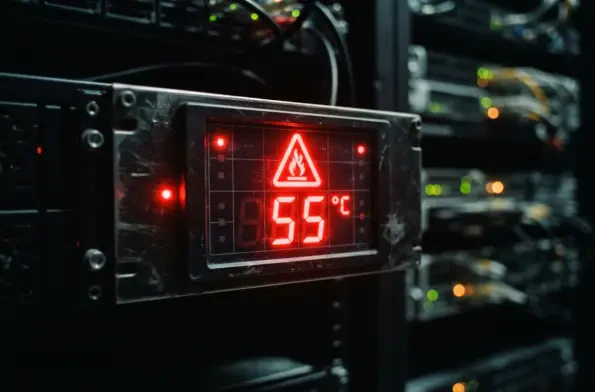
Hackers are shifting focus from data theft to physical damage by exploiting cooling controllers from brands like Danfoss and Copeland to ruin perishable goods across Europe. This alarming trend has manifested in coordinated strikes against prominent Swedish retailers like ICA and Coop, where attackers managed to manipulate industrial cooling systems during the overnight hours of early November. Instead of demanding a traditional ransom for encrypted files, these actors targeted the operational heartbeat of the food supply chain, effectively turning essential cooling units into heaters. By accessing the management interfaces of refrigeration systems, intruders pushed internal temperatures to a staggering 55 degrees Celsius. The resulting fallout was catastrophic for the affected branches, leading to the immediate loss of massive amounts of perishable inventory and forcing stores to shutter their doors to the public. These incidents represent a fundamental shift in the cyber threat landscape, moving away from intellectual property theft toward the disruption of critical physical infrastructure.
Vulnerabilities in the Modern Food Supply Chain
The Exposure of Industrial Control Systems
The recent wave of sabotage highlights a systemic weakness in how industrial control systems are integrated into modern retail environments. While corporate networks usually benefit from robust security layers, the Operational Technology governing refrigeration often operates on localized connections that lack equivalent protection. In the case of the Swedish retailers, internal investigations revealed that the compromised stores were utilizing network configurations that bypassed the central corporate infrastructure. This isolation allowed hackers to target exposed management interfaces directly through the public internet, avoiding the sophisticated firewalls of the main headquarters. Many of these controllers, specifically older models, were designed for functionality rather than security, featuring management pages that are easily discoverable by automated scanning tools. This accessibility provides a low barrier to entry for attackers who seek to cause maximum physical disruption with minimal technical effort or advanced tools.
Tactical Sabotage: Weaponizing Defrost Cycles
Beyond simple temperature adjustments, the attackers utilized the defrost mode function as a primary weapon to ensure the rapid destruction of inventory. Under normal operating conditions, this cycle is used periodically to melt ice buildup on the cooling coils, but by remotely forcing the system to stay in this mode indefinitely, hackers effectively turned freezers into ovens. This maneuver generates sustained heat that penetrates the thermal insulation of the units, ruining everything from dairy products to frozen meats in a matter of hours. The choice of this specific mechanism demonstrates a calculated understanding of industrial hardware, as it bypasses traditional temperature alerts that might otherwise trigger a standard compressor failure warning. By weaponizing a legitimate maintenance function, the perpetrators maximized the financial damage while complicating the recovery process for on-site technicians. This level of technical manipulation signals that threat actors are no longer just exploring networks but are actively studying physical mechanics.
Securing the Future of Retail Infrastructure
Strategic Defense: Network Segmentation and Access
Protecting the integrity of the food supply chain now requires a fundamental reassessment of how environmental control systems are connected to the digital world. The most critical step involves removing management interfaces from the public web and placing them behind secure Virtual Private Networks. This ensures that only authenticated personnel can access the control settings of refrigeration units, effectively blinding the automated scanners used by cybercriminals to find easy targets. Retailers must also prioritize the implementation of multi-factor authentication for any access point that governs physical hardware. Simply relying on the obscurity of a localized network is no longer a viable defense strategy in the current landscape. Security agencies like CERT-FR have emphasized that these breaches were largely preventable through basic digital hygiene, such as changing default administrative passwords and closing unnecessary ports on routers. Without these foundational layers of security, industrial controllers remain low-hanging fruit.
Future Resilience: Proactive Monitoring and Standards
The adoption of rigorous firmware update schedules and real-time monitoring emerged as the most effective defense against these specialized attacks. Retailers began to integrate anomaly detection software that flagged unusual temperature spikes or unauthorized setting changes, providing a critical buffer before spoilage occurred. Close coordination between supermarket operators and refrigeration equipment providers became standard practice to ensure security was baked into the hardware lifecycle. This shift allowed businesses to identify vulnerabilities in the defrost logic before they were exploited in the field. Ultimately, the industry moved toward a holistic security model that treated cooling units with the same level of scrutiny as financial servers. This transition proved that the convergence of digital safety and physical operations was no longer optional. By implementing these measures, organizations successfully reduced their attack surface and protected the continuity of the food supply. These proactive steps ensured that environmental control systems were no longer the weakest link.