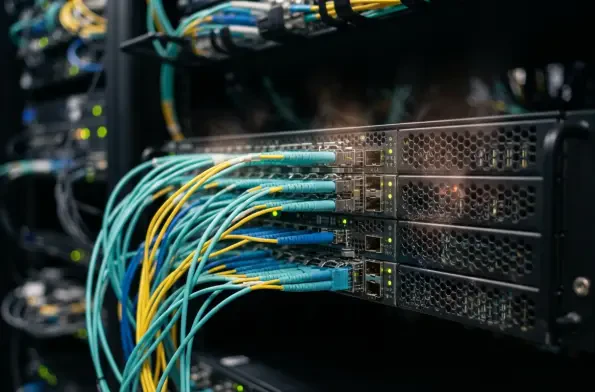
The launch of Sophos Firewall v23 introduces high-performance hardware capable of delivering up to 59 Gbps in threat protection to meet the demands of modern AI workloads. This technological leap arrives at a time when the digital landscape is undergoing a radical transformation driven by the integration of generative AI and high-speed cloud services. Organizations now face a “perfect storm” where legitimate traffic volumes are skyrocketing while malicious actors use artificial intelligence to accelerate every phase of an attack, from initial reconnaissance to rapid lateral movement. Sophos’ internal research highlights the urgency of this shift, noting that in 61% of ransomware incidents, the firewall acts as the primary early-warning system. This data underscores the necessity of a defense-in-depth strategy where the network infrastructure is inherently AI-native. Rather than serving as a passive gateway, the modern firewall must function as an active, coordinated containment point capable of stopping threats.
Scaling Performance: High-Demand Network Environments
Scaling network performance in 2026 requires more than just incremental speed increases; it necessitates a fundamental rethink of how security processing is handled. As businesses progress from 2026 to 2028, the projected volume of encrypted data is expected to triple, putting immense strain on legacy infrastructure that cannot keep up with decryption and inspection demands. When security becomes a bottleneck, IT teams are often forced to choose between protection and productivity, a compromise that is no longer viable in an era of zero-day exploits and AI-driven malware. The objective of the latest Sophos initiative was to eliminate this trade-off by providing a hardware foundation that supports massive throughput without inducing latency. By addressing the physical limitations of the network edge, enterprises can finally implement granular security controls across their entire traffic stream while maintaining the high-speed connectivity required for real-time collaboration and cloud-based AI workflows.
Engineering Throughput: Next-Generation Hardware Solutions
To prevent security infrastructure from becoming a bottleneck, the introduction of the XGS Series 1U appliances represents a critical engineering milestone for high-demand environments. These new models, specifically the XGS 2380 through the flagship XGS 5580, have been optimized to handle the heavy lifting of modern encrypted traffic through dedicated Xstream processors. The XGS 5580 provides a massive capacity for threat protection and reaches up to 16 Gbps in TLS inspection, which is nearly four times the performance of previous hardware generations. This leap in raw power ensures that even the most data-intensive AI applications can run securely without the risk of packet loss or performance degradation. Furthermore, the hardware-aware detection capabilities have reduced failover times by a factor of 13, bringing transition speeds down to 300 milliseconds. This near-instantaneous continuity is essential for maintaining operational resilience in distributed networks where every second of downtime impacts the bottom line.
Unified Intelligence: Coordinated Defense Frameworks
Beyond raw speed, the Sophos Fusion framework represents a pivotal shift toward a coordinated defense architecture that successfully breaks down traditional security silos. By integrating firewalls, endpoints, switches, and access points into a single, unified ecosystem, the system can share intelligence in real time to execute synchronized responses across all control points. For instance, if an endpoint identifies a potential compromise or a suspicious process, the firewall can instantly receive an alert and isolate the affected device from the rest of the network. This automated containment effectively neutralizes lateral movement, preventing an attacker from traversing the corporate infrastructure to reach sensitive databases or backup servers. This level of synchronization moves security management away from the manual task of updating individual rules and toward a holistic policy-driven approach. Consequently, organizations can achieve a higher level of “active” security that adapts to the behavior of users and devices.
Intelligent Management: Active Detection Strategies
Intelligent management is the second pillar of the Sophos strategy, focusing on how administrators interact with increasingly complex network configurations. In the current cybersecurity environment, the volume of logs and the intricacy of firewall rules often exceed the capacity of human operators to manage effectively without assistance. The push toward AI-native security is not just about detecting threats but also about augmenting the capabilities of the IT professionals tasked with defending the perimeter. By streamlining the administrative experience, organizations can reduce the risk of misconfigurations, which remain one of the leading causes of data breaches. The focus has shifted toward creating a “Secure by Design” environment where the system provides proactive insights rather than just reactive alerts. This evolution allows small to mid-sized IT teams to manage enterprise-level security with a degree of precision that was previously only available to organizations with massive, dedicated security operation centers.
Innovations in Firewall v23: AI-Assisted Administration
The release of Sophos Firewall v23 introduces several innovative features that leverage artificial intelligence to simplify these complex administrative tasks for the modern team. A new AI Assistant has been integrated to help IT personnel navigate configuration challenges and draft security rules for review, which significantly reduces the likelihood of human error in high-stakes environments. Furthermore, the Sophos AI Defense feature provides critical visibility into the rise of shadow AI usage within the corporate network. Administrators can now easily identify which generative AI tools are being accessed by employees, allowing them to sanction trusted platforms while blocking unauthorized or high-risk services that might lead to sensitive data leaks. This granular control is vital for maintaining compliance with evolving data sovereignty laws and internal privacy policies. By automating the identification of unapproved applications, the firewall serves as a proactive filter that safeguards intellectual property.
Strengthening Visibility: Active Inline NDR Capabilities
To bolster visibility across the entire network fabric, the introduction of a standalone Network Detection and Response (NDR) offering represents a move toward active packet intervention. The NDR 5500 hardware functions in an “Active Inline” role, meaning it can proactively drop malicious packets in real time rather than simply alerting administrators after an event has occurred. By combining behavioral detection with deep packet inspection and intrusion prevention, this system provided a comprehensive safety net for traffic that might otherwise bypass traditional firewall rules. To ensure long-term resilience, organizations adopted the Xstream Plus licensing model to unify threat protection and workspace security into a single, streamlined package. This approach implemented synchronized web policies that ensured security rules were applied consistently across firewalls and user browsers, regardless of location. These steps successfully transformed the network into a resilient hub that anticipated future threats while maintaining the agility needed for continued technological growth.