The digital correspondence that defines modern life has become a vast, uncurated data set for massive corporations and sophisticated artificial intelligence algorithms to scrape at will. This realization has prompted a mass migration toward specialized communication platforms that prioritize the individual over the advertiser. For decades, the standard for email was convenience, facilitated by providers who offered “free” services in exchange for access to user data. However, the paradigm shifted as users recognized that “free” often meant they were the product. The evolution of encrypted email represents a technical rebellion against this model, moving from niche tools for activists to mainstream solutions for any professional concerned about data sovereignty.
These services represent a significant advancement in the cybersecurity and digital privacy sectors. By fundamentally altering how data is handled at the server level, these providers offer a level of protection that legacy systems cannot match. This review explores the evolution of the technology, its key features, and the impact it has on various applications. The objective is to provide a thorough understanding of current capabilities and the potential for long-term development in an increasingly transparent world.
The Evolution and Principles of Email Privacy
The history of electronic mail was built on the Simple Mail Transfer Protocol, a system never intended for high-level security. In the early days of the internet, messages were essentially digital postcards, readable by any server through which they passed. As the internet matured, Transport Layer Security became the industry standard, encrypting messages while they traveled between points. While this prevented external hackers from intercepting data in transit, it did nothing to protect the data once it landed on the provider’s server. Major companies continued to hold the keys to these “digital vaults,” allowing them to scan content for advertising or comply with broad government surveillance requests.
The emergence of modern encrypted email providers was a direct response to this centralized control. Instead of relying on a “trusted” middleman, these services utilize cryptographic protocols that ensure data is scrambled before it ever leaves the sender’s device. This shift reflects a broader technological trend toward decentralization and individual empowerment. By moving the encryption process to the “edge” of the network, users have regained control over their digital footprint, making privacy a default setting rather than an optional configuration.
Core Mechanisms of Secure Communication
Zero-Knowledge Architecture and End-to-End Encryption
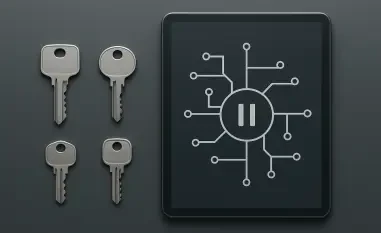
At the heart of any truly private email service lies the principle of zero-knowledge architecture. This technical framework ensures that the service provider has zero technical means to access the user’s unencrypted data. When a user creates an account, their password is used to generate a unique set of cryptographic keys locally on their device. The private key remains exclusively in the user’s possession, while the public key is shared to facilitate incoming mail. Consequently, even if a provider is served with a legal warrant or suffers a catastrophic data breach, the stored emails remain nothing more than unintelligible strings of characters.
The performance of end-to-end encryption has improved drastically as processing power on mobile and desktop devices has surged. Previously, the overhead required to encrypt and decrypt large volumes of data caused noticeable lag. Modern implementations have optimized these cryptographic libraries, making the experience nearly indistinguishable from using standard, unencrypted services. This seamless integration is critical for widespread adoption, as most users will not sacrifice efficiency for security. The significance of this mechanism lies in its ability to render the server—the most vulnerable point in the communication chain—entirely irrelevant to the security of the message content.
Jurisdictional Protections and Legal Frameworks
Beyond the mathematical shields of encryption, the physical location of a provider’s servers plays a pivotal role in the security ecosystem. Companies operating within the United States or certain European Union countries are often subject to “gag orders” or data-sharing mandates that can undermine user trust. In contrast, providers based in neutral jurisdictions like Switzerland or Germany benefit from some of the most robust privacy laws in the world. These legal frameworks often require a high burden of proof for any data request, and even then, the zero-knowledge nature of the service limits what can be handed over to basic metadata.
These jurisdictional protections offer a secondary layer of defense that is particularly valuable for international business and investigative journalism. For example, Swiss law does not recognize many foreign discovery requests, meaning a domestic court order is required before any information is disclosed. This legal friction acts as a deterrent against frivolous “fishing expeditions” by state actors. Real-world usage shows that users are increasingly selecting services based on the flag flying over the data center, recognizing that technical security is only as strong as the legal environment in which it operates.
Current Trends in the Privacy Ecosystem
The privacy landscape is currently being reshaped by the aggressive integration of artificial intelligence into mainstream productivity tools. As major providers begin to use email content to train large language models, a growing segment of the market is seeking “AI-free” zones. This shift in consumer behavior is driving innovation in the encrypted sector, as providers are now marketing themselves not just as “secure,” but as “sovereign.” The demand for environments where data is not commoditized has led to a surge in development for integrated privacy suites that mirror the functionality of global tech giants without the invasive monitoring.
Another significant trend is the push toward “post-quantum” cryptography. With the potential for future computers to break current encryption standards, forward-thinking providers are already implementing algorithms designed to withstand quantum attacks. This proactive approach acknowledges that data stolen today could be decrypted years from now if the encryption is not future-proofed. Moreover, there is an emerging emphasis on “hardware-backed” security, where encryption keys are stored on physical tokens or specialized chips within smartphones, further insulating sensitive communications from software-level vulnerabilities.
Real-World Applications and Provider Implementations
Comprehensive Privacy Suites for Consumer Use
The transition from a single secure mailbox to a comprehensive privacy suite is best exemplified by providers like Proton Mail. For the modern consumer, email does not exist in a vacuum; it is tied to calendars, cloud storage, and identity management. By offering an integrated ecosystem where every component is end-to-end encrypted, these services provide a viable alternative to the Google or Microsoft landscapes. This “privacy suite” model is particularly effective for small businesses and independent professionals who require professional-grade tools but cannot risk the data exposure inherent in traditional cloud platforms.
The implementation of these suites involves complex synchronization challenges, especially when managing encrypted files across multiple devices. However, the successful deployment of encrypted calendars and drive storage has proven that data sovereignty does not require a regression to primitive tools. These applications are now being utilized in sectors ranging from healthcare, where patient confidentiality is paramount, to the legal industry, where attorney-client privilege must be protected against digital intrusion. The result is a more resilient digital infrastructure that treats privacy as a foundational requirement.
Streamlined Communication for Non-Technical Users
One of the greatest hurdles for encrypted communication has historically been the “complexity gap.” Earlier iterations required users to manually manage PGP keys, a process that was often too cumbersome for the average person. Modern providers like Tuta have addressed this by automating the encryption process entirely. When sending an email to someone who does not use an encrypted service, these platforms often generate a secure, password-protected link. This allows the recipient to view the message in a secure browser environment without needing to install specialized software or understand the underlying cryptography.
This streamlined approach has opened the door for non-technical users to engage in secure communication without a steep learning curve. It is a notable implementation because it solves the “weakest link” problem in email—the person on the other end of the thread. By prioritizing user experience, these companies have moved encrypted email out of the basement of cryptography enthusiasts and into the hands of families, activists, and casual users. This democratization of security is essential for creating a baseline of privacy across the broader internet.
Technical Obstacles and Market Challenges
Despite the advancements, encrypted email faces persistent technical hurdles, most notably regarding metadata. While the body of an email and its attachments can be encrypted, the “metadata”—which includes the sender, the recipient, and the time the message was sent—is often visible to facilitate routing across the internet. This information can still be used to build a profile of a user’s associations and habits. Efforts to obfuscate metadata are ongoing, but they often involve trade-offs in speed and reliability that many users find unacceptable in a high-stakes professional environment.
Market obstacles also persist in the form of “interoperability” issues. Because different providers use different encryption standards or proprietary protocols, sending a truly end-to-end encrypted message between two different secure providers can still be complex. Furthermore, regulatory pressure remains a constant threat, as some governments continue to push for “backdoors” in encryption to assist in law enforcement. These challenges require a constant balancing act between technical purity and market viability, ensuring that the service remains both usable and legally defensible in a global marketplace.
Future Trajectory of Secure Messaging
The path forward for secure messaging is likely defined by the total disappearance of the “encryption” label as a standalone feature. As privacy becomes a baseline expectation, encryption will likely become an invisible, standardized background process for all digital interactions. We are moving toward a period where decentralized identity protocols will replace traditional email addresses, allowing users to communicate through unique, cryptographically verified identifiers that are not tied to a central server. This would further reduce the reliance on specific providers and enhance the resilience of the network.
Long-term impact will also be felt in the realm of corporate accountability. As more individuals and businesses move their data to zero-knowledge environments, the massive data troves currently held by advertising-based companies will become less relevant. This may force a pivot in the entire business model of the internet, shifting away from data harvesting toward a value-based service economy. Potential breakthroughs in biological or quantum-resistant encryption could eventually make digital communications as private as a whispered conversation in a locked room, fundamentally altering the relationship between the individual and the digital state.
Assessment of the Encrypted Email Landscape
The review of the encrypted email landscape demonstrated that the technology moved successfully from a niche security tool to a foundational pillar of digital hygiene. These services proved that the zero-knowledge model was not only technically feasible but also commercially viable for millions of users worldwide. The transition away from centralized, scan-heavy platforms toward Swiss or German-based alternatives represented a significant victory for those seeking to reclaim their data sovereignty. While challenges regarding metadata and interoperability remained, the overall trajectory indicated a clear preference for privacy-first architectures.
The adoption of these technologies was catalyzed by an era of unprecedented data breaches and the intrusive expansion of artificial intelligence. Users who implemented these secure solutions found themselves better protected against both corporate surveillance and cybercriminal activity. The industry demonstrated that the most effective path forward involved a holistic approach to privacy, integrating mail with calendars and storage to create a secure ecosystem. Ultimately, the move toward encrypted email established a new standard for the digital age, ensuring that personal communication remained a private right rather than a public commodity.