Malik Haidar has spent his career at the intersection of high-stakes corporate security and the nuanced world of business operations, bridging the gap between technical defense and strategic growth. His philosophy doesn’t just prioritize locked doors; it focuses on how security protocols can actually drive a company’s culture, reputation, and day-to-day efficiency. Today, he breaks down how even a historic retreat can modernize its core operations without losing its soul, proving that the smartest security is often the kind the guest never sees.
Our conversation explores the evolution of access control within the hospitality sector, specifically examining how manual, legacy systems are being replaced by intelligent automation. We delve into the psychological impact of accountability on staff, the practicalities of managing sprawling estates, and the enduring relevance of physical security in an increasingly digital world. Haidar provides insights into the integration of modern technology within traditional settings, highlighting how these solutions reduce human error and enhance the overall guest experience.
How do traditional hospitality environments, which often rely on manual ledgers and safes, leave themselves vulnerable compared to modern digital solutions?
In a setting like Dormy House, which originated as a 17th-century farmhouse, there is a certain romance to the old ways, but manual ledgers are a security nightmare. When you have staff signing keys in and out of a paper book, you are relying entirely on human diligence, which is notoriously prone to “ledger fatigue” and simple error. If a key is stolen or misplaced, the manager is left blind, unable to track who had it last or where it might be, creating a dangerous situation for the 39 guest rooms and everyone on-site. By moving to an intelligent cabinet, every single transaction is digitally tattooed into the system, meaning that if a key isn’t back by a specific time, a notification is fired off immediately. This effectively eliminates the frantic, time-wasting searches that plague traditional hotels and ensures that the facility remains a secure environment for everyone involved.
Dormy House prides itself on a “home-away-from-home” experience in the Cotswolds; how does integrating rigid security technology like intelligent cabinets support rather than disrupt that cozy atmosphere?
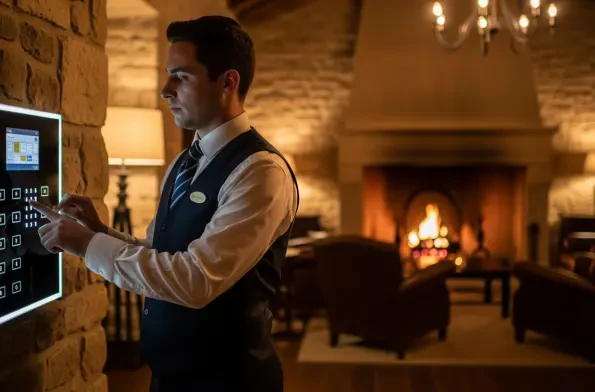
The goal of a luxury retreat is to ensure the guest feels the warmth of the fireplace and the history of the stone walls without ever seeing the “gears” of the operation turning. Security should be a silent, invisible partner; by streamlining the key management, you take the stress off the staff, allowing them to focus on the guest’s car or their spa experience rather than fumbling with a heavy safe. When the infrastructure is secure and staff members feel confident in their tools, that professionalism radiates outward, creating an environment where the guest can park their car and truly relax because the property feels orderly. It turns a potentially clunky back-of-house task into a swift, professional action that keeps the “homey” illusion intact for the guests staying in those 39 rooms. We have to remember that a secure environment is a welcoming one, and technology like this helps underscore that ideal daily.
From an operational standpoint, how does moving away from manual keys influence employee accountability and the overall onboarding process for new staff?
Transitioning to a system where employees use a personal PIN code to access specific keys radically changes the internal culture from one of “hopeful tracking” to absolute accountability. As Chris Hindle noted, the system is so intuitive that there is virtually no extensive training needed, which is a massive win for the onboarding process in an industry that needs to stay agile. When a new porter or housekeeper is assigned only the keys they need, it reduces the chance of unauthorized access and makes them feel like a trusted custodian of the property’s security. This digital trail means that if someone forgets to return a set, they know the manager will receive a notification, which naturally encourages a higher standard of care and eliminates much of the downtime spent looking for lost assets. It simplifies the workflow while making the facility more secure for everyone, which is the ultimate goal of any successful security integration.
Managing a diverse estate like Dormy House, which includes properties like The Fish and Foxhill Manor, presents unique challenges; how does a centralized key solution help navigate this complexity?
When you are dealing with a sprawling estate that includes multiple distinct properties, the risk of “key creep”—where unnecessary keys pile up and visibility is lost—is incredibly high. An intelligent cabinet allows management to consolidate their assets, maintaining only the critical sets they actually need and ensuring that even a “secure key” used only once or twice a year is visible and accounted for. For larger hotels or multi-property estates, you can even leverage additional cabinets across the campus to reduce the time staff spends walking back and forth to a central hub, which is a massive boost to operational efficiency. This transparency ensures that whether a staff member is at the main house or an auxiliary building, the management has a bird’s-eye view of every access point. As Hindle suggested, taking the risk and the potential for human error out of the equation is a priority that helps the staff accomplish their tasks more easily.
Given the rise of mobile credentials and digital phone-based access, why do physical keys and their management remain a critical priority for hotel operators?
Digital credentials are a fantastic convenience, but they are not a silver bullet; physical keys remain a tangible asset that provides a vital layer of redundancy against system failures or cyber-attacks. In a world where a server crash or a digital glitch could potentially paralyze a digital-only hotel, having a physical key managed through an intelligent cabinet ensures that the property remains operational and secure no matter what. These cabinets act as a central, hardened location that prevents keys from being lost or left in vulnerable spots, bridging the gap between old-world reliability and modern digital oversight. Physical keys represent a valuable component of hospitality operations because they can’t be compromised by the same threats that target digital systems. As Dormy House has demonstrated, the peace of mind that comes from knowing every key is traceable and accounted for is simply irreplaceable.
What is your forecast for the future of access security in the luxury boutique sector?
I predict we will see a “hybrid harmony” where high-end boutique hotels increasingly hide their sophisticated security behind a mask of traditional hospitality. We will move away from the “security guard at the door” feel and toward hyper-intelligent, invisible systems like these cabinets that use biometric or PIN-based access to ensure only the right people enter those historic 17th-century corridors. Management will move toward predictive analytics, where the system doesn’t just tell you a key is missing, but analyzes patterns of movement to optimize how staff navigate the property, potentially saving thousands of hours in labor costs over several years. Ultimately, the future belongs to those who can make their guests feel the most “at home” by having the most robust, yet invisible, digital safety net possible. By taking the risk out of it and making everything traceable, hotels will be able to offer a safer experience for guests who remain blissfully unaware of the complex operations keeping them safe.