Malik Haidar has spent decades in the trenches of multinational cybersecurity, navigating the complex intersection of high-stakes intelligence and business strategy. As the industry watches the rise of well-funded startups aiming to redefine sovereignty, Haidar provides a seasoned perspective on why AI-native, private-cloud solutions have become a necessity for the world’s most sensitive entities. This discussion explores the strategic deployment of massive capital, the architectural shift required to move away from public cloud dependence, and the nuances of building a unified data foundation that respects national and corporate sovereignty.
The conversation covers the prioritization of engineering resources to build air-gapped AI capabilities and the technical hurdles of merging network and endpoint intelligence into a single platform. It also examines the trade-offs of private cloud models and the rigorous benchmarks required to meet the security standards of government agencies.
With $290 million in total funding secured within just six months of launching, how are you prioritizing the allocation of these funds toward engineering versus product development, and what specific milestones must your team of 40 reach before the 2026 beta release?
Securing 5 million on top of our initial million seed allows us to be incredibly aggressive with our engineering roadmap while the rest of the market is tightening its belt. We are currently funneling the majority of these resources into a deep-tier build-out for the 40-person team we’ve assembled, ensuring they have the specialized hardware needed for local AI training. Before the beta release later this year, our primary milestone is the completion of an AI engine that functions with zero reliance on external public APIs or third-party cloud processing. This requires building a scalable architecture that can handle the sheer volume of telemetry from highly regulated environments without the usual safety net of public cloud scaling.
Given that the founding team includes high-level veterans from Palo Alto Networks and SentinelOne, how are these diverse perspectives shaping the architecture of an AI-native platform, and what technical challenges are you facing while building a unified foundation for security operations from scratch?
When you have veterans who basically wrote the book on firewall and endpoint security, you get a unique synthesis of network and behavioral intelligence. We aren’t just bolting AI onto an old frame; we are stripping away the legacy bloat that usually hampers real-time response in traditional environments. The biggest technical hurdle is creating a unified foundation from the ground up that actually allows disparate data streams to talk to one another in a single, cohesive view. It feels like building a high-performance engine while the car is moving, ensuring our AI-native roots can handle the heavy lifting of security operations without the latency issues that plague older, siloed platforms.
Organizations in highly regulated sectors often struggle with visibility gaps when using multiple disconnected security products. How does your platform integrate data and context across an entire infrastructure, and what specific steps does this architecture take to ensure data remains entirely on-premises?
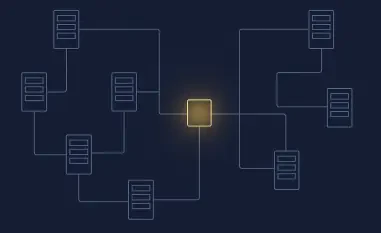
The biggest threat to a regulated entity is the blind spot created by having a dozen different dashboards that do not share context or language. Our architecture is designed to pull every scrap of telemetry—from the network edge to the core server—into a localized data lake where the AI processes it in situ. This sovereign-first approach means that sensitive data never touches a public server, which effectively eliminates the risk of accidental exposure or cross-tenant leakage. By unifying this context, we give operators a singular source of truth that identifies threats based on the totality of their environment rather than a fragmented slice of it.
For entities that cannot depend on public cloud infrastructure due to sovereignty requirements, what are the primary trade-offs when implementing a private cloud security model, and how do you ensure that these AI-powered workflows remain as performant as their cloud-based counterparts?
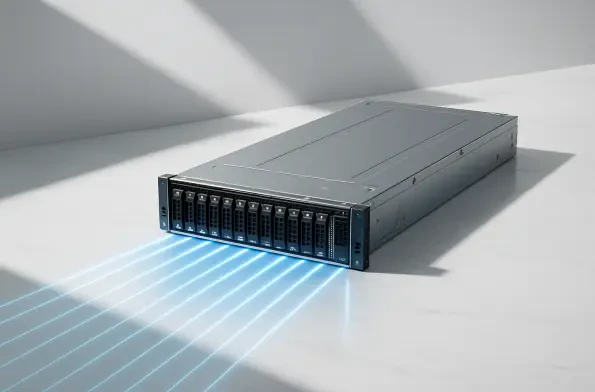
Private clouds have historically been harder to scale, but we are optimizing our models for local deployment to flip that script and prove that isolation doesn’t mean inferiority. You lose the infinite elasticity of the public cloud, but you gain absolute control and significantly reduced latency for critical, split-second security decisions. We tackle the performance gap by using high-density compute clusters and specialized software layers that mimic the efficiency of cloud workflows without any data egress. It is a tangible experience of speed; users can feel the difference when their security stack isn’t fighting for bandwidth on a shared public backbone.
With general availability not scheduled until 2027, how do you plan to maintain a competitive edge as the cybersecurity landscape evolves over the next three years, and what metrics will you use to determine if the platform is ready for government-grade deployment?
Waiting until 2027 for general availability is a calculated move because, in the world of government intelligence, precision beats speed every single time. Our competitive edge lies in the fact that we are building for the threats of tomorrow rather than trying to patch the vulnerabilities of the past decade. We measure our readiness through rigorous stress tests, including zero-trust validation and the ability of our AI to autonomously mitigate complex attacks in completely isolated environments. We will know we are ready when our internal benchmarks show a near-zero false positive rate across the most stringent regulatory compliance frameworks used globally.
Your board now includes leaders from Lightspeed Venture Partners and Picture Capital; what strategic shifts or expansion plans have emerged from their involvement, and how will your hiring strategy change as you scale toward a full market launch?
Having partners from Lightspeed and Picture Capital on our board provides a massive strategic lift, particularly in how we approach global market entry for sovereign solutions. They are pushing us to think beyond just the software and focus on the entire ecosystem, ensuring we have the support infrastructure to handle deployments in any geography. Our hiring strategy is now shifting from purely deep-tech engineering to bringing on mission-critical support and sales experts who understand the unique bureaucracy of the public sector. We are actively looking for individuals who have felt the frustration of legacy systems and are hungry to implement a platform that actually delivers on the promise of autonomous security.
What is your forecast for the future of sovereign security platforms?
I believe we are entering an era where the concept of cloud-first will be replaced by sovereignty-first for any organization handling critical national infrastructure. Over the next few years, the reliance on centralized public clouds will be seen as a major strategic vulnerability, prompting a massive migration toward localized, AI-driven security stacks. We will see a specialized market emerge where the most valuable commodity isn’t just the software, but the absolute certainty that your data remains yours and yours alone. Eventually, the ability to operate securely in total isolation will be the gold standard for every major enterprise, not just the highly regulated few.