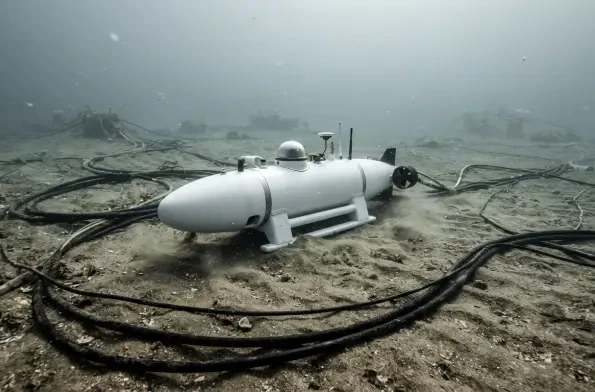
The UK’s proactive strategy involves using autonomous technology to deter aggression and prevent physical damage to critical cross-border energy transmissions. As geopolitical friction in the North Atlantic intensifies, the British government has committed £90 million to the “Atlantic Bastion” program, a strategic initiative designed to fortify the invisible lifelines that sustain modern society. This investment reflects a significant pivot in national security priorities, recognizing that the physical security of undersea assets is just as vital as the digital defense of the data they carry. By integrating unmanned maritime vehicles and artificial intelligence into the Royal Navy’s existing fleet, the program aims to create a hybrid force capable of continuous surveillance across vast, inhospitable stretches of the ocean floor. This transition marks a departure from traditional reactive patrolling toward a more dynamic, technology-led deterrent designed to protect the economic interests of the United Kingdom and its allies.
Securing the Physical Layer of Global Data
The Economic Importance: Submarine Communications Cables
Submarine communications cables represent the hidden architecture of the global economy, carrying approximately 99% of the United Kingdom’s international data traffic in 2026. These physical lines are responsible for facilitating trillions of dollars in financial transactions, supporting cloud computing infrastructures, and ensuring the smooth operation of critical industrial systems. While the tech industry has historically focused on software-based redundancy and cybersecurity to protect digital services, the physical vulnerability of these cables has become an unavoidable concern for national resilience. Recent global events have highlighted how even minor disruptions to these undersea routes can lead to cascading failures across entire sectors. Consequently, the resilience of these networks is no longer viewed as a private industry concern but as a foundational element of national sovereignty, requiring the same level of military protection as territorial waters or airspace to prevent economic paralysis.
Beyond the transmission of data, the scope of undersea infrastructure protection extends to the critical energy links that connect the United Kingdom with its neighbors. Electricity interconnectors are essential for maintaining a stable domestic power supply and are increasingly central to the nation’s transition toward renewable energy sources. These cables allow for the efficient balancing of power grids across borders, ensuring that fluctuations in wind or solar generation can be mitigated through international trade. However, their physical exposure on the seabed makes them prime targets for accidental damage or deliberate sabotage by foreign actors seeking to exploit energy vulnerabilities. By focusing on these interconnectors, the Atlantic Bastion initiative ensures that the transition to a greener economy is not undermined by physical security flaws. Protecting these energy routes is a long-term strategic necessity that supports both environmental goals and the continuous functionality of the United Kingdom’s domestic power grid.
Strategic Partnerships: Advancing Defense Innovation
At the technological core of this defense initiative is “Atlantic Net,” a sophisticated surveillance framework developed in partnership with domestic specialists like Ocean Infinity Solutions. This system consolidates advanced underwater sensing technology into a unified service, providing the Royal Navy with an unprecedented level of situational awareness across the North Atlantic. By utilizing autonomous drones and automated sensors, the Navy can maintain a persistent presence that would be prohibitively expensive or logistically impossible with manned vessels alone. This hybrid approach allows for the early detection of hostile submarine movements or suspicious activity near sensitive infrastructure, providing frontline assets like Astute-class submarines with the intelligence needed for rapid response. This partnership also serves to strengthen the British defense industrial base, supporting high-skilled jobs and ensuring that the nation remains at the forefront of maritime technological innovation.
This collaborative model between the Ministry of Defense and the private sector underscores a broader shift toward agile procurement and rapid technological integration. By backing domestic businesses, the government ensures that the specialized knowledge required to maintain these autonomous systems remains within national borders, reducing reliance on foreign technology chains. The Atlantic Net system is designed to be scalable, allowing for the addition of new sensor nodes as the threat environment evolves. Furthermore, the data gathered by these autonomous platforms is processed using artificial intelligence to filter out environmental noise, ensuring that military commanders receive only the most relevant and actionable intelligence. This modernization effort demonstrates how the integration of commercial innovation and military requirements can create a more resilient defensive posture, effectively future-proofing the United Kingdom’s maritime interests against the increasingly complex challenges of the 21st century.
Addressing Modern Threats Through Collective Defense
Geopolitical Context: Changing North Atlantic Dynamics
The North Atlantic has become an increasingly contested theater where hostile activities, including potential interference and sabotage by foreign adversaries, pose a direct threat to national lifelines. In response, the United Kingdom is integrating the Atlantic Bastion program into the broader international security architecture of NATO and the Joint Expeditionary Force. This collaborative approach reflects a growing consensus among Western allies that the security of undersea infrastructure is a collective responsibility requiring shared intelligence and coordinated defensive measures. By aligning its surveillance capabilities with international partners, the Royal Navy ensures that there are no “blind spots” in the monitoring of critical cables and pipelines. This unified front serves as a powerful deterrent against gray-zone aggression, signaling to potential adversaries that any attempt to disrupt these shared economic assets will be met with a swift and coordinated multinational response from allied naval forces.
The security landscape of the North Atlantic required a collaborative response that integrated British surveillance efforts into the broader international architectures of NATO and the Joint Expeditionary Force. This cooperative model ensured that the security of undersea cables and energy pipelines was treated as a collective responsibility, where shared intelligence and coordinated defensive measures protected mutual interests. Looking forward, the focus shifted toward establishing permanent, automated monitoring zones that use machine learning to distinguish between routine maritime traffic and high-risk anomalies. Decision-makers successfully prioritized the deployment of these smart sensors to create a self-healing defensive network that identifies potential threats before physical contact occurs. By formalizing these international data-sharing protocols and investing in scalable autonomous platforms, the United Kingdom effectively hardened its maritime borders against the sophisticated sabotage tactics of modern warfare.
Redefining Resilience: The Role of Autonomous Systems
Utilizing artificial intelligence and autonomous systems signals a profound shift in defining infrastructure resilience, moving beyond traditional software reliability to address the physical vulnerability of the global internet. Recent incidents in the tech industry have shown that even robust digital architectures depend on physical connectivity routes that can be disrupted by external forces. By deploying a network of autonomous underwater vehicles, the Royal Navy aims to create a more cost-effective and scalable way to monitor vast ocean expanses than traditional patrols could ever achieve. This proactive stance ensures that the “physical layer” of the internet remains intact against sophisticated 21st-century threats. The ability to monitor deep-sea environments in real-time allows for the rapid identification of tampering or structural issues, enabling maintenance teams to intervene before a full-scale outage occurs, thus maintaining the integrity of the nation’s digital and energy lifelines.
The adoption of these technologies was a decisive step toward a new era of maritime security where speed and precision were the primary metrics of success. Military leaders moved to integrate these autonomous feeds directly into national emergency response frameworks, ensuring that a physical break in an undersea cable triggered an immediate, automated reallocation of data traffic across alternative routes. This system-wide resilience was bolstered by the deployment of mobile repair drones that could be stationed near high-risk nodes, drastically reducing the time required to restore connectivity after an incident. By treating the seabed as a monitored environment similar to air traffic control, the government created a sustainable model for infrastructure protection that adapted to the pace of modern technological change. Ultimately, this strategic foresight provided a blueprint for other maritime nations, proving that the combination of autonomous hardware and coordinated policy could effectively neutralize the risks inherent in a hyper-connected global society.