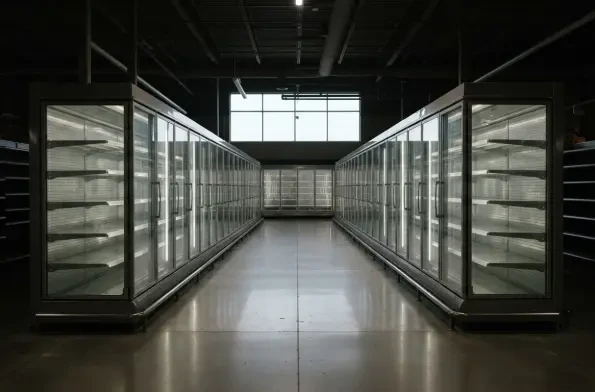
The use of industrial controllers as weapons to destroy food supplies marks a significant shift in the tactics employed by state-sponsored hacking organizations. This startling development surfaced following a massive digital intrusion on October 12, when approximately 700 supermarkets across France experienced a total failure of their refrigeration systems. Retailers like the Intermarché chain reported that hackers managed to override safety protocols and raise temperatures to 50 degrees Celsius for six hours, resulting in the immediate spoilage of massive quantities of fresh and frozen inventory. Financial losses reached tens of millions of euros, yet the economic impact was secondary to the psychological shock of such a direct hit on the national food supply. Foreign Minister Jean-Noël Barrot characterized this incident as an unprecedented act of sabotage against French interests, highlighting a dangerous evolution in how foreign adversaries target the daily lives of citizens.
Digital Forensics: Identifying the Architects of Infrastructure Sabotage
The investigation, led by the Paris prosecutor’s office and the national cybersecurity agency, known as ANSSI, successfully traced the breach to a specific entity. Technical evidence pointed directly to the Shahid Kaveh group, a specialized cyber unit within Iran’s Islamic Revolutionary Guard Corps. Analysts discovered traces of Farsi within the malicious code and identified several IP addresses tied to Iranian government hardware, making the technical attribution unusually definitive. Consequently, the French government took the rare step of summoning the Iranian ambassador to formally demand explanations while simultaneously requesting international arrest warrants for the group’s leadership. This public naming of the perpetrators indicates a strategic pivot toward aggressive transparency in diplomatic relations. By exposing the specific unit responsible, France aims to deter future operations by showing that state-sponsored actors cannot remain anonymous while dismantling foreign infrastructure.
Beyond the immediate disruption of retail sectors, investigators uncovered a much more chilling pattern of attempted interference. Shortly after the supermarket breaches, French security services managed to thwart a similar attempt to compromise the temperature integrity of national blood banks, which would have had catastrophic consequences for the healthcare system. This coordinated effort was not confined to French borders, as similar technical anomalies were reported by major retail chains in Sweden, Belgium, Luxembourg, Ireland, and Estonia during the same period. The regional nature of these strikes suggests a sophisticated, multi-pronged campaign designed to test the resilience of European supply chains. These operations utilized vulnerabilities in common industrial control systems, proving that standard cybersecurity measures often fail to protect the specialized hardware governing critical utilities. The scale of the coordination reveals a level of planning that extends far beyond simple vandalism.
Governments and private enterprises responded by prioritizing the hardening of industrial control environments against remote manipulation. Technical experts emphasized that isolating operational technology from the broader internet became a mandatory standard rather than a recommended practice. The French government successfully advocated for a new framework of digital mutual defense among EU member states, which facilitated faster intelligence sharing during active threats. Corporations across the continent invested heavily in redundant monitoring systems that used hardware-based locks to prevent unauthorized temperature shifts in climate-controlled facilities. These defensive measures were bolstered by international legal efforts to categorize infrastructure sabotage as a violation of sovereignty under global law. By treating digital attacks on food supplies as physical threats, the international community established a clearer threshold for retaliation. These actions ultimately provided a more resilient blueprint for protecting essential services.