Malik Haidar is a seasoned cybersecurity veteran who has spent years fortifying the digital perimeters of multinational corporations against sophisticated threat actors. With a deep background in intelligence and security analytics, Malik specializes in bridging the gap between complex technical defenses and practical business strategies. Today, he shares his insights on the evolving landscape of AI security and the significance of hardware-backed authentication in protecting sensitive user data. We delve into the mechanics of physical security keys, the logistical hurdles of global deployment, and why moving away from traditional software-based authentication is no longer just an option, but a necessity for high-risk users.
OpenAI is now offering a hardware-based security program for users at high risk of digital attacks. How does implementing physical keys change the security posture of an AI platform compared to software-based MFA, and what technical advantages do hardware-backed passkeys offer over SMS or app-based codes?
The shift toward physical keys represents a fundamental move from “knowledge-based” or “possession-based” software to cryptographic hardware truth. When you rely on SMS or app-based codes, you are still vulnerable to sophisticated phishing where a hacker intercepts the code via a fake login page or a SIM-swap attack. By integrating hardware-backed passkeys, we effectively eliminate the human error element because the key requires a physical “touch” or proximity to authorize the login. This provides the highest level of protection against account takeovers because the secret never leaves the hardware. In a world where AI data is increasingly sensitive, having a physical barrier that cannot be digitally replicated or intercepted remotely is a massive strategic advantage for any platform.
The new security bundle includes both a mobile-friendly NFC key and a low-profile nano key for laptops. Why is it necessary to provide two distinct form factors for comprehensive protection, and what are the practical trade-offs users face when switching between “tap-to-authenticate” and “always-plugged-in” hardware?
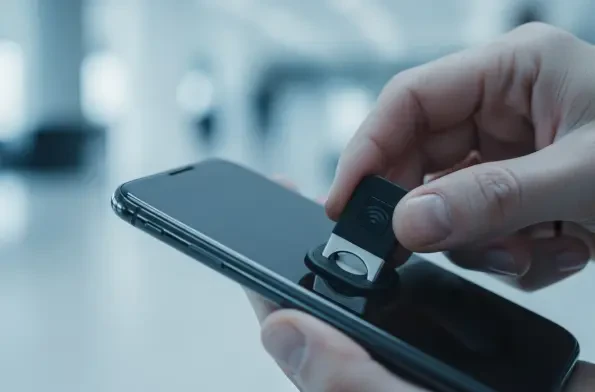
Comprehensive protection must account for the reality of modern workflows, which involve a constant flux between mobile devices and desktop workstations. The YubiKey C NFC is designed for the “on-the-go” professional, allowing a quick tap against a smartphone to authenticate, which feels modern and seamless but requires the user to carry it on a keychain. Conversely, the YubiKey C Nano is a “set it and forget it” solution that stays in the laptop’s USB port, minimizing the risk of losing the device but potentially taking up a valuable port permanently. Offering both in a two-pack set ensures that a user is never locked out or forced to revert to a weaker security method just because they switched devices. This dual-pronged approach acknowledges that security is only effective if it is convenient enough to be used every single day.
When a major technology organization transitions from using security keys internally for employees to offering them to the general public, what logistical challenges arise? How do you ensure a low-friction user experience while maintaining phishing resistance for a global user base with varying levels of technical expertise?
Transitioning from an internal mandate to a public offering is a massive undertaking because you lose the ability to provide hands-on IT support to every user. The primary challenge is ensuring “low-friction” enrollment, where a non-technical user can pair their key without feeling overwhelmed by cryptographic jargon. To maintain a high success rate, the onboarding process must be intuitive, guiding the user through the physical tap or plug-in actions as if they were second nature. OpenAI and Yubico are focusing on making secure login simple by using modern authentication features that work out of the box. By mirroring the same phishing-resistant standards used by OpenAI’s own employees, the program aims to democratize elite-level security for the broader AI ecosystem.
Unauthorized access to sensitive data in AI accounts is a growing concern for the broader technology ecosystem. What are the specific steps a company should take to integrate hardware-backed authentication into its infrastructure, and how does this shift impact the overall success rate of targeted phishing campaigns?
To successfully integrate this technology, a company must first audit its current authentication flow and identify the “weakest links” where SMS or password-only logins are still permitted. The next step is deploying a “phishing-resistant” standard, like FIDO2, which allows the infrastructure to communicate directly with hardware keys. When this is implemented correctly, the success rate of targeted phishing campaigns drops toward zero because even if a user is tricked into giving away their password, the attacker cannot bypass the physical key requirement. We have seen this internally at major tech firms where account takeovers practically vanish once hardware keys become the mandatory standard. It transforms the security culture from one of constant vigilance against links to one of structural confidence in the hardware itself.
What is your forecast for the adoption of hardware-backed security in the AI industry?
I believe we are at a tipping point where hardware keys will soon become the “gold standard” for anyone handling proprietary or sensitive AI models. As AI becomes more integrated into our daily lives, the value of the data stored within these accounts—be it intellectual property or personal history—will make them the primary targets for global threat actors. We will likely see a shift where “Advanced Account Security” programs like this one become the default for enterprise users and high-profile individuals. Eventually, the industry will move away from passwords entirely, favoring the “tap-to-authenticate” model as the only way to ensure the integrity of the AI frontier. Security will no longer be an afterthought but a foundational layer of the user experience.