The relentless pace of modern software deployment has rendered traditional security protocols nearly obsolete, forcing a pivot toward autonomous systems that can think like seasoned researchers. Anthropic’s launch of the Claude Security beta signals a departure from rigid methods, introducing an AI-driven approach that interprets software with human-like nuance. By leveraging the specialized Claude Opus 4.7 model, the system moves beyond basic pattern recognition to reason through the complex logic of entire code modules.
Beyond Pattern Matching: A New Era of Reasoning-Based Defense
Modern software architectures have become too intricate for legacy static scanners to navigate effectively. These traditional tools often rely on rigid signatures that fail to grasp the underlying intent of a developer, leading to missed vulnerabilities and a false sense of security. The introduction of Claude Security addresses this gap by utilizing advanced reasoning to uncover deep-seated flaws that historically remained hidden within the code.
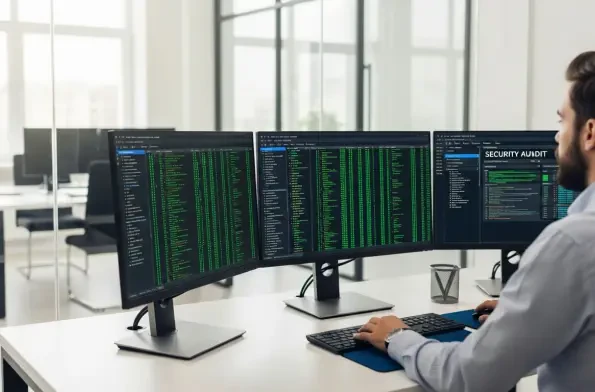
This new defensive paradigm allows the model to simulate the investigative process of a professional security auditor. Rather than simply scanning for known “bad” strings, the system analyzes the functional flow of data and the logical connections between disparate components. This sophisticated level of comprehension ensures that even the most subtle structural weaknesses are identified before they can be exploited in a live environment.
The Growing Necessity of AI-Native Security in Modern Enterprises
The digital threat landscape reached a critical juncture where manual code review and basic automation can no longer keep pace with the massive volume of software being deployed daily. This transition to AI-native defense is driven by the emergence of “frontier” models, such as Anthropic’s experimental Project Glasswing and Claude Mythos. These systems have already demonstrated a terrifyingly efficient ability to identify zero-day flaws that escaped human notice for years.
As organizations face increasingly sophisticated attacks, the shift from optional security layers to integrated, intelligent defense systems has become a core requirement. Maintaining software integrity and public trust now depends on the ability to detect threats at machine speed. Consequently, enterprises are moving away from reactive patches toward a proactive stance where AI monitors and secures the development pipeline from the inside out.
Architectural Innovations and Enterprise-Grade Features
The Claude Security platform distinguishes itself through a multi-stage validation pipeline designed specifically to combat the “alert fatigue” caused by excessive false positives. Unlike basic automation tools, this system analyzes component interactions across broad directories to provide security teams with context-aware insights. Each finding includes a comprehensive severity assessment, detailed reproduction steps, and targeted instructions for rapid patching.
Engineered for high-stakes corporate environments, the tool offers robust management features that simplify compliance and oversight. Organizations can schedule recurring scans to ensure continuous protection as their codebases evolve over time. Furthermore, the ability to export audit-ready findings in CSV or Markdown formats allows for seamless reporting to stakeholders and regulatory bodies, ensuring transparency across the entire security lifecycle.
Comparative Trends and Industry Validation
The release of Claude Security coincides with a broader industry surge toward defensive AI, recently underscored by the launch of OpenAI’s GPT-5.4-Cyber. To ensure these capabilities translate into tangible protection, Anthropic secured strategic partnerships with cybersecurity giants such as CrowdStrike and Palo Alto Networks. These collaborations embed Claude’s reasoning directly into existing security ecosystems, providing a unified front against global cyber threats.
Industry validation for these tools has grown as recent research highlighted the superior accuracy of AI-driven vulnerability detection. Tech leaders reached a consensus that the future of cyber defense lies in models that can anticipate and remediate threats autonomously rather than relying on manual intervention. This unified approach signals a fundamental change in how the technology sector views the relationship between artificial intelligence and network resilience.
Implementing Claude Security: Strategies for Initial Adoption
The beta is currently accessible to Claude Enterprise users, with a structured rollout to the Team and Max tiers expected in the coming months. To maximize the effectiveness of the tool, security teams prioritized critical directories and utilized webhooks to link Claude Security with communication hubs like Slack and Jira. These early strategies focused on creating a closed loop between threat detection and engineering response to minimize the window of exposure.
Organizations successfully integrated these capabilities by establishing a framework for automated remediation, which allowed security personnel to transition from reactive firefighting to high-level strategic oversight. The actionable intelligence provided by the system enabled developers to close security gaps with unprecedented speed and accuracy. By adopting these AI-native protocols, enterprises secured their digital assets against an increasingly complex array of vulnerabilities.