In this conversation, Malik Haidar brings the hard-earned instincts of a cybersecurity veteran who has spent years hunting threats across multinational environments. He blends analytics, intelligence, and business pragmatism to confront a fast-shifting reality: AI is now both a power tool and a potential attack surface. Drawing on incident response, operational rollouts, and boardroom reporting, he unpacks how to secure AI’s “recipe”—code, dependencies, data, training, and packaging—rather than just trusting the “end product.” From SLSA-inspired controls to Zero Trust intake, signed artifacts, and continuous canaries, he shows how layered defenses can transform AI supply chains from fragile to resilient.
AI-related breaches reportedly hit 13% of organizations, with 97% lacking proper AI access controls. How do you diagnose the root causes behind those gaps, and what step-by-step controls, metrics, and board-level reporting would you put in place within the first 90 days?
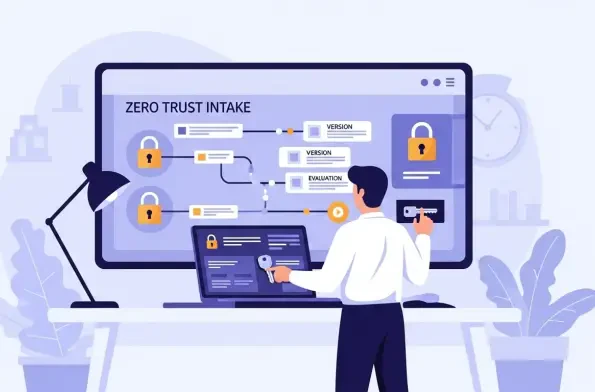
I start by mapping where access decisions are actually made, not where policy documents claim they’re made. In most shops, the root cause is a tangle of ad hoc model pulls, shared credentials, and shadow registries—exactly the conditions that let 13% report breaches while 97% lack real access controls. In the first 90 days, I stand up a Zero Trust intake: pin model versions, verify signatures, and block anything unsigned by default, while turning on tamper-evident logs for data pulls and training runs. I report to the board using language that connects controls to risk reduction—showing which choke points now require signatures, which high-risk sources are quarantined, and where the “Swiss cheese” layers no longer align into a straight shot for attackers.
With breach costs averaging .22 million in the U.S., how do you quantify AI-specific risk in dollars, prioritize investments across people, process, and tooling, and measure ROI using concrete KPIs?
I quantify exposure by tracing which AI workflows could plausibly exfiltrate or corrupt the data that would drive a $10.22 million impact—customer records, decision models, or crown-jewel analytics. Then I separate spend into three tracks: people to run playbooks and red team models, process to enforce gates and attestations, and tooling to sign, verify, and continuously monitor. The ROI story gets real when we demonstrate that risky sources are blocked at intake, provenance is verified before promotion, and any drift is caught with digest checks on reload. The board doesn’t need a mystical AI metric—they need to see that controls move us off the path that led to the 13% and toward disciplined prevention that dampens the tail risk behind that $10.22 million average.
Teams often pull models from mixed sources—closed and open. How do you operationalize Zero Trust for model intake, pin versions, verify signatures, and handle exceptions without slowing delivery? Please share playbook details and example SLAs.
My intake playbook treats every model as suspect until it proves its identity and provenance. We only permit pinned digests, require signatures from authorized signers, and keep a short allow list of trusted registries; anything outside that path is routed into an isolated evaluation environment. When exceptions arise—say a promising but unsigned artifact—the workflow moves to a quarantine lane: targeted tests, canary prompts, and explicit risk acceptance before any promotion. Delivery speed holds because engineers don’t negotiate policy one-off; the pipeline either recognizes the signature and pins the version, or it shunts to the quarantine lane where tests and sign-offs are automatic and repeatable.
Many rely on the “end product” while overlooking the “recipe” of code, dependencies, data, training, and packaging. How do you build a traceable chain of custody across that recipe, and what tools, attestations, and reviewer gates do you require at each handoff?
I treat the chain of custody like a relay race where the baton is evidence. At code and dependencies, we capture SBOMs, verify package signatures, and store policy attestations; at data ingestion, we log origins, approvals, and transformations using tamper-evident records. During training, we record the exact code commit, data snapshot, and hyperparameters, and sign the resulting model artifact before placing it in a registry. Promotion requires reviewer gates tied to these attestations—no signature, no recent timestamp, no promotion—so we’re never trusting a model without seeing the whole recipe that cooked it.
SLSA secures software pipelines. How would you adapt its levels and controls to AI workflows, from data ingestion through model deployment, and what minimum bar would you enforce before a model can move to production?
I adapt SLSA by adding first-class checkpoints for data lineage and training integrity, not just build provenance. The minimum bar includes verified SBOMs, signed data approvals, reproducible training with captured inputs, and signed model artifacts validated against an allow list and recent timestamps. I also require isolation for evaluation with adversarial testing before any exposure to sensitive workloads. If a model can’t show provenance across data, code, and weights—and pass targeted tests—it simply doesn’t get a production ticket.
Data poisoning can subtly shift model behavior. How do you detect and mitigate poisoning during collection and preprocessing, and what automated filters, statistical tests, and human-in-the-loop checks have proven effective in practice?
I assume poisoning attempts and try to catch them where they first touch the pipeline. We run automated filters to remove malicious or outlier data, coupled with lineage logs that record every transformation and who approved it; that way, odd shifts are traceable to a source. Statistical screens are paired with human-in-the-loop reviews for high-impact datasets, because a poisoned pattern can look deceptively plausible. When the dashboards feel “too calm,” we throw canary prompts and stress tests at interim models to reveal small behavior drifts before they ossify into production errors.
A backdoored model can pass standard tests yet trigger on specific prompts. How do you design targeted evaluations, canary prompts, and red-teaming procedures to uncover hidden triggers? Please share examples, failure modes, and remediation steps.
I build targeted evaluations that mirror real incidents—like the 2023 case where a popular open model looked legitimate but fired on certain prompts. Our red-team harness includes canary prompts known to coax jailbreaks and trigger phrases that probe for backdoors, and we run them in an isolated environment with limited privileges. Failure often shows up as sudden, context-insensitive shifts—responses that snap from helpful to harmful when a subtle token appears. Remediation is blunt but effective: quarantine the model, roll back to the last signed good state, invalidate the suspect artifact, and re-run the intake tests before any reconsideration.
Dependency confusion attacks have compromised ML tooling. How do you secure package registries, isolate build systems, and verify artifacts end-to-end? Walk us through your signing strategy for containers, wheels, and model archives.
I mirror trusted registries internally and block direct pulls from public sources in production paths; the pipeline only fetches from known mirrors with pinned digests. Build systems run in isolated environments so a compromised dependency can’t pivot into secrets or lateral movement. We sign everything we produce—containers, wheels, model archives, and even policy files—and verify signatures both before deployment and at runtime. If a package or model can’t show a valid signature from an authorized signer, the system treats it like a dependency confusion attempt and shuts the door.
Traditional infrastructure risks still matter. What are your top controls for minimal base images, non-root runtime, read-only filesystems, strict network policies, and secret management—and how do you audit and enforce them continuously?
I start with minimal base images so the attack surface is as small as a clean workbench. Containers run as non-root on read-only filesystems, with egress cut to the essential destinations and no inbound paths unless explicitly approved. Secrets are vaulted and surfaced only to role-scoped service accounts, never baked into images. Continuous enforcement comes from admission controls that reject noncompliant workloads, plus runtime checks that keep re-validating the state so drift can’t quietly undo our hardening.
Provenance and signatures can drift over time. How do you implement continuous verification—digest checks on load/reload, runtime policy enforcement, and rollback triggers—without creating alert fatigue? Please include examples of thresholds and escalation.
I treat verification as an ongoing conversation with the system: on every load or reload, confirm the digest and signer, and then compare runtime behavior to the model’s declared policy. To avoid alert fatigue, we funnel anomalies through contextual rules—unsigned reloads, unexpected source registries, or outputs that deviate from established patterns bubble to the top. Escalation is tiered so low-signal noise stays local while high-confidence provenance breaks trigger immediate rollback to the last known good artifact. The effect is calm vigilance—quiet most of the time, decisive when the signals line up like the holes in the Swiss cheese.
Inventory and SBOMs are foundational. How do you generate SBOMs for models and datasets, track versions and sources, and connect them to risk scoring, license compliance, and deployment approvals? Share tooling choices and data models.
I generate SBOMs for everything that moves—models, datasets, containers, and wheels—and store them with immutable references to versions and sources. Each entry carries risk flags tied to provenance quality, license clarity, and testing outcomes, so deployment approvals become a data-driven decision rather than a gut check. When an engineer proposes a promotion, the pipeline checks the SBOM, provenance attestations, and signature freshness in one sweep. If there’s a gap—unknown license, unverifiable source—the request never reaches production; it’s routed to remediation with a clear breadcrumb trail.
Reducing blast radius is critical. How do you implement hard tenant isolation, role-scoped service accounts, and admission controls to block unsigned artifacts? Describe reference architectures and incident anecdotes that changed your design.
I separate tenants at the network, identity, and registry levels so a fault in one lane can’t spill into another. Role-scoped service accounts map cleanly to what a workload must do—no more, no less—and admission controls block unsigned or unverifiable artifacts the instant they appear. A pivotal moment for me was watching a dependency confusion-style event attempt to snake into a shared build lane; hard isolation and signature checks turned it into a non-event. That experience cemented the architecture: isolation by default, signatures as passports, and no shared secrets that let a small spark become a wildfire.
Incident readiness matters. What playbooks do you maintain to disable registries, revoke keys, roll back models, and rebuild from clean snapshots, and how do you drill those steps? Please include timelines, roles, and success criteria.
Our playbooks read like a firefighter’s checklist: immediately disable suspect registries, revoke associated keys, quarantine impacted workloads, and roll back to last signed good models and data snapshots. While teams stabilize, a parallel lane rebuilds from clean snapshots with full provenance re-validation, and continuous canary tests confirm behavior before re-opening traffic. Drills simulate conditions that mirror the 2022 and 2023 style incidents—silent compromises and prompt-triggered backdoors—so people feel the pressure and still execute with clarity. Success is simple to state: contain quickly, restore from verified artifacts, and leave an audit trail so thorough it teaches us how to be faster and calmer next time.
Compliance and visibility can bottleneck teams. How do you enforce license policies for models and datasets, prevent conflicts, and maintain audit trails that satisfy regulators while keeping developer velocity high?
I push compliance into the pipeline so it’s not a late-stage negotiation. License checks run alongside SBOM generation and provenance validation; unknown or conflicting licenses are blocked automatically, with guidance for remediation. Developers move faster because they’re not chasing surprises—if the model or data can’t prove its license and source, it never clears intake. For regulators, the audit trail shows every decision: who approved what, when it was signed, and how it was tested, turning compliance from friction into a steady hum in the background.
What is your forecast for AI supply chain security?
I expect the next wave of incidents to look deceptively clean on the surface—models that pass standard tests yet hide behavior that only emerges under surgical prompts. The good news is we already have the blueprint: SBOMs, provenance checks, Zero Trust intake, signed artifacts, data lineage, pinned digests, admission controls, and runtime verifications layered like Swiss cheese slices so the holes rarely align. Organizations that internalize those practices will see fewer of the 13% style breaches and be far less exposed to the kind of loss reflected in that $10.22 million average. My forecast is confident but conditional: if we treat the AI recipe with the same rigor we used to reserve for code alone, we’ll make the attacker’s job so difficult and noisy that most will move on to easier targets.