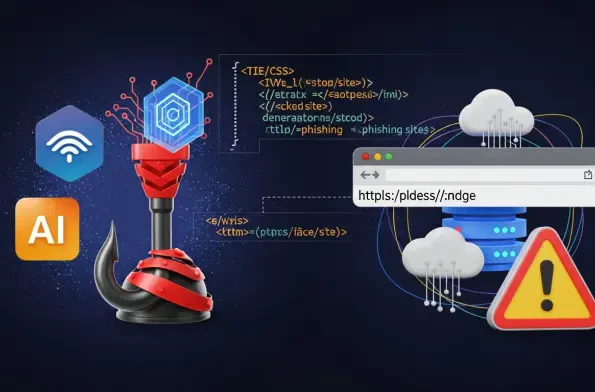
Modern cyber warfare has reached a tipping point where complex coding skills are no longer a prerequisite for launching devastatingly effective global phishing campaigns against major corporations. The barrier to entry for digital fraud collapsed as generative AI transformed how malicious web pages are built and deployed. Attackers no longer scour the dark web for static phishing kits that are easily flagged by security software. Instead, they leverage tools like Vercel’s v0.dev to generate high-fidelity replicas of corporate login pages through simple text instructions. This shift represents a move toward dynamic development where even a novice can produce sophisticated deception in minutes.
The Convergence of Generative AI and Automated Phishing Infrastructure
Platforms designed to empower developers are inadvertently providing the perfect staging ground for automated attacks. Vercel and its v0.dev interface streamline front-end workflows, yet this same efficiency allows criminals to move away from suspicious, self-hosted servers. By hosting scams on reputable cloud infrastructure, attackers benefit from the inherent trust associated with established domains. This trend erodes the reliability of digital brand ecosystems, making it harder for users to distinguish between a legitimate prototype and a data-stealing trap.
The Growing Threat of Weaponized Web Development Platforms
Security analysts examined telemetry to map the lifecycle of these modern phishing attempts. The investigation focused on how attackers transition from a natural language prompt to a fully functional HTML and CSS structure. Researchers also tracked how these pages integrate with external services to manage stolen data. By connecting phishing sites to Telegram bots or AWS buckets, criminals created a seamless exfiltration pipeline that operates with minimal manual intervention.
Research Methodology, Findings, and Implications
Methodology
The research identified high-fidelity clones targeting household names such as Microsoft, Spotify, Nike, and Adidas. Vercel’s free and low-cost tiers proved especially attractive, offering a cost-effective way to launch short-lived sites that vanish before traditional blacklists can catch them. Natural language prompts have effectively replaced technical server management requirements, allowing actors to iterate on designs with unprecedented speed.
Findings
Traditional phishing kits are rapidly losing their value as adaptable AI tools provide more versatility for a fraction of the cost. Automated security filters now face a daunting challenge in separating malicious AI-generated code from legitimate developer experimentation. This evolution forces a fundamental shift in defensive priorities, as simple pattern matching is no longer sufficient. Organizations must look toward behavioral analysis and domain scrutiny to protect their employees.
Implications
The core problem lies in the dual-use nature of modern tools, where every innovation for developers doubles as a weapon for cybercrime. Current reactive reporting systems often lag behind the rapid deployment cycles of automated platforms. Balancing platform accessibility with the need for rigorous anti-abuse measures remains a complex hurdle for cloud providers. It is clear that the speed of innovation in web development has temporarily outpaced the defensive response.
Reflection and Future Directions
Reflection
Combatting this trend requires the development of security protocols as intelligent as the tools being used to create the threats. Industry leaders are exploring ways to implement AI-driven code analysis that can spot subtle markers of a phishing site before it goes live. Closer collaboration between cloud hosting providers and security firms will be essential to disrupt the malicious hosting lifecycle.
Future Directions
User education must evolve to focus on the psychological manipulation used in these scams, rather than visual inconsistencies. By teaching employees to recognize the triggers of urgency and suspicious domain patterns, companies can build a human firewall. Defensive strategies must shift toward real-time domain reputation monitoring and the immediate revocation of credentials when anomalies are detected.
Conclusion: Securing the Future of AI-Driven Development
The integration of generative AI into phishing workflows marked a significant turning point in cybercrime accessibility. Defenders recognized that the efficiency of these tools required a total overhaul of existing security frameworks. Direct collaboration with platform providers became a cornerstone of the new defensive strategy, ensuring that malicious infrastructure was dismantled within hours. This proactive approach underscored the need for resilient systems that grew alongside emerging web technologies to protect the integrity of the digital world.