While the government prioritizes external threats, the rapid deployment of autonomous AI agents within corporate workflows creates a significant governance gap regarding human-in-the-loop controls. The U.K. government’s latest Autumn Budget marks a pivotal moment in national policy by injecting substantial capital into artificial intelligence and cybersecurity frameworks. This fiscal strategy seeks to enhance the nation’s digital defenses while fostering a competitive environment for emerging technologies throughout 2026. While industry leaders generally welcome the financial support, the announcement has triggered a complex debate regarding the difference between mere financial investment and actual operational resilience. The primary objective is to determine if public spending can successfully transform into a protective shield capable of securing essential services against digital threats that evolve daily. Industry experts suggest that while funding is a vital prerequisite, it cannot serve as a fix for systemic vulnerabilities.
Transitioning From Prevention to Resilience
Redefining Success in Modern Cybersecurity
Current cybersecurity metrics are shifting away from simply stopping attacks toward ensuring the continuity of operations during an active threat. Experts argue that the ability to keep public services running under duress is the true measure of a successful digital strategy. Recent incidents involving outdated software vulnerabilities have demonstrated that the government often faces an impossible choice between a total shutdown or security risks, highlighting the need for more flexible defense mechanisms. For example, the discovery of flaws in PHP software that remained hidden for two decades forced the suspension of 32 vital public services. This event underscored the inherent weakness in a purely preventive posture, as the cost of grinding to a halt has become unsustainable for the modern British economy. Consequently, the focus has moved toward creating systems that are resilient enough to absorb impact without a complete failure of service delivery to citizens.
Implementing Physical Technological Interventions
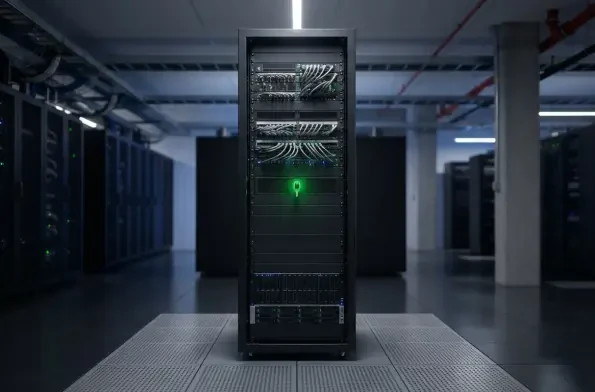
To address these persistent vulnerabilities, some specialists advocate for physical technological interventions, such as cyber kill switches, rather than relying solely on software-based firewalls. Unlike software protections that AI-driven exploits can often bypass through automated trial and error, physical isolation allows a compromised system to be disconnected from a wider network without disabling an entire departmental operation. This move toward physical resilience acknowledges that as artificial intelligence accelerates the speed at which flaws are discovered, traditional defense layers are no longer sufficient. By utilizing hardware that can physically sever a connection, organizations can isolate threats in real time, preventing lateral movement across a network. This approach provides a failsafe that operates independently of the software environment, offering a level of certainty that digital-only solutions cannot match. It represents a strategic shift toward protecting infrastructure.
Navigating Internal Risks and Hardware Security
Managing Autonomous AI Operational Risks
While external hackers remain a significant concern for the state, the internal risks posed by autonomous AI agents are becoming a priority for technology leaders. Businesses are rapidly integrating these agents into their workflows to handle everything from data processing to customer interaction, often without sufficient human oversight or strictly defined operational boundaries. There is a growing concern that companies might over-rely on third-party large language model providers for safety and monitoring, creating a governance gap that could lead to unpredictable and damaging internal outcomes. If an autonomous agent is granted too much authority over sensitive processes without a human-in-the-loop to verify its decisions, the potential for catastrophic error increases significantly. Leaders emphasize that companies must take direct responsibility for the AI they deploy by ensuring these systems operate within rules that prevent them from acting outside of their intended context.
Strengthening the Domestic AI Supply Chain
On the hardware front, there is an increasing trend toward hardware-rooted security to protect the domestic AI supply chain and ensure economic stability. With a large percentage of companies reporting at least one major digital breach annually, embedding security measures directly into the silicon chips and storage drives offers a layer of protection that is significantly harder to penetrate than standard software firewalls. By supporting homegrown AI chip design and domestic manufacturing talent, the government aims to marry technological leadership with a robust, indigenous approach to physical data protection. This strategy reduces the risk of backdoors being introduced through foreign-made components and ensures that the hardware powering the nation’s AI transition is built with security as a foundational requirement. Investing in these physical layers of the technology stack creates a more defensible perimeter that protects intellectual property and national data from espionage.
Addressing Infrastructure and Sovereignty Hurdles
Overcoming Utility and Power Constraints
Despite the influx of funding, the U.K.’s power grid remains a major bottleneck for the development of essential data centers required for high-level AI computing. Some large-scale infrastructure projects have already faced significant delays because grid connections are not projected to be ready for several years, with some timelines stretching toward 2028 and beyond. Without immediate reforms to energy infrastructure and faster utility connections, the financial allocations for AI safety and development may fail to produce tangible results for the British economy. Developers are finding that while they have the capital to build, they lack the megawatts necessary to power the cooling systems and processing clusters that modern AI requires. This infrastructure gap threatens to undermine the competitive advantage the budget seeks to create, as projects move to regions with more reliable energy access. Bridging this gap requires a synchronized effort between energy providers.
Securing National Sovereignty in AI Modeling
National sovereignty is another critical concern, as the U.K. remains heavily dependent on overseas AI model providers for its high-level security and biosecurity labs. Relying on rented technology from foreign corporations raises difficult questions regarding data jurisdiction, commercial terms, and long-term national security. This dependency leaves the U.K. vulnerable to shifts in the geopolitical landscape or changes in the operational policies of the providers, making the development of domestic, sovereign models a strategic necessity. If a critical service depends on an API that could be throttled or modified by a foreign entity, the nation’s digital autonomy is effectively compromised. Experts argue that for the U.K. to truly lead in AI safety, it must possess the ability to run and modify its own models on its own terms. Building domestic capacity ensures that the nation retains control over its data and the algorithms that process it, shielding vital interests from international shifts.
Bridging the Specialized AI Procurement Gap
The human element of procurement presents a final challenge, as government departments often lack the specialized expertise required to manage and evaluate advanced AI systems. Buying sophisticated technology is not the same as effectively running it; without staff who can distinguish between marketing hype and true technical capability, the risk of wasted investment is high. Furthermore, even the most advanced automated threat detection still requires skilled human intervention to verify alerts and manage the consequences of a response. There is a pressing need for a new class of digital civil servants who are as technically proficient as the suppliers they are managing. Without this internal talent, the government risks becoming vendor-locked into expensive contracts for tools that may not meet the specific security needs of the public sector. Effective governance requires humans who understand the underlying logic of the AI systems they oversee to ensure they stay secure.
Synthesizing a Unified National Strategy
Prioritizing Recovery and Long-Term Stability
A unified national strategy must move beyond the “what” of funding to the “how” of delivery and long-term recovery after a cyber incident. Successful implementation of the budget requires deep infrastructure reform to allow for domestic growth and the reduction of reliance on foreign tech giants for critical services. By investing in domestic hardware and specialized skills during 2026, the U.K. can transition from a defensive posture to a proactive stance that prioritizes technological sovereignty and expert governance. This transition involves not only deploying the latest tools but also creating a culture of operational resilience where every department is prepared for a breach. The goal is to move from a mindset of absolute prevention, which is no longer realistic in the age of AI-powered attacks, to one of rapid recovery and sustained functionality. This holistic approach ensures that the nation’s digital foundations are strong enough to support the growth plans of the years ahead.
Executing the Resilient Digital Ecosystem Plan
The successful implementation of the national digital strategy ultimately hinged on bridging the gap between high-level policy announcements and the physical reality of aging infrastructure. By focusing on actionable steps, the government integrated hardware-level security and physical isolation mechanisms into critical national systems. Leaders prioritized the development of a self-sufficient AI ecosystem that reduced reliance on external providers and prioritized domestic sovereignty. Moving forward, the emphasis shifted toward continuous training for procurement officers to ensure that every pound spent on technology translated into measurable defensive capabilities. This transition ensured that the NHS and national defense sectors remained functional even when facing advanced cyber intrusions. Stakeholders concluded that the move toward a hardware-secure and resilient framework was the only viable path for maintaining global leadership and ensuring long-term national stability.