Achieving high levels of accuracy in vulnerability management now requires a standard of deep, credentialed access rather than simple unauthenticated pings. In the current digital climate, security leaders face a landscape defined by extreme network segmentation and the complex fusion of Information Technology (IT) with Operational Technology (OT). This convergence has created fragile digital estates where a single aggressive packet could potentially halt a manufacturing line or disrupt critical infrastructure. Consequently, network scanning has transitioned from a basic diagnostic utility into a highly specialized orchestration discipline. Modern scanners are no longer judged solely by their ability to find open ports but by how effectively they navigate technical hurdles like firewall segmentation, credential vaulting, and safe-scan protocols without causing operational friction. This analysis provides a comprehensive look at the premier scanning solutions dominating the industry, evaluating their capacity to deliver deep, authenticated insights across global infrastructures while preserving the delicate balance of system uptime and security posture.
The rankings provided here are derived from a rigorous research-based evaluation designed to reflect the practical utility of these tools in complex environments. It is important to note that these scores represent editorial and research-driven assessments rather than controlled laboratory results. To maintain objectivity, the methodology excludes paid placements and focuses on practical, real-world utility across six critical areas. These areas include authenticated scan depth, which measures a scanner’s ability to probe internal configurations using provided credentials, and distributed engine orchestration, which assesses how effectively a platform manages multiple scan engines placed across various segments. Additionally, the evaluation weights fragile estate safety, scan cycle performance, pricing accessibility, and compliance reporting. By analyzing these factors, organizations can better understand which tools align with their specific architectural needs and risk profiles in an increasingly interconnected and sensitive digital environment.
Core Trends and Strategic Industry Shifts within the Competitive Landscape of the Modern Global Marketplace
Evolution: The Modern Scanning Landscape
A primary trend observed throughout the current year is the significant consolidation of security product lines. Major vendors are increasingly acquiring specialized firms to create integrated platforms that combine traditional vulnerability management with file integrity monitoring and configuration hardening. This move toward comprehensive integrity and scanning solutions allows organizations to maintain a unified view of their security state rather than juggling disparate datasets. For example, the integration of various products under the Fortra umbrella demonstrates how the industry is pivoting toward a model where the state of a device is as important as its known vulnerabilities. This consolidation simplifies procurement but also necessitates a deeper understanding of how these merged technologies interact within a single enterprise dashboard.
Furthermore, the increasing convergence of IT and OT systems has made OT awareness a mandatory feature for any top-tier vulnerability scanner. As industrial systems become more connected, the key differentiator is no longer just finding a CVE but doing so without knocking a critical switch or a programmable logic controller offline. There is also a distinct shift toward agent-scanner hybridization within the industry. Security teams have realized that while agents provide a continuous source of truth for workstations and servers, network scanners remain the only viable way to assess the unmanaged parts of the network, such as printers, IoT devices, and legacy hardware that cannot host agent software. This balanced approach ensures that no dark corners remain in the enterprise infrastructure.
The Challenge: Logistics Management in Modern Networks
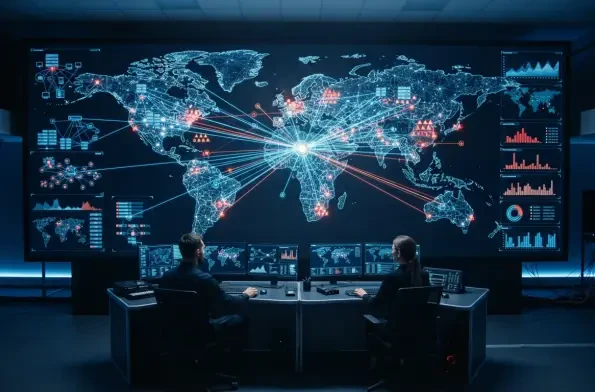
As corporate networks become more heavily segmented to thwart lateral movement, the priority for security teams has shifted from simple discovery to the strategic placement of scan engines. The old concept of a centralized probe reaching across the entire infrastructure is no longer feasible due to strict firewall rules and zero-trust architectures. Instead, distributed orchestration has become the primary logistical challenge. Platforms must now be capable of managing dozens or even hundreds of scan engines placed within specific network zones or geographic locations. This ensures that the scanner has the proximity required to perform deep checks without overwhelming narrow bandwidth connections or being blocked by internal security controls.
The logistical evolution of scanning involves a shift away from first-packet priority and toward comprehensive visibility. In highly protected environments, the ability to coordinate these distributed engines from a single cloud console is what separates market leaders from legacy tools. This orchestration ensures that data is collected locally and analyzed centrally, providing a global view of the security posture without requiring excessive network overhead. By focusing on the strategic placement of sensors, organizations can achieve a level of granular visibility that was previously impossible in highly segmented environments. This trend reflects a broader industry movement toward localized intelligence managed through a centralized command structure.
Evaluating the Leading Commercial Vendors
Industry Leaders: A Comprehensive Examination of Dominant Market Players and Their Core Competitive Strengths
Tenable continues to hold its position as the market leader with its Nessus ecosystem, scoring a 9.0 in our current evaluation. Its primary strength lies in its unmatched plugin library and its deep roots in authenticated scanning. By 2026, Tenable will have successfully integrated its OT-aware lineage into the core platform, allowing it to move safely from standard data centers to the industrial edge. It remains the benchmark against which all others are measured, offering the most flexible deployment options for segmented networks. However, security leaders should be mindful of SKU stacking, where advanced program features often require additional platform licenses, potentially increasing the total cost of ownership as the program matures.
Qualys, ranking second with a score of 8.7, focuses on infrastructure-light management through its cloud-orchestrated model. It utilizes a mesh of virtual appliances and agents that are all controlled from a centralized console, making it an ideal choice for organizations that want to schedule segment-by-segment scans without managing heavy local infrastructure. Rapid7 follows with a score of 8.5, differentiating itself through a program-centric approach that emphasizes the remediation phase. By pairing its InsightVM engines with live dashboards and remediation projects, Rapid7 ensures that findings are assigned to the relevant teams. Its risk scoring benefits from the realism of its Metasploit lineage, making it a favorite for mid-market programs that require actionable data rather than just long lists of vulnerabilities.
Specialized Solutions: Niche and Alternative Scanning Tools
For organizations that prioritize data sovereignty and local compliance, Outpost24 offers a high-compliance alternative with a score of 7.6. Based in Europe, it provides a managed service track that is increasingly popular for entities operating within the EU legal framework. Holm Security rounds out the list with a score of 7.5, excelling at discovering misconfigurations across firewalls, IoT, and OT environments. It is particularly noted for its CIS Benchmark policy scanning, which provides a robust automated path for organizations focused on standardized security hardening. These specialized tools offer a level of geographic and technical focus that large global competitors sometimes struggle to match in specific regional markets.
Ivanti and Fortra provide unique value propositions in the current market, with Ivanti, scoring 7.7, focusing on the speed of the detection-to-remediation pipeline by flowing scan data directly into its patch management system. This is ideal for teams looking for the shortest path from identifying a CVE to deploying a fix. Fortra, with a score of 8.0, represents a consolidated approach that combines Tripwire’s file integrity monitoring with Digital Defense’s scanning capabilities. This combination is particularly valuable for compliance-heavy industries where verifying the state and configuration of a switch is just as important as identifying known software vulnerabilities. These tools demonstrate that specialized functionality can be a major differentiator for organizations with specific regulatory or operational requirements.
Open-Source and Complementary Tools
Accessible Options: Cost-Effective and Agent-Based Alternatives
For organizations operating on strict budgets or those requiring a secondary validation layer, Greenbone’s OpenVAS remains the premier open-source workhorse, earning a score of 8.2. It provides full authenticated scanning and commercial-grade sensors suitable for distributed environments. While it may lack the high-gloss interface or the absolute currency of plugin libraries found in top-tier commercial vendors, its transparency and cost-effectiveness make it an essential tool for the global security community. It allows smaller teams to maintain a high level of security rigor without the massive overhead of enterprise licensing, provided they have the internal expertise to manage and tune the open-source engine effectively.
In contrast, Microsoft’s Defender for Vulnerability Management, which scored 7.9, serves as a vital agent-driven complement to traditional network scanners. It provides continuous assessment for Windows, Linux, and macOS hosts, delivering real-time visibility into the operating system’s state. However, the industry consensus remains that Microsoft’s tool should handle host-level data while a dedicated network scanner covers the gaps. Since Defender is largely blind to network hardware such as routers, printers, and firewalls that cannot host agent software, it is viewed as a partner in a multi-layered strategy rather than a standalone replacement. This partnership ensures that both the internal state of the host and the external accessibility of the hardware are fully accounted for.
Implementation Guide: Strategic Buying Advice
The transition from selecting a scanner to successfully implementing one requires a first-packet philosophy that prioritizes architecture over features. Organizations often underestimate total costs because they overlook the complexities of network segmentation. Every isolated zone requires an engine or a sensor, and the number of these engines usually drives the final price more than the per-asset license fee. Before a purchase is finalized, it is essential to map out engine placement to ensure full coverage without unexpected costs. Additionally, solving the credential crisis is non-negotiable for modern accuracy. Security teams must integrate their scanners with password vaults and establish scoped service accounts before the first scan runs to avoid relying on simple banner grabbing.
Another critical step involves negotiating safe scanning windows, especially given the fragility of modern IoT and OT devices. In the current year, disrupting industrial systems during a security sweep is an unacceptable risk. Security teams must test passive discovery modes in laboratory environments and obtain written agreements from network operations regarding specific scan windows. A scan that takes more than a week to complete might provide only monthly visibility, regardless of how real-time the vendor dashboard claims to be. By focusing on these three steps—mapping placement, managing credentials, and establishing safe windows—organizations can ensure their vulnerability management program is both effective and operationally sound.
Frequently Asked Questions About 2026 Scanning
Which Scanner Is Best for Global Enterprises?
Tenable is widely considered the industry standard for large-scale global enterprises due to its flexible deployment options and its massive plugin library that covers a vast range of legacy and modern systems. For organizations with thousands of assets spread across multiple continents, Tenable’s ability to scale and integrate with various orchestration tools provides a significant advantage. However, Qualys is often preferred by enterprises looking to minimize their local hardware footprint. Its cloud-managed model allows for centralized control over a global mesh of virtual sensors, making it easier to manage from a single location without the need for extensive on-site maintenance.
The choice between these leaders often comes down to the specific technical architecture of the organization; if the priority is deep, technical plugins and the ability to customize scans for highly specialized hardware, Tenable usually wins. If the priority is a lightweight, platform-wide orchestration that integrates scanning with broader compliance and asset management modules, Qualys is often the stronger candidate. Both vendors have matured significantly, offering robust APIs and integration capabilities that allow them to fit into modern security operations centers. Ultimately, the best tool is the one that aligns most closely with the existing network management philosophy and the skill set of the internal security team.
How Does Utilizing Operational Technology-Aware Vulnerability Scanning Effectively Prevent Critical Industrial System Crashes and Downtime?
OT-aware scanning utilizes safe-scan modes and passive discovery techniques that avoid sending the aggressive or malformed packets often used in standard IT vulnerability assessments. Legacy industrial equipment, such as manufacturing controllers or utility switches, often has limited processing power and can be overwhelmed by a high volume of network traffic or unexpected protocol requests. By using passive monitoring, the scanner can identify devices and their potential vulnerabilities simply by observing existing network traffic. When active scanning is required, OT-aware tools use refined, non-intrusive packets specifically designed not to disrupt the real-time processes critical to production.
This non-intrusive approach ensures that security assessments do not result in costly operational downtime or permanent hardware failure. In 2026, these tools are sophisticated enough to recognize the signatures of sensitive industrial hardware and automatically adjust their scanning profiles to match each device’s tolerance. This prevents the “blue screen” or “lock-up” scenarios that were common in the early days of IT and OT convergence. By implementing these safety protocols, organizations can maintain a high level of security visibility in their manufacturing and utility environments without risking the stability of the very processes they are trying to protect.
Can Microsoft Defender Effectively Replace a Dedicated Network Scanner Within a Complex Corporate Infrastructure?
Microsoft Defender for Vulnerability Management is recognized as a vital partner to traditional network scanners, but it cannot fully replace them. Because it relies on an agent installed on the operating system, it provides an exceptional depth of host-level data for supported platforms such as Windows and Linux. However, it remains blind to a significant portion of the network that consists of unmanaged hardware. Routers, firewalls, printers, and IoT devices typically cannot host the Defender agent, meaning a standalone network scanner is still required to discover and assess these critical infrastructure components. Relying solely on an agent-based approach leaves dangerous gaps in perimeter and internal network visibility.
A complete vulnerability management program in the current era requires a hybrid architecture, as the 2026 consensus emphasizes using an agent-based tool like Microsoft Defender for host-level truth and continuous monitoring while employing a dedicated network scanner to cover the hardware infrastructure. This combination ensures that the organization can see both the “inside-out” view provided by the agent and the “outside-in” view provided by the network scan. By using both, security teams can verify that their host-level defenses are working as intended while also identifying misconfigured or vulnerable network hardware that could serve as an entry point for an attacker.
The Strategic Path Forward
The analysis of the vulnerability management market throughout the year indicated that success was no longer defined by the purchase of a single tool, but by the orchestration of a diverse security ecosystem. Organizations that achieved the highest levels of resilience were those that integrated deep, credentialed scanning with real-time agent data and OT-aware safety protocols. The market consolidation seen among vendors like Fortra and Tenable simplified some aspects of procurement, yet it also heightened the need for security architects to understand the nuances of how these combined technologies behaved in segmented zones. It became clear that the placement of scan engines and the management of service credentials were the true drivers of program accuracy, far outweighing the importance of specific vendor feature lists.
To move forward, security leaders should have focused on mapping their network zones to ensure that every segment was reachable by a dedicated sensor or engine. They were encouraged to solve the credential crisis by integrating scanning platforms with centralized password vaults, thereby enabling the deep, authenticated access that has become the industry standard. Furthermore, establishing clear communication with operational teams regarding safe-scan windows proved essential in avoiding downtime in sensitive industrial environments. By treating vulnerability management as a continuous orchestration discipline rather than a periodic checkup, organizations ensured they remained one step ahead of emerging threats while maintaining the operational stability required in a modern digital economy.