The traditional Security Operations Center is currently undergoing a radical transformation as global enterprises move away from static defensive scripts toward dynamic autonomous systems capable of neutralizing sophisticated threats in real time. This paradigm shift has propelled Mate Security from an ambitious stealth-mode startup into a dominant force within the enterprise cybersecurity market, as evidenced by its staggering growth rate exceeding 500 percent since the latter half of 2025. This momentum is further underscored by a successful 35 million dollar Series A funding round, a financial milestone that signals a departure from experimental AI tools in favor of integrated, mission-critical platforms. Fortune 500 companies are increasingly demanding solutions that can handle the complexity of modern digital landscapes, and the rapid adoption of this agentic AI architecture suggests that the industry is finally finding a way to bridge the gap between human intuition and machine efficiency.
Financial Milestones and Investor Confidence
Strategic Capital: Success of the Series A Round
The successful closure of the recent Series A funding round represents a significant validation of the company’s technical vision, particularly given the high-profile nature of the participating investors. Led by Canaan Partners, the round saw continued and expanded support from Insight Partners and Microsoft’s Venture Fund, M12, showcasing a rare level of institutional confidence in a crowded marketplace. This infusion of capital arrived just eight months after the initial seed round, a timeline that reflects the extreme urgency felt by large-scale enterprises to modernize their security stacks. Such a rapid progression from seed to a substantial Series A indicates that the market demand is not merely speculative but is being driven by the concrete limitations of existing defensive measures. By securing this level of backing, the organization has demonstrated that it possesses the necessary resources to scale its operations globally while continuing to refine its unique AI models.
Investor Perspectives: The Move Toward Agentic Defense
Investors have noted that traditional cybersecurity infrastructure is increasingly unable to keep pace with the sheer speed and complexity of AI-driven cyber attacks, necessitating a fundamental rethink of defensive strategies. The decision by every previous investor to double down on their financial commitment suggests that the industry sees this agentic approach as a viable solution to the problem of vendor lock-in and generic security filters. Unlike traditional tools that apply a one-size-fits-all approach to threat detection, this platform prioritizes a nuanced understanding of specific business operations, which allows it to offer customized protection that evolves alongside the organization. This strategic flexibility is highly valued in an era where digital adversaries are constantly finding new ways to exploit the gaps between disparate security tools. Consequently, the financial community views this investment as a commitment to a new category of autonomous security operations.
Market Impact and the Challenge of Trust
Scaling Challenges: Growth Within the Fortune 500
Achieving such a significant growth rate is particularly noteworthy when considering the target demographic of the Fortune 500, a segment known for its extremely rigorous and often slow procurement processes. Winning contracts within these massive organizations typically requires navigating months of legal reviews, exhaustive technical evaluations, and intense security audits conducted by elite internal defense teams. The fact that the platform has successfully integrated into these environments suggests that its value proposition is strong enough to overcome the friction points that usually stall the adoption of new technologies. This success also points to a high level of operational maturity, as the system must prove its reliability and scalability before being trusted with the sensitive data of a global corporation. For these large-scale enterprises, the ability to deploy an AI-driven solution that provides immediate improvements to their security posture is a powerful incentive to fast-track.
The Organizational Brain: Bridging the Trust Gap
A persistent hurdle for most security operations centers has been the trust gap created by standard artificial intelligence tools, which often generate a high volume of alerts without providing sufficient context for human analysts. This results in a situation where human defenders become the primary bottleneck, overwhelmed by noise and unable to act decisively on genuine threats. The platform addresses this systemic failure by constructing what is described as an organizational brain, a repository of knowledge that mirrors the experience and logic of a company’s most seasoned security professionals. By enabling the AI to understand the specific business context behind technical logs, the system reduces the need for constant manual verification and allows analysts to focus on higher-level strategic tasks. This approach not only improves efficiency but also builds the necessary trust for the AI to handle more complex investigative tasks, transforming the SOC into a more resilient unit.
Technical Framework and Innovation
Security Context Graph: Architecture and Reasoning
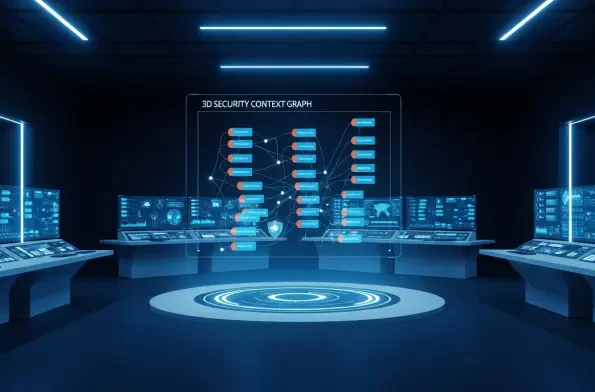
At the heart of this technological innovation lies the Security Context Graph, an advanced architectural layer that serves as a single, governed source of truth for all security operations. This graph functions by synthesizing data from a multitude of sources, allowing a diverse group of AI agents—including vendor-specific tools and custom-built internal agents—to operate with a unified understanding of the environment. Unlike legacy systems that analyze events in isolation, the context graph enables the system to perform complex reasoning tasks by examining the relationships between different digital signals. This specialized framework is essential for managing the intricate dependencies found in modern cloud-native and hybrid infrastructures, where a single event can have cascading effects across multiple departments. By providing a clear and comprehensive view of the organization’s digital footprint, the platform ensures that every autonomous action taken by its agents is informed by context.
Autonomous Remediation: Contextual Decision Making
The ability to incorporate deep business context into the decision-making process allows the platform to perform autonomous remediation with a degree of accuracy that was previously unattainable for automated systems. For example, the AI can distinguish between a seemingly suspicious login attempt and a legitimate pre-planned security test by cross-referencing internal employee schedules and testing calendars. This capacity to determine whether a specific behavior is a normal business function or a genuine threat is the critical factor that allows organizations to authorize autonomous actions without fear of disrupting essential operations. By automating the resolution of routine incidents, the platform frees up human defenders to concentrate on more sophisticated adversarial threats that require creative problem-solving. This shift toward self-healing security infrastructures marks a significant evolution in how companies manage risk, as the platform effectively acts as an always-on extension of the team.
System Foundations: Persistent Memory and Governance
The ongoing development of the platform is rooted in two essential technical pillars: persistent memory and the principle of least-agency, both of which ensure long-term scalability and security. Unlike many AI systems that treat every new event as an isolated problem with no historical context, this platform’s agents possess the ability to learn and retain information from every interaction they perform. This persistent memory allows the system to become increasingly sophisticated over time, as it accumulates a deep understanding of the unique patterns and vulnerabilities specific to its host organization. As more data is processed, the AI becomes better at predicting potential attack vectors and optimizing its own response protocols, creating a feedback loop that enhances the defensive capabilities of the entire enterprise. This design philosophy ensures that the investment in AI technology yields compounding benefits, as the platform’s utility grows in proportion to the volume of data it manages.
Future Scaling: Actionable Steps for Resilience
Security leaders recognized that the principle of least-agency was fundamental to maintaining strict compliance and safety standards while deploying autonomous agents across sensitive environments. By ensuring that every AI agent operated with only the specific permissions required for its task, organizations successfully mitigated the risks associated with excessive access and potential system misuse. Moving forward, the focus shifted toward integrating these agentic platforms as the foundational core of a unified security strategy, rather than treating them as supplementary tools. Industry professionals advised that the next logical step involved the broader adoption of these context-aware systems to replace fragmented legacy architectures that could no longer handle the volume of modern telemetry. As the technology matured, it became clear that the path to a truly resilient enterprise lay in the seamless collaboration between human expertise and autonomous reasoning through continuous training.