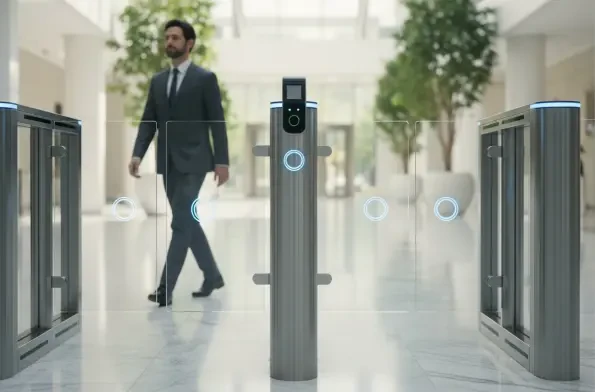
The morning ritual of patting pockets for a plastic rectangle or scrolling through digital wallets to find a QR code is rapidly fading into the obscurity of technological history. Every day, more than 131 million Americans perform a silent and subconscious ritual: they glance at their smartphones to unlock their digital lives, accessing banking apps, private messages, and sensitive health records through instant facial recognition. This simple act has quietly dismantled decades of security tradition, rendering the physical office badge an irritating relic of the past that feels increasingly out of sync with modern life. As society moves through a world that increasingly recognizes individuals by sight, the fundamental question of security has shifted from a query about possession to one of personhood. The era of asking “Do you have the key?” is being replaced by a much more personal and secure inquiry: “Are you who you say you are?”
This transition represents more than a mere upgrade in hardware; it is a fundamental shift in the philosophy of movement and protection. For years, security was defined by the barrier, but today, it is defined by the individual. The friction that once signaled a secure environment—the stopping, the swiping, and the waiting—is now viewed as an operational failure. In the modern workplace and public square, the objective is to create a secure environment that is entirely aware of its occupants without demanding their constant attention. This evolution toward identity-centric systems ensures that the right people have the right access at the right time, powered by sophisticated vision intelligence that operates at the speed of life.
From Fumbling for Badges to Instant Recognition: The Death of the Physical Key
The physical badge was once a symbol of professional belonging, but in a landscape defined by seamless digital interactions, it has become a cumbersome liability. Traditional access control has long relied on the assumption that the person holding a card is the authorized user, yet this logic is fundamentally flawed. Plastic credentials are lost, stolen, or shared among colleagues with alarming frequency, creating security gaps that are often only discovered after a breach occurs. The inconvenience of misplacing a badge or the delay of a manual checkpoint creates a persistent “friction” that modern users find increasingly intolerable. As biometric sensors become more integrated into the fabric of daily life, the expectation for instant, hands-free recognition has transformed from a luxury into a standard requirement for any high-functioning facility.
The transition toward identity-based systems is underpinned by a psychological shift in how people perceive security. When a person uses facial authentication to unlock a phone hundreds of times a day, they develop a trust in the reliability and speed of the technology. This normalization has paved the way for corporate environments to adopt similar protocols, where the individual’s face becomes the ultimate, unforgeable credential. By removing the need for a physical intermediary, organizations are not only improving the user experience but are also closing the loop on the primary weakness of legacy systems: the separation of the credential from the person. In this new reality, the door is no longer a gate to be unlocked by a tool; it is a point of recognition that welcomes the person through their unique biometric signature.
Furthermore, the operational benefits of abandoning physical keys extend far beyond the convenience of the individual employee. Facility managers are increasingly burdened by the logistics of issuing, tracking, and deactivating thousands of physical cards. The administrative overhead and environmental waste associated with plastic badges are significant, and the risk of unauthorized duplication remains a persistent threat. Moving toward a digital, identity-focused framework allows for instantaneous updates to access permissions across entire global enterprises. If a person’s role changes or their employment ends, their “key” is revoked within milliseconds in the cloud, ensuring that the physical perimeter remains as dynamic and responsive as the organization itself.
Why the Traditional Security Perimeter Is No Longer Enough
The historic reliance on physical barriers—heavy gates, mechanical locks, and plastic credentials—is proving insufficient in an era defined by extreme mobility and rapid throughput. Traditional access control verifies a “thing,” such as a card or a programmed code, rather than a person, creating a massive security loophole that sophisticated actors can easily exploit. In the current threat landscape, where social engineering and credential theft are on the rise, simply knowing that a badge was scanned is not enough to guarantee the integrity of a space. Organizations are now facing a convergence of rising security demands and a “frictionless” consumer expectation, largely driven by what many experts call the “Apple Effect.” This phenomenon describes how the widespread success of consumer-grade biometrics has fundamentally altered the baseline for user experience in every other sector.
This psychological shift means that employees, visitors, and travelers now view any manual checkpoint as a sign of technical debt rather than a sign of safety. If a person can pay for groceries or clear customs with a glance, they expect to enter their workplace with the same level of ease. When security protocols fail to meet this expectation, users often look for workarounds—propping doors open, tailgating behind colleagues, or sharing credentials—which ironically makes the building less secure. A truly effective security posture must align with human behavior rather than working against it. By prioritizing identity-centric systems, organizations can provide a seamless movement experience that actually improves security by ensuring that every entry event is tied to a verified human being.
Moreover, the modern perimeter is no longer a static line drawn around a building; it is a fluid concept that must account for hybrid work models and remote access. In this context, the physical badge is even less relevant. A security system that relies on a physical object cannot scale to meet the needs of a workforce that moves between home offices, satellite hubs, and headquarters. Identity, however, is the only constant. Whether a person is logging into a secure server or entering a research laboratory, their biometric identity provides a single, unified thread of authentication. This convergence of physical and digital security is the only way to maintain a robust defense in a world where the boundaries between the office and the outside world have largely dissolved.
The Evolution of Movement: From Static Checkpoints to Continuous Identity Awareness
The modern paradigm of access control is rapidly moving away from the “stop-and-scan” interaction toward an environment that is “aware” of its occupants at all times. In high-stakes environments like global aviation, the benefits of this shift are already being realized on a massive scale. Data from major travel hubs suggests that a significant majority of passengers—often exceeding 75% in recent studies—now prefer biometric journeys over the traditional process of showing passports and boarding passes at every turn. This proves that identity-based systems can handle massive throughput without sacrificing the high level of safety required in international travel. This “human speed” authentication occurs in as little as 300 milliseconds, allowing for background verification where security happens while people are in natural motion.
This shift toward continuous identity awareness represents a move from a reactive security model to a proactive one. In the traditional model, a door only “wakes up” when a badge is presented. In contrast, modern systems utilizing Physical AI transform simple sensors into an intelligent perception layer capable of analyzing the environment in real-time. These systems do more than just unlock doors; they can detect sophisticated security threats like tailgating, where an unauthorized person follows an authorized one through a secure portal. By analyzing the flow of bodies through a space, these intelligent systems can trigger alerts or even adjust lighting and climate control based on the presence of verified individuals. The building essentially becomes an extension of the security team, providing a constant, vigilant presence that does not require human intervention for every minor event.
Furthermore, the rise of intelligent infrastructure allows for a more nuanced approach to crowd management and safety. In large-scale venues or corporate campuses, understanding how people move is vital for both security and operational efficiency. Identity-centric systems can track the density of occupants in specific zones, identify bottlenecks before they become dangerous, and ensure that emergency responders have accurate headcounts during an evacuation. This level of insight is impossible to achieve with a system that only tracks badge swipes at a door. By moving to a model of continuous awareness, organizations are not just securing their entrances; they are optimizing the entire experience of being within a physical space, ensuring that safety and fluidity are always in balance.
Data, Trust, and the Benchmarks of Modern Authentication
Leading figures in the technology sector emphasize that the hardware of a door is merely a secondary tool in the broader security landscape; identity is the primary element of any modern protocol. This shift toward intelligent infrastructure is supported by the latest industry megatrends, which highlight the dissolution of the traditional boundaries between video surveillance and access control. To ensure reliability and gain widespread acceptance, these identity-centric systems must meet rigorous international standards for performance and security. For instance, the National Institute of Standards and Technology (NIST) now provides benchmarks showing that the most advanced facial recognition algorithms can achieve true-positive rates exceeding 99.8%. This level of accuracy provides the empirical evidence needed to move biometrics from experimental pilot programs to global enterprise standards.
A critical component of this technical reliability is the ability to defend against “spoofing” or presentation attacks. For a system to be truly secure, it must be able to distinguish a living human being from a high-resolution photograph, a 3D-printed mask, or a video playing on a smartphone screen. Modern systems must adhere to standards such as ISO 30107-3 Level 2 for anti-spoofing, which involves sophisticated “liveness detection” technologies. These sensors analyze depth, skin texture, and even subtle movements to ensure that the identity being presented is both authentic and present in real-time. By meeting these high benchmarks, manufacturers are providing the technical foundation upon which trust can be built, proving that biometric identity is significantly harder to forge than a traditional plastic badge or a numerical code.
The integration of these systems into a unified “system of systems” allows for a more automated and operationally valuable outcome for businesses. When access control and surveillance are linked through a common identity framework, security teams can search for specific events with much greater precision. For example, if a security incident occurs, a system can instantly locate the last verified position of the individual involved, rather than requiring a manual review of hours of video footage. This efficiency transforms security from a passive cost center into an active contributor to business intelligence. By leaning into standardized, high-performance authentication, organizations are creating a future where the data generated by entry points provides actionable insights that improve everything from labor management to facility maintenance.
Implementing a Privacy-First Framework for Identity Access
To successfully transition to identity-centric control, organizations must adopt a “privacy-by-design” architecture that directly addresses public skepticism and regulatory requirements. A practical and ethical strategy involves moving away from centralized databases of raw images, which are vulnerable to misuse and theft. Instead, modern systems utilize “faceprints”—unidirectional, encrypted mathematical representations of a person’s facial features. These templates cannot be reverse-engineered into a visual image of a human face, meaning that even if the data were compromised, it would be useless to an attacker. This approach shifts the conversation from “surveillance” to “authentication,” focusing strictly on the functional need to verify identity without retaining unnecessary personal imagery.
Processing this sensitive data at the “edge” is another cornerstone of a privacy-first framework. By conducting the authentication directly on the hardware at the door or turnstile rather than sending data to a central cloud server, organizations significantly reduce the risk of data interception during transit. This decentralized approach ensures that biometric information never leaves the local device, which is a major factor in facilitating compliance with strict global regulations like the General Data Protection Regulation (GDPR). When users know that their biometric data is being handled locally, encrypted, and used only for the purpose of granting access, their willingness to adopt the technology increases. Building this trust is essential for the long-term viability of identity-based systems in democratic societies.
Finally, a transparent communication strategy is necessary to ensure that employees and visitors understand the value proposition of biometric access. This involves clearly explaining how data is collected, how long it is stored, and the specific security measures in place to protect it. Offering an “opt-in” model, where users can choose to use biometric access in exchange for a faster and more convenient experience, empowers individuals and fosters a sense of agency. By prioritizing local processing, mathematical encryption, and data minimization, entities can build a secure infrastructure that provides a superior, badge-free experience while upholding the highest standards of individual privacy. The goal is to create a world where security is ubiquitous but never invasive, functioning as a silent guardian of movement.
The transition toward identity-centric access control was marked by a profound departure from the mechanical limitations of the past. As organizations across the globe phased out plastic badges and centralized security gates, they adopted a more fluid model of movement that prioritized the individual over the credential. Technical hurdles that once seemed insurmountable—such as the speed of recognition and the threat of digital spoofing—were systematically addressed through rigorous international standards and decentralized processing. The security industry successfully moved the needle from mere observation to active perception, allowing buildings to become intelligent partners in the safety of their occupants. By focusing on the unique signature of the human face and the integrity of encrypted data, the landscape of physical security became more robust and less intrusive than ever before.
In the wake of this technological shift, the relationship between people and their physical environment was fundamentally reshaped by a new foundation of trust. The adoption of privacy-by-design principles ensured that the convenience of biometric access did not come at the cost of personal liberty or data security. Operational efficiency reached new heights as facilities managed throughput at human speed, eliminating the bottlenecks that had defined the era of the physical key. Moving forward, the lesson remains clear: true security is not found in the strength of a lock, but in the certainty of identity. The successful implementation of these systems provided a roadmap for a future where people move through the world with unprecedented ease, recognized and protected by an infrastructure that finally understands who they are.