Securing the supply chain for national infrastructure involves managing a complex web of system integrators, original equipment manufacturers, and remote-maintenance contractors. As industrial processes become increasingly digitized, the boundary between physical machinery and software code has effectively dissolved, creating a massive surface area for potential disruption. For operators of power grids, water treatment plants, and transportation networks, the challenge is no longer just about protecting the perimeter but about verifying the integrity of every vendor that touches the system. These critical entities inherit a dual burden of responsibility, where they must navigate the fast-paced world of enterprise software-as-a-service (SaaS) while simultaneously securing legacy operational technology (OT) that may have been in the field for decades. This intersection creates a unique risk profile that standard corporate security policies are often ill-equipped to address. The focus must shift from simple vendor checklists to a holistic strategy that prioritizes the continuity of physical services above all else, ensuring that the components keeping a city running are as resilient as the infrastructure they support. Effectively managing these risks requires a synthesis of international regulatory requirements and a deep understanding of the technical challenges inherent in industrial control systems.
Defining the Global Regulatory Landscape
The North American Compliance Framework
In the United States, the Cybersecurity and Infrastructure Security Agency (CISA) oversees the resilience of 16 distinct critical infrastructure sectors, ranging from energy and transportation to healthcare and chemical manufacturing. The regulatory environment for these sectors has become increasingly rigorous, with a primary focus on the specific processes an operator uses to vet its supply chain. For example, the North American Electric Reliability Corporation (NERC) has implemented CIP-013, a standard specifically designed to mitigate supply chain risks for the Bulk Electric System. Unlike broader industry standards that might accept a general security certification, NERC CIP-013 requires documented, repeatable risk management plans that address how vulnerabilities are identified and mitigated during the actual procurement phase. This ensures that every contract and equipment purchase is evaluated based on its specific impact on the national power grid. Furthermore, the Cyber Incident Reporting for Critical Infrastructure Act (CIRCIA) has introduced mandatory reporting windows that require covered entities to notify the government of significant incidents within 72 hours, making vendor transparency a legal necessity rather than a secondary business preference.
The European Union NIS2 Directive
Across the Atlantic, the European Union’s NIS2 Directive has fundamentally reshaped how member states approach the security of essential services by expanding the definition of critical infrastructure and increasing the accountability of executive management. The directive categorizes organizations into “sectors of high criticality,” such as banking and drinking water, and “other critical sectors,” including waste management and postal services. A core pillar of NIS2 is the mandatory management of supply chain security, which forces entities to evaluate the cybersecurity practices of their direct suppliers and service providers. One of the most stringent aspects of this regulation is the incident reporting timeline, which dictates that an “early warning” must be issued within 24 hours of a significant cybersecurity incident. This clock begins the moment the entity becomes aware of a potential issue, regardless of whether the root cause originated within its own network or within the environment of a third-party vendor. This creates a powerful incentive for operators to establish deep, real-time visibility into their vendor relationships and to demand a high baseline of security hygiene from every partner in the ecosystem.
The Divergence of Operational Technology
Asset Longevity and Replacement Challenges
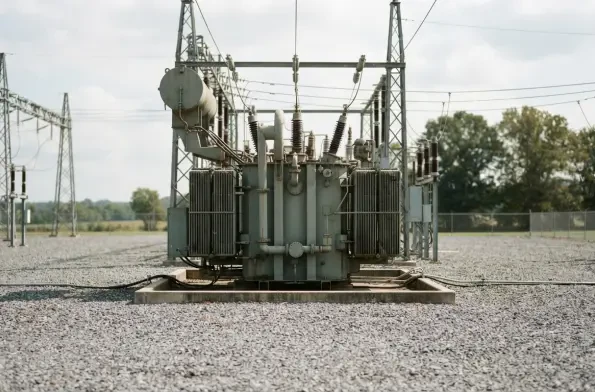
Operational technology differs fundamentally from traditional information technology in its lifecycle and the physical consequences of failure. While an enterprise might replace its laptop fleet or SaaS subscriptions every few years, critical infrastructure assets like protection relays in an electrical substation or pumps in a water treatment plant often have a service life of 30 years or more. This longevity means that many systems currently in operation were designed and deployed long before modern cybersecurity threats became a primary concern. Because these assets represent massive capital investments and are vital for public safety, a “terminate and replace” strategy is rarely a viable option when a vendor’s security posture is found to be lacking. Instead, operators must rely on a combination of risk acceptance and the implementation of compensating controls, such as network segmentation or hardware-based firewalls, to protect aging equipment. Maintaining long-term contract leverage is also essential, as the operator must ensure that the vendor provides technical support, spare parts, and security updates throughout the multi-decade lifespan of the physical asset.
Complexity of Patching and Remote Access
The process of maintaining and securing OT systems introduces technical hurdles that are virtually non-existent in the world of standard corporate IT. Patching a critical industrial control system is a high-risk activity; updating firmware can lead to unexpected process interruptions, require the physical presence of a specialized technician at a remote site, or even necessitate expensive and time-consuming regulatory recertification. In this environment, security is less about the rapid deployment of every available patch and more about the vendor’s ability to thoroughly qualify updates and provide clear, actionable vulnerability disclosures. These disclosures must be integrated into the operator’s specific maintenance windows to prevent unplanned downtime that could disrupt essential services or compromise public safety. Furthermore, many OT vendors maintain persistent, standing remote access to the systems they support to facilitate maintenance and troubleshooting. This creates a permanent bridge into the core of the operational network that traditional security assessments often fail to capture with sufficient granularity, leaving potential back doors into the infrastructure that are difficult to monitor and even harder to close.
Building a Workable TPRM Program
Tiering Based on Operational Consequence
A successful third-party risk management program in the critical infrastructure sector must prioritize its efforts based on the potential operational consequence of a vendor failure rather than the total financial spend associated with the contract. In a traditional corporate setting, the largest vendors often receive the most scrutiny, but in the world of OT, a small, local system integrator with remote access to a municipal water treatment plant poses a much greater risk than a multi-billion dollar office supply company. Effective tiering must focus on whether a vendor’s failure or compromise could lead to a loss of life, environmental damage, or a prolonged interruption of service. By categorizing vendors based on their level of access to critical control systems and the sensitivity of the data they handle, organizations can ensure that their limited security resources are focused on the highest-risk relationships. This consequence-based approach allows security teams to move beyond generic questionnaires and instead perform deep technical evaluations of the third parties that could realistically cause a catastrophic failure of the infrastructure.
Implementing Bifurcated Assessment Workflows
To accurately gauge the risks associated with modern industrial suppliers, operators should implement bifurcated assessment workflows that separate corporate-level security from product-specific integrity. The corporate assessment focuses on the vendor’s general business practices, including its internal IT security posture, financial stability, and historical incident handling capabilities. This provides a baseline understanding of the company as a whole and is often managed through automated security rating platforms or standardized questionnaires. In contrast, the product or service assessment focuses specifically on the technical security of the OT equipment or software being provided. This includes an evaluation of the vendor’s secure development lifecycle (SDL) and a thorough review of the Software Bill of Materials (SBOM) to identify any vulnerable open-source components embedded in the product. By maintaining these two distinct streams of evaluation, an operator can identify a vendor that might have a solid corporate reputation but produces a technically flawed product, or conversely, a small manufacturer with a highly secure product but weak internal IT controls that could lead to a data breach.
Aligning Operations with Legal Requirements
Contractual Alignment with Reporting Windows
The modern regulatory landscape, characterized by the 2026 enforcement of updated incident reporting standards, requires that vendor contracts be drafted with extreme precision regarding notification timelines. If an infrastructure operator is legally mandated to report a breach to a government regulator within 24 hours of discovery, the third-party vendor must be contractually obligated to notify the operator in a significantly shorter window, such as 4 to 12 hours. This time buffer is critical, as it allows the operator’s internal security and legal teams to validate the vendor’s report, assess the potential impact on their own systems, and prepare the necessary documentation for the regulator. Contracts should also explicitly demand that vendors disclose known vulnerabilities in their products as soon as they are identified and coordinate the implementation of security controls for any vendor-initiated remote access. These legal requirements ensure that the operator is never left in the dark about a risk originating in its supply chain, allowing it to remain in compliance with standards like NERC CIP-013 while maintaining the safety and reliability of the services provided to the public.
Managing Systemic Concentration and Fourth-Party Risks
Concentration risk has become a major concern for critical infrastructure sectors, as many operators often rely on the same small pool of specialized vendors for critical control systems or cloud-based SCADA backups. If a single vendor that serves multiple power utilities or water districts suffers a catastrophic failure, it could escalate from a localized problem into a national security event. Monitoring these “fourth-party” risks is essential for long-term resilience, as it requires operators to look beyond their direct suppliers to understand the shared dependencies that exist deeper in the supply chain. For instance, if several key vendors all rely on the same specialized semiconductor manufacturer or the same cloud availability zone, a disruption at that foundation can cause a cascading failure across the entire industry. Operators must work collaboratively with industry peers and government agencies to map these systemic dependencies and develop contingency plans for scenarios where a common service provider becomes unavailable. This broad perspective is necessary to ensure that the interconnected nature of modern infrastructure does not become a single point of failure for society.
The Role and Limits of Technology
Monitoring Capabilities of Modern Platforms
Technology serves as a vital enabler for managing third-party risk, but it must be applied with a clear understanding of its inherent limitations in an industrial context. Digital security rating platforms are highly effective at providing a continuous, “outside-in” view of a vendor’s internet-visible footprint, allowing operators to monitor for sudden drops in security hygiene or the emergence of new vulnerabilities on public-facing servers. Likewise, Governance, Risk, and Compliance (GRC) platforms are indispensable for managing the massive audit trails required by regulations like NIS2 and NERC CIP, as they house the records of assessments, contract negotiations, and remediation efforts in a centralized location. These tools provide the efficiency needed to manage hundreds or thousands of vendor relationships at scale, flagging potential issues for human review and ensuring that no critical assessment expires unnoticed. However, while these platforms are excellent for monitoring the corporate IT health of a vendor, they are typically unable to see through the air gaps of an OT network or evaluate the proprietary code of a specialized controller, leaving a significant visibility gap that must be addressed through other means.
Integrating Manual Engineering and Assurance Audits
For high-consequence OT vendors, automated tools were historically insufficient for providing a complete picture of risk, necessitating a hybrid approach that combined digital monitoring with manual engineering reviews. These technical deep-dives into product architecture and on-site assurance audits allowed operators to verify that a manufacturer’s secure development claims were actually reflected in the physical hardware and software being delivered. Organizations that achieved the highest levels of resilience successfully integrated these engineering reviews into their standard procurement and maintenance cycles, ensuring that every critical component was vetted by experts who understood the physical processes at stake. This rigorous process established a transparent and defensible risk management framework that went far beyond basic compliance checklists. By balancing the speed of automated data with the depth of human expert analysis, infrastructure operators effectively mitigated the risks inherent in an increasingly interconnected global supply chain. This comprehensive strategy ultimately ensured that the systems providing electricity, clean water, and safe transportation remained robust against the evolving threats of the modern digital landscape.