Security professionals recently discovered that a specialized hardware device, used to manage power grids or hospital equipment, can be fully controlled by typing a single malicious command into a username prompt without ever needing a valid password. This critical vulnerability, identified as CVE-2025-67038, represents a catastrophic failure in the authentication logic of the Lantronix EDS5000 series. While these devices are designed to streamline operations, they have inadvertently become the weakest link in the digital defense of modern utilities.
The flaw fundamentally changes the security landscape for any organization relying on these specific serial-to-IP servers. By bypassing the standard requirements for a password, an attacker can leapfrog directly into the administrative core of the operating system. This level of access is not merely a breach of data; it is an acquisition of the keys to the physical kingdom, where digital instructions translate into mechanical actions.
A Single Login: The Gateway to Total System Control
The vulnerability known as CVE-2025-67038 allows an unauthenticated attacker to bypass traditional security barriers and gain root privileges on Lantronix EDS5000 servers simply by manipulating a username field. This flaw effectively turns a standard login prompt into a high-level gateway for executing arbitrary commands, placing the very hardware designed to manage critical networks in the hands of malicious actors without requiring a single credential. The absence of proper input validation means that the system treats certain character sequences as instructions rather than simple identifiers.
Once root access is achieved, the attacker possesses the same authority as a legitimate system administrator, enabling the modification of settings, the deletion of logs to hide tracks, and the redirection of network traffic. This level of control is particularly dangerous because it occurs at the hardware level, below the visibility of many traditional antivirus or endpoint detection programs. The simplicity of the exploit ensures that even low-skilled actors can achieve high-impact results with minimal effort.
Essential Connections: Serial-to-IP Servers in Operational Technology
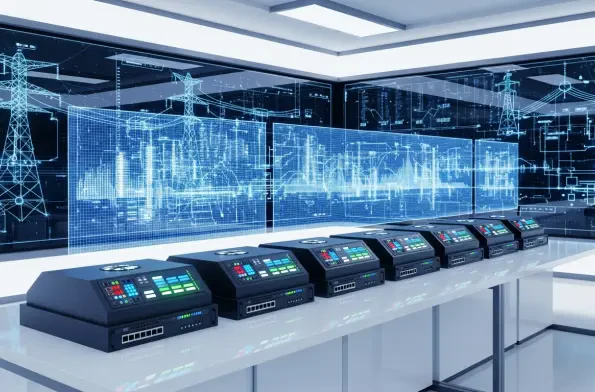
Serial-to-IP servers act as the connective tissue between modern digital networks and legacy industrial hardware, making them indispensable in manufacturing, energy, and healthcare sectors. These devices translate the language of older sensors and controllers into data that can be managed over standard internet protocols. Because these devices often manage communication with sensitive sensors and industrial controllers, their compromise represents a significant threat to the physical operations of critical infrastructure, where the digital and physical worlds converge.
In many industrial environments, replacing legacy equipment is cost-prohibitive, so bridges like the Lantronix EDS5000 are used to extend the life of essential machinery. This creates a high-stakes environment where a single vulnerability in a translation device can bring an entire production line or power distribution center to a standstill. The reliance on these servers means that any interruption in their service or integrity ripples toward the very foundation of public safety and economic stability.
Technical Mechanics: Analyzing Exploits and Network Risks
The exploit is a classic command injection flaw where unsanitized input in the username parameter is executed directly by the operating system. Instead of checking if the input is a valid name, the server interprets special characters as a signal to run local system commands. Beyond immediate device takeover, this vulnerability serves as a persistent foothold for lateral movement, enabling attackers to pivot from an exposed serial-to-IP server to more lucrative internal targets like workstations or data centers.
Successful exploitation can lead to disastrous scenarios, such as manipulating industrial sensor readings to hide hazardous conditions or deploying malicious firmware to brick essential medical equipment. If a hacker alters the data coming from a pressure sensor in a chemical plant, the automated safety systems might fail to engage during a crisis. This ability to falsify reality for human operators makes command injection in operational technology one of the most feared vectors in cybersecurity.
Targeted Tactics: Threat Actor Interest and CISA Intervention
Research from Forescout indicates that threat actors are actively reverse-engineering security patches to develop functional exploits within days of their release. Evidence from global honeypots reveals that Lantronix hardware is being specifically fingerprinted and targeted, rather than being swept up in generic internet scans. This precision indicates that attackers are aware of the high value of industrial targets and are looking for specific entry points that offer the greatest leverage over a victim’s network.
This alarming trend, coupled with the fact that thousands of devices remain exposed, prompted the Cybersecurity and Infrastructure Security Agency (CISA) to add the vulnerability to its Known Exploited Vulnerabilities catalog. This federal designation forced agencies and private partners to recognize the urgency of the situation. The speed at which exploits were developed—often before technical documentation was even public—highlighted a sophisticated level of interest from groups focused on industrial espionage and sabotage.
Strategic Defense: Frameworks for Neutralizing the Lantronix Vulnerability
Securing critical infrastructure against this threat required an immediate, multi-layered defense strategy that prioritized the application of official firmware updates. Organizations moved away from simply trusting peripheral devices and instead adopted a zero-trust model where every component was verified before communicating. The most effective responders implemented strict network segmentation that ensured a compromised serial server could not reach the broader corporate network or sensitive databases.
Beyond technical patches, teams established persistent monitoring that flagged any unauthorized shell activity at the hardware level. These organizations also successfully transitioned their legacy devices into isolated virtual local area networks, effectively cutting off the public internet from the vulnerable interfaces. This shift toward proactive isolation and granular control provided the necessary buffer to maintain operational continuity while the broader industry worked to replace or secure the aging infrastructure components that once stood as easy targets.