Malik Haidar has built a career navigating the complex labyrinth of multinational security, where the stakes involve protecting both digital assets and thousands of human lives across various continents. He has spent decades analyzing how vulnerabilities emerge when systems fail to communicate, leading him to advocate for a more cohesive, business-aligned approach to physical protection. By merging technical intelligence with a pragmatic business perspective, he has become a leading voice for organizations looking to fortify their infrastructure without drowning in unnecessary complexity. In this conversation, we explore the evolution of the security market, the philosophy of “baked-in” simplicity, and the shifting dynamics between cloud-hosted accessibility and the reliability of on-premises hardware. We delve into how modern access control is expanding into unconventional territories, from forklift security to temporary construction sites, and why the future of the industry might actually lie in having less technology rather than more.
Security systems often integrate disparate technologies like access control and video surveillance. How does a consolidated, single-platform approach change the operational reality for those managing large-scale facilities?
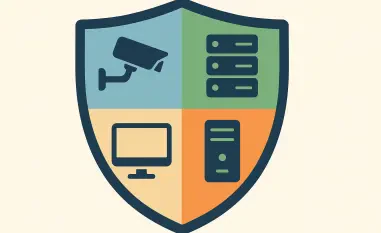
When you look at the scale of modern operations, where companies are securing upwards of 30,000 buildings a year across more than 60 countries, the traditional fragmented model starts to crumble under its own weight. Historically, we’ve seen a market dominated by niche manufacturers who provide excellent solutions in one narrow category—perhaps just wireless door handles or just video surveillance—but they force the end-user to act as the glue between these systems. A consolidated approach flips that script by ensuring that access control, door entry, and video surveillance are not just “integrated” through a messy software handshake, but are fundamentally designed to function as a single unit. This creates a synergy where the total system becomes significantly greater than the sum of its individual parts, allowing a facility manager to see a video clip of an unauthorized entry attempt the exact second it happens, all within one interface. For the professional installers we work with, this simplicity isn’t just a luxury; it’s a competitive advantage that allows them to deploy high-end security in education, healthcare, and manufacturing without the typical headaches of multi-vendor compatibility issues.
You have often argued that simplicity is more than just a user interface update. How do you embed that philosophy into the actual DNA of a security system?
There is a persistent misconception in our industry that you can take a bloated, over-engineered system and “make it simple” just by slapping a clean UI redesign on top or by stripping away a few obscure features. True simplicity has to be baked into the core of the business from day one, and it requires a culture where every developer and engineer truly believes in a minimalist, intuitive approach. We have been banging the drum for simplicity for over 30 years now, and it’s fascinating to see the rest of the market finally shifting toward that mindset as users demand technology that feels as natural as the smartphones in their pockets. At its heart, this philosophy is woven into the company structure itself, ensuring that from the moment a circuit board is designed to the moment a five-year warranty is issued, the goal is to reduce friction. When simplicity is part of the culture, you end up with systems that are not only easier to use for the building owner but are also significantly more reliable because there are fewer points of failure and less “noise” in the system’s architecture.
As we move toward more flexible work environments, how do phone-based and cloud-hosted solutions like Solo differ from traditional networked systems in their practical application?
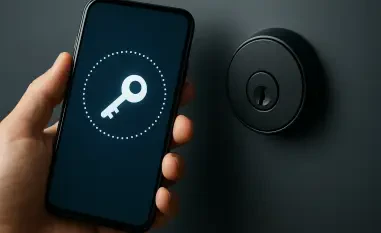
The shift toward a phone-based, cloud-hosted model represents a massive leap forward because it treats the user’s smartphone as the actual decision-making center of the security system. Unlike traditional networked systems, such as Paxton10 which requires an on-premises server to handle multi-site management, a system like Solo is designed to be completely “all in” on mobile technology. This removes the need to tether door controllers to a customer’s IP network, which is often a major pain point in installations; instead, you simply connect the controller to a lock power supply, wire the relay, and the system is live. We are even seeing innovations like the DoorTag, which is a completely wireless component that requires no power of its own, replacing the traditional RFID reader entirely. This makes it an ideal solution for off-grid or unconventional needs, such as securing electric car charging points, utility substations, or even bike storage facilities where dragging data cables would be cost-prohibitive. It offers that rare combination of networked benefits, like real-time event reporting and centralized permission control, but with the physical installation simplicity of a standalone lock.
With the rise of mobile credentials, there is a lot of debate about the future of physical tokens. Do you believe we are witnessing the end of the traditional RFID card and fob?
Mobile credentials certainly hold some serious advantages that are driving a major wave of system upgrades across the globe, primarily because they offer layers of security that a plastic card simply cannot match. When you use a phone, you’re often backed by biometric or passcode verification, and the ability to issue credentials virtually means you never have to worry about the logistics or environmental waste of physical tokens. There’s also a distinct sensory satisfaction in the different user experiences phones provide, such as “long-range mode” for car park barriers or the convenience of simply touching a reader with your hand while your phone stays tucked away in your pocket. However, I don’t believe cards and fobs are going anywhere in the immediate future; there are still plenty of user groups who find comfort in the tactile familiarity of an RFID token. We have to balance the high-tech pull of mobile with the practical reality of certain applications where a physical fob is still the most efficient tool for the job.
The relationship between manufacturers and installers is shifting toward subscription models. How does this new dynamic benefit the end-user while also supporting the installer’s business?
We have always been an installer-first company, and the introduction of subscription-based systems is a logical evolution of that partnership, allowing installers to move away from a one-off transactional approach toward a recurring revenue model. By offering a subscription service, we significantly reduce the upfront hardware and installation costs for the end-user, making high-quality security accessible to businesses that might have been put off by a large initial capital expenditure. This creates a win-win scenario: the customer gets a constantly updated, managed service, and the installer builds a long-term relationship with their client, often backed by our market-leading support team and a five-year warranty. The opportunities for this are virtually limitless, especially in sectors with massive numbers of users across many locations, such as national gym chains or sprawling building sites where security needs are temporary and need to be scaled up or down rapidly. It’s about keeping pace with changing customer expectations while giving our installers the tools to win more business through flexible, modern financial models.
Given the rapid advancement of cloud technology, do you think on-premises servers will eventually become obsolete in the physical security space?
While cloud technology is improving at a staggering rate and offers incredible benefits in terms of scalability and lower cost of ownership, I don’t expect it to completely replace on-premises servers anytime soon. Physical security is unique because it deals with the “here and now” of a physical building, and there are always going to be applications that are intentionally off-grid or located in environments with unreliable connectivity. For these scenarios, an on-premises server like the one used in Paxton10 remains the inevitable and most secure choice because it provides that localized “brain” that functions regardless of the outside world’s digital infrastructure. We also see many commercial offices and public buildings that prefer the total control and native video surveillance functionality that comes with an on-site server. The future isn’t about one technology killing the other; it’s about having a diverse toolbox so that whether a site is a temporary construction zone or a permanent government facility, the hardware matches the specific demands of the environment.
What is your forecast for the physical security industry over the next decade?
My forecast is that we are going to see a major push toward what I call “less tech” rather than the pursuit of more gadgets. While the industry often gets distracted by sophisticated equipment with infinite compute power and AI promises, the real progress will be made by those who can fulfill the core requirement of keeping people and assets safe while actually reducing the cost and complexity of the hardware involved. We will see more systems that leverage the technology people already carry—their phones—to act as the interface, moving away from tethered infrastructure and toward wireless, energy-efficient components. The ultimate goal is to make security so seamless and simple that it becomes invisible, protecting 30,000 buildings or 300,000 buildings with the same ease of use. I believe the winners in the next decade won’t be the ones with the most features, but the ones who can deliver the most peace of mind with the smallest possible footprint.