Malik Haidar is a veteran cybersecurity expert who has spent his career at the intersection of business intelligence and high-stakes security operations for global corporations. With deep experience in neutralizing sophisticated threats and optimizing security architectures, he understands that safety is no longer just about a guard at a gate—it is about the seamless integration of technology and strategy. Today, he joins us to discuss the mounting pressures facing the alarm response sector, a field currently caught in a complex balancing act between operational speed, escalating costs, and the rigorous demands of environmental and social governance.
The following discussion explores the “three-way conflict” reshaping the industry, where traditional methods like transporting hundreds of physical keys in heavy vehicles are colliding with modern sustainability goals and staffing shortages. We delve into the logistical nightmares of fleet management, the hidden risks of centralized key storage, and the potential for digital access control systems, like SentriGuard, to revolutionize how patrols operate across large geographical areas.
Security providers often face a conflict between meeting strict response times, controlling rising fleet costs, and adhering to new ESG standards. How are these three competing demands fundamentally changing the way mobile response teams operate on the ground?
The reality on the ground has shifted from a linear challenge of just getting to a site quickly to a complex three-way tug-of-war that pulls every operational resource in different directions. For decades, the primary metric was the clock—if an alarm went off, the goal was simply to be the first one there to secure the perimeter. Now, we are seeing a landscape where providers are managing increasingly complex contracts across vast geographical areas while trying to protect shrinking margins against the rising costs of fuel and vehicle maintenance. This is compounded by a constant recruitment cycle that leaves many organizations struggling to maintain service consistency with limited personnel. The introduction of ESG expectations adds a third layer of friction, as companies are now required to provide measurable proof of their sustainability efforts, which is incredibly difficult when your entire business model relies on heavy patrol vehicles covering thousands of miles. It is no longer enough to be fast; you have to be efficient and environmentally conscious, all while the industry feels the weight of these three competing forces every single day.
One of the most common methods for mobile response involves carrying hundreds of client keys within a secure locker inside a patrol vehicle. From a risk management perspective, what are the primary vulnerabilities and operational bottlenecks inherent in this “keys-on-board” model?
While the “keys-on-board” model has been the industry standard for a long time, it creates a massive single point of failure that keeps security managers awake at night. When you have a single patrol vehicle carrying hundreds of physical keys, you are essentially putting all your eggs in one basket; if that vehicle is involved in a collision or, worse, a targeted break-in, the security of every single one of those client sites is instantly compromised. The financial fallout of such an event is staggering, as the cost of replacing locks and rekeying dozens or even hundreds of properties can be operationally disruptive and incredibly expensive. From a logistical standpoint, it also creates a rigid bottleneck because only the specific patrol car with those keys can respond to an alarm at a specific site. If that vehicle is tied up at an incident miles away, the response time suffers, and the client’s property is left vulnerable while the nearest available patrol is unable to gain entry because they don’t have the physical key in their own locker. This dependency on a specific piece of metal in a specific car is becoming a major stumbling block in an era where we need much more fluid and dynamic response capabilities.
As sustainability moves from a corporate talking point to a compliance requirement, why is the traditional keyholding model such a significant barrier to fleet electrification and the reduction of Scope 3 emissions?
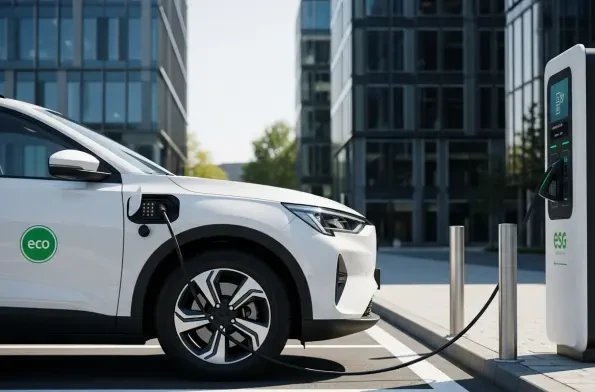
The push for green fleets is hitting a very physical wall when it comes to the traditional keyholding model, primarily because of the sheer weight and security requirements of the equipment involved. To safely transport a high volume of client keys, vehicles must be reinforced with heavy, secure lockers, which significantly increases the curb weight of the patrol car. This extra mass, combined with the long shifts and the massive mileage these patrols cover, makes transitioning to lighter hybrid or electric vehicles a massive practical challenge. Most electric vehicles currently on the market aren’t designed to carry that kind of payload over such high-mileage routes without constant recharging, which would lead to unacceptable downtime during a shift. Furthermore, clients are now looking closely at Scope 3 emissions, meaning they are holding their security suppliers accountable for the carbon footprint of the services they provide. This creates a scenario where the security provider is stuck between a rock and a hard place: they want to modernize their fleet to meet environmental goals, but the physical reality of hauling hundreds of keys in a reinforced “rolling vault” makes that transition nearly impossible under the current operational structure.
Beyond environmental concerns, there is a growing focus on the “Social” and “Governance” aspects of ESG. In what ways do tightened response targets and traditional key management impact the health, safety, and operational risk of the patrol officers themselves?
The human element of the security industry is often the first to feel the strain when operational models are outdated, and we are seeing that clearly in the “Social” pillar of ESG. When you have incredibly tight response targets combined with the logistical hurdles of physical key management, it places an immense amount of pressure on the patrol officers. They are often operating within compressed timeframes, rushing from one site to another, which naturally increases the risk of road traffic accidents and other health and safety concerns. This pressure can lead to process breaches where corners are cut just to hit a contractual deadline, creating a dangerous environment for the staff and a liability for the firm. We are seeing a cycle of burnout and stress that contributes to the ongoing staffing pressures and the constant need for recruitment that the sector is currently facing. A governance structure that relies on physical keys also makes auditing much more difficult, as tracking exactly who had which key and when they used it requires manual logs that are prone to error, further complicating the oversight of the entire operation.
Many organizations are now exploring hybrid access control models that use systems like SentriGuard or mobile credentials. How does decoupling the physical key from the patrol vehicle enable a more efficient and responsive security operation?
The transition toward digital access or hybrid models is really about breaking the chains that physical keys have placed on operational efficiency for decades. By using systems like SentriGuard or digital mobile credentials, you remove the requirement for a specific vehicle to carry a specific key; instead, the nearest available patrol can respond to an alarm because they can be granted access remotely or through a secure on-site system. This drastically reduces unnecessary mileage and operational downtime because guards no longer have to drive back to a central facility to collect a key or wait for a specific “key-holding” vehicle to arrive from miles away. From a sustainability perspective, this allows companies to finally look at lighter, more efficient fleet options because they no longer need to carry those heavy, reinforced lockers everywhere they go. It also provides a level of auditability and traceability that was previously impossible, giving managers a real-time view of who is accessing a site and why. It’s not just about getting rid of metal keys; it’s about creating a frictionless, data-driven response model that can actually meet the high-performance demands of modern service level agreements.
What is your forecast for the future of alarm response as organizations move away from traditional keyholding toward more integrated, technology-driven access management?
I believe we are entering an era where the definition of “efficiency” in security will be completely rewritten, shifting away from a focus on individual response times toward the total optimization of the entire operational ecosystem. In the coming years, we will see a widespread move toward hybrid access models where physical keys are still present for legacy systems but are managed through intelligent, remote-access hardware that eliminates the need for constant transportation. This shift will allow security providers to finally meet those aggressive ESG targets by downsizing their fleets and moving toward electrification, as the heavy “key vault” becomes a relic of the past. We will also see a much more professionalized environment for patrol officers, where digital tools reduce the frantic stress of the job and provide a clear, automated audit trail for every action taken on-site. Ultimately, the winners in this space will be the organizations that stop viewing keyholding as a standalone task and start seeing it as a critical component of a digital-first business strategy. The industry is reaching a tipping point where the costs of staying with the old way—both financially and environmentally—will simply be too high to ignore any longer.