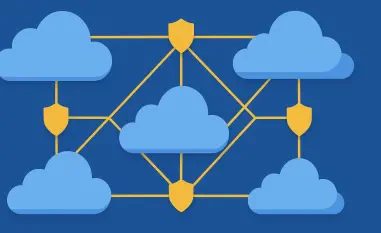
The rapid evaporation of the corporate network perimeter has forced a fundamental reckoning within the global cybersecurity landscape, rendering legacy defense strategies largely ineffective against modern threats. For decades, the industry operated under a “castle-and-moat” philosophy that prioritized the fortification of the physical office network, but the ubiquity of distributed cloud architectures and remote workflows has shattered these rigid boundaries. Organizations are no longer protecting a static site; they are managing a fluid ecosystem where users, devices, and applications interact across untrusted environments. This transition necessitates a departure from location-based security toward a more nuanced, data-centric approach that places identity at the heart of every transaction. As businesses integrate sophisticated artificial intelligence into their core operations, the urgency to secure actual information rather than the pipes it travels through has reached a critical point where trust must be earned through real-time context.
The Erosion of Traditional Network Boundaries
Traditional security boundaries have transitioned from physical walls to abstract concepts as the modern workforce leans heavily into mobile platforms and third-party SaaS environments. Employees today rarely function within the safety of a managed local area network, instead relying on a patchwork of home routers, public hotspots, and unmanaged devices to fulfill their roles. This shift means the concept of a “trusted internal network” has become a dangerous fallacy, as attackers no longer need to breach a physical facility to gain access to crown-jewel assets. The dissolution of this perimeter requires security leaders to treat every connection attempt as potentially hostile, regardless of its origin. This reality is compounded by the increasing sophistication of phishing and social engineering attacks that bypass hardware-level protections by targeting the human element directly. Focus has shifted toward verifying the context of every digital interaction to ensure that access is never assumed.
The Governance Challenge: Managing Stealth AI Integration
Complexity within these distributed environments is significantly intensified by the silent integration of generative AI features into common tools like web browsers and everyday productivity suites. Many of these capabilities operate as “stealth” upgrades, often bypassing standard IT procurement and vetting cycles, which leaves sensitive data exposed to unassessed processing models. The distinction between enterprise-grade AI, which emphasizes data sovereignty, and consumer-grade tools, which frequently ingest user data for training purposes, has become a primary point of vulnerability for organizations without robust governance. When employees paste proprietary code or customer information into an unmanaged AI assistant, the traditional perimeter offers no protection against the resulting data leak. Addressing this requires a proactive strategy that monitors application behavior at a granular level, identifying when sensitive information leaves the managed ecosystem. Failure to govern these automated inputs and outputs creates a dangerous blind spot.
Identity: The Fundamental Control Point in Zero Trust
As traditional network walls become obsolete, identity has assumed the role of the most critical control point within a modern Zero Trust architecture. Access is no longer viewed as a binary, one-time event granted during a morning login; rather, it is a dynamic, continuous process that evaluates a multitude of risk factors in real-time. Security systems must now analyze user behavior patterns, device health metrics, and geographic anomalies to determine the legitimacy of each request as it occurs. This persistent verification model ensures that even if an attacker manages to compromise valid credentials, the potential damage is mitigated by a system that detects shifts in typical activity or unauthorized attempts to access sensitive segments. By moving toward a session-based trust model, organizations can adapt to the fluid nature of modern work, where a user might move between different networks and devices throughout a day. This granular approach transforms security from a restrictive gatekeeper into a flexible enabler.
Managing Machine Identities and Automated Service Accounts
Beyond human employees, a comprehensive identity strategy must also encompass non-human entities such as AI agents, APIs, and automated service accounts. These machine identities frequently possess high-level administrative privileges and move vast quantities of data between systems, yet they are often overlooked in traditional lifecycle management processes. In an era where automated workflows drive business efficiency, these invisible actors represent a massive attack surface if they are not strictly monitored and governed. Applying the principle of least privilege to these automated service accounts is essential to prevent lateral movement within a network should a single API key be leaked. Organizations are now implementing identity-first governance that tracks the “who, what, and where” of every automated request, ensuring that machine-to-machine communication remains as secure as human interaction. Centralizing the management of these diverse identities allows for a unified view of the organization’s risk posture.
Shifting Toward Governed Compute Environments
To safeguard intellectual property and highly sensitive customer records, enterprises are pivoting away from allowing valuable data to reside permanently on local endpoints. Instead of treating a high-performance laptop as a primary storage container, modern organizations are utilizing these devices merely as secure “windows” into governed compute environments. By keeping data within centralized, cloud-based repositories where strict security policies are enforced at the source, companies significantly reduce the likelihood of information leaks via stolen hardware or unmanaged personal devices. This architectural shift ensures that sensitive calculations and data manipulations occur within a controlled sandbox, where telemetry can be easily gathered and analyzed. This approach not only enhances security but also simplifies compliance with global data residency regulations, as the information never truly leaves the authorized jurisdiction. It transforms the endpoint from a liability into a strictly monitored interface.
Achieving Comprehensive Visibility into Data Telemetry
True governance and data protection depend entirely on the organization’s ability to maintain comprehensive visibility into how information moves throughout the digital ecosystem. Security teams require the technical capacity to track which applications are receiving data, who is accessing specific files, and whether that information is being improperly retained in unauthorized locations. Without real-time telemetry and advanced data-loss prevention tools, organizational security policies remain purely theoretical exercises that lack the teeth necessary for enforcement. Modern platforms now utilize machine learning to baseline normal data movement patterns, allowing them to flag suspicious exfiltration attempts or unauthorized data sharing as they happen. This level of oversight is vital for detecting internal threats or compromised accounts that may be slowly siphoning off intellectual property over long periods. By prioritizing data-centric visibility, businesses can move beyond simple reactionary measures and anticipate threats.
Automated Threat Response and Identity Orchestration
The integration of automated threat response mechanisms with real-time identity signals has become a cornerstone of resilient enterprise defense strategies. As the volume of security telemetry continues to grow, human analysts can no longer manually correlate every disparate alert without the risk of significant delay. By leveraging automated orchestration, systems can instantly revoke access or isolate a suspect device the moment a high-risk anomaly is detected, such as a login from an impossible geographic location combined with a massive file download. This rapid response capability drastically reduces the “dwell time” of attackers within a network, limiting the potential scope of a breach before it can escalate into a full-scale crisis. These automated protocols are not merely about blocking access; they are about maintaining business continuity by dynamically adjusting permissions based on the shifting risk environment. This proactive stance allows security teams to focus on strategy while routine mitigations are handled at speed.
Reflecting on the Transition to Data Centricity
The transition toward an identity-centric and data-focused security model proved to be the most significant evolution in enterprise defense over the last several years. Organizations that recognized the fragility of the traditional perimeter early were able to navigate the complexities of cloud adoption and remote work with minimal disruption. These businesses successfully moved away from static defenses, instead establishing a framework where trust was never inherent but always verified through continuous assessment. The implementation of robust identity governance for both human and machine actors allowed for a more granular control over access, while the centralization of compute resources effectively neutralized the risks associated with unmanaged endpoints. By prioritizing the protection of the information itself, security leaders demonstrated that resilience was not about building higher walls, but about ensuring the integrity of the data regardless of where it traveled. This strategic shift laid the groundwork for a more agile and secure digital enterprise.
Actionable Strategies for Long-Term Digital Resilience
Looking forward, the next logical step for organizations involves the deeper integration of “security as code” to automate the enforcement of these data-centric policies across the software development lifecycle. Security teams should move to implement standardized identity frameworks that span across multi-cloud environments, ensuring a consistent policy regardless of the underlying platform. It is also essential to conduct regular audits of machine identities and API permissions to prune excessive access that naturally accumulates over time. Investing in privacy-enhancing technologies will allow businesses to leverage AI and data analytics more aggressively without compromising the confidentiality of their core assets. By fostering a culture of “identity-first” awareness among all employees, organizations can transform their workforce from a potential liability into an active component of the defense strategy. Ultimately, the focus must remain on the fluid movement of data, ensuring every touchpoint is authenticated and logged.