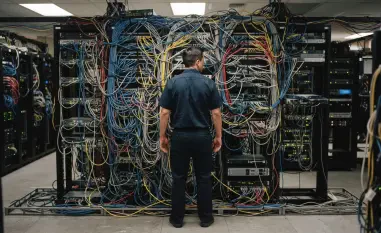
Current benchmarks show that NTT’s on-premises AI achieves approximately 80 percent of the performance of top-tier frontier models in discovering system vulnerabilities. This breakthrough comes at a critical juncture for the global telecommunications giant, which has observed a sevenfold increase in blocked cyber intrusions as of late 2024. Under the stewardship of CEO Akira Shimada, NTT Group is fundamentally rewriting its security playbook to move beyond traditional perimeter-based defense. The modern adversary no longer relies on manual probing; instead, it utilizes automated artificial intelligence to hunt for flaws at a scale that exceeds human defensive capabilities. Consequently, the organization has pivoted toward an AI-integrated framework that seeks to identify and neutralize threats before they can be weaponized. This transition is not merely a technological upgrade but a necessary survival strategy in an era where data exposure at major corporations has reached hundreds of millions of records annually. By prioritizing proactive detection, the company aims to secure its vast infrastructure against an increasingly sophisticated and relentless digital opposition.
Rapid Acceleration of Digital Threats
The most pressing challenge facing modern cybersecurity professionals is the complete evaporation of the response window that once allowed teams to patch vulnerabilities after their discovery. In previous years, a grace period existed between the identification of a software flaw and its first active exploitation by malicious actors. However, AI-driven tools have effectively eliminated this luxury by enabling hackers to analyze code and launch global attacks even before a vulnerability is officially disclosed to the public. A prominent example involved a foundational flaw in PHP that saw exploitation attempts surface days before the official security announcement was even made. Within a mere twenty-four hours of the disclosure, the threat had metastasized across more than one hundred countries. This rapid diffusion demonstrates that manual defensive strategies are now largely obsolete. To maintain stability, organizations must deploy real-time automated systems capable of recognizing patterns and blocking exploits at machine speed without waiting for human intervention.
Beyond the sheer speed of modern attacks, the tactical methodology of adversaries has evolved through the use of vulnerability chaining. Historically, security departments prioritized high-severity flaws while often leaving minor, low-risk vulnerabilities unpatched due to a shortage of time or personnel. Artificial intelligence has fundamentally changed this risk calculation by allowing attackers to aggregate thousands of these insignificant bugs to find unique paths into a network. By determining how to combine multiple minor weaknesses into a single, critical entry point, AI has turned the concept of a low-risk flaw into a dangerous oversight. This cumulative risk model dictates that no gap in the digital perimeter can be ignored, as even the most specialized and obscure weaknesses can now be leveraged to bypass traditional security measures. Enterprises are finding that a siloed approach to threat management is no longer sufficient. Instead, a holistic view of the entire system architecture is required to anticipate how disparate flaws might be linked together by a motivated and AI-equipped adversary.
Expansion Into Physical and Industrial Risks
The theater of cyber warfare has significantly expanded beyond the theft of digital records to encompass the disruption of physical infrastructure and Operational Technology. Recent security breaches have demonstrated that even seemingly mundane internet-connected devices, such as industrial refrigeration units at supermarkets, can be turned into weapons of economic sabotage. By compromising the defrost cycles of these systems, attackers have successfully managed to spoil massive food stocks, highlighting that cybersecurity is now intrinsically linked to physical safety and business continuity. Because AI allows for high levels of automation, these types of attacks are now easily repeatable across thousands of disparate locations simultaneously. This shift in targeting from central IT servers to remote physical hardware necessitates a broader defensive perimeter that includes every connected sensor and industrial controller within a company’s portfolio. The potential for large-scale physical damage means that the stakes for maintaining robust security have risen from financial loss to the preservation of essential public services and vital operational assets.
To address these escalating physical and digital threats, NTT is pioneering the use of frontier AI models to conduct extensive white-box testing. This process involves scanning source code and internal system designs to find hidden vulnerabilities before they can be exploited by external actors. However, a significant dilemma arises when using powerful cloud-based AI models, as uploading sensitive proprietary code to a public cloud can itself create a data leakage risk. To resolve this paradox, the organization has focused on developing on-premises security solutions that utilize open-weight AI models. These systems allow for high-level analytical power to be deployed entirely within an organization’s own IT environment, ensuring that sensitive data and system configurations never leave the internal network. While these localized versions currently provide about eighty percent of the analytical depth of the largest cloud models, they offer a superior balance of privacy and performance. This approach provides a blueprint for how large enterprises can leverage cutting-edge AI diagnostics while maintaining absolute sovereignty over their most sensitive digital assets.
Network Infrastructure as a Defensive Tool
A persistent challenge in securing modern industrial environments is the continued reliance on legacy equipment and small Internet of Things devices that lack the processing power to host modern security software. These un-agentable devices often remain vulnerable because they cannot run standard endpoint detection and response tools, making them attractive targets for hackers. NTT has countered this vulnerability by reimagining the network infrastructure itself as a massive, intelligent sensor. By monitoring traffic patterns at the infrastructure level, the system can identify and block anomalous behaviors targeting these weak points without requiring any local software installation. This network-centric approach allows for the protection of older hardware that would otherwise be exposed in an increasingly hostile digital environment. It also provides a critical layer of defense for the sprawling ecosystem of sensors and controllers that define modern smart cities and industrial hubs. By shifting the defensive burden from the device to the network, organizations can secure their entire hardware stack regardless of the age or technological limitations of individual components.
While advanced AI tools represent the future of defense, NTT emphasizes that foundational security hygiene remains an indispensable component of a successful strategy. The massive volume of data leaks recorded in the Japanese corporate sector reached nearly four hundred million records in 2024 and was often traced back to vulnerabilities in the supply chain rather than the central core. This underscores the reality that an organization’s security is only as strong as the third-party vendors and interconnected partners that support it. Effective defense now requires the decommissioning of end-of-life hardware, the rigorous application of patches, and the continuous auditing of remote access protocols for every external partner. By combining high-speed AI detection with these traditional best practices, a multi-layered defense is created that can withstand the velocity of modern automated attacks. The integration of advanced technology with disciplined operational standards ensures that the entire business ecosystem remains resilient. Addressing these systemic weaknesses at every level of the supply chain prevents minor gaps from becoming catastrophic entry points for sophisticated global threat actors.
Strategic Next Steps for Modern Enterprises
The implementation of these strategies required a fundamental shift in how IT departments viewed internal system designs and code integrity. By adopting white-box testing protocols, organizations were able to simulate the exact techniques used by elite hacking groups, identifying logic flaws that traditional scanners frequently missed. This proactive approach allowed security teams to remediate issues during the development phase rather than attempting to patch live systems under the pressure of an active breach. Furthermore, the use of open-weight models provided a scalable way to implement these tests across diverse business units without incurring the massive costs or privacy liabilities associated with third-party cloud services. The transition to these methodologies underscored the importance of integrating security directly into the DevOps pipeline, ensuring that every new piece of software was born with an inherent layer of protection. This systematic integration proved essential for maintaining a defensive posture that could adapt as quickly as the threats themselves, providing a stable foundation for digital growth.
Looking toward the future of enterprise security, the focus shifted from simple perimeter defense to a more resilient, self-healing architecture. It was concluded that the ability to find and fix flaws faster than an automated adversary became the primary metric for business survival in the late 2020s. By moving toward a zero-trust architecture and embracing localized AI power, companies established a more robust posture that protected both digital data and physical operational technology. Actionable recommendations were established for enterprises to prioritize the decommissioning of unsupported devices and to implement rigorous auditing of third-party vendor access. These steps ensured that the entire business ecosystem remained resilient against the next generation of cyber threats, allowing for a transition from a state of constant reaction to one of strategic foresight. Ultimately, the successful deployment of AI-driven defense mechanisms preserved business continuity and protected critical infrastructure from potentially catastrophic sabotage, securing the digital landscape for the coming years.