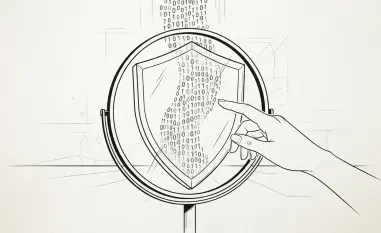
The cybersecurity landscape often finds itself inundated with sensationalist reports that prioritize flashy branding over technical substance, leading to a phenomenon known as vulnerability fatigue among modern IT professionals. This environment creates a perfect vacuum where the distinction between a critical architectural flaw and a standard system operation becomes blurred by high-production websites and dramatic nicknames. Terminal2Shell emerged as a calculated critique of this trend, presenting itself as a devastating global threat that spans over five decades of computing history. By mimicking the aesthetic of high-stakes security disclosures, it successfully highlighted how easily stakeholders can be swayed by frightening statistics and impossible severity scores. The project serves as a mirror for the industry, reflecting the absurd reality of current disclosure practices where the urgency of a patch is often dictated by the quality of a logo rather than the actual risk of exploitation or the presence of a viable attack vector. It effectively forces a conversation about technical literacy and the need for deeper scrutiny in the face of alarming headlines.
The Mechanics: A Case Study in Visual and Technical Parody
The Anatomy: TermGeddon and Impossible Vulnerability Metrics
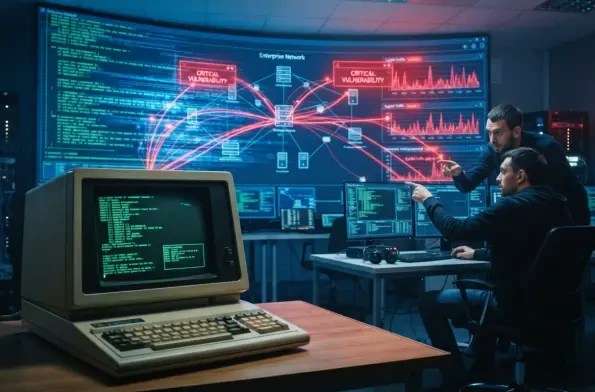
The satirical campaign centered around the TermGeddon exploit, a supposed zero-day vulnerability that claimed to have existed unnoticed since the early seventies while affecting billions of devices. To drive home its point regarding marketing hyperbole, the creators assigned the flaw a CVSS score of 11.0 out of 10. This rating is technically impossible within the Common Vulnerability Scoring System, which utilizes a maximum scale of 10.0 to represent the highest possible severity for an exploit. By choosing a number that literally breaks the scale, the satire targeted the tendency of security firms to escalate threat levels for the sake of media coverage. The website for this faux threat featured high-resolution graphics and urgent calls to action that perfectly replicated the visual language of legitimate security advisories. This deliberate mimicry forced security practitioners to acknowledge that the presentation of a threat can often bypass the critical thinking required to evaluate the actual risk.
Deconstructing the Absence: Standard Features as System Flaws
When investigating the technical claims of the TermGeddon disclosure, one quickly discovers that the exploit is merely the standard operation of a command-line interface. The satirical process describes a scenario where an authorized user with physical access and a keyboard opens a terminal to receive a shell with their own established permissions. This interaction represents the intended behavior of a multi-user operating system and fails to meet any recognized definition of a security vulnerability because no security boundary is crossed. There is no privilege escalation, no unauthorized access to data, and no bypass of authentication protocols. By labeling this basic functionality as a critical flaw, the satire highlights how easily common system actions can be misrepresented to create a sense of panic. This exercise underscores the importance of verifying whether a reported threat involves a legitimate breach of trust or simply describes the normal, day-to-day interactions of an authorized user with their hardware.
Evaluating the Impact: Real Versus Performative Threats
Tangible Risks: Documented Exploits in Servers and Media
In sharp contrast to satirical claims, real-world vulnerabilities like Able2Shell and Plex2Shell represent significant dangers to enterprise and consumer environments. Able2Shell involved a complex chain of exploits within N-central servers that necessitated emergency offline maintenance periods to prevent widespread compromise. Similarly, the Plex2Shell vulnerability allowed attackers to chain flaws within the Plex Media Server to deploy unauthorized software, such as cryptocurrency miners, across affected systems. Furthermore, critical weaknesses like PHP2Shell and WP2Shell targeted web foundations, with the former allowing root access on compromised servers and the latter permitting unauthorized administrator account creation. Protocol-level errors such as those in HTTP2Shell and Node2Shell also highlighted how decoding mistakes could lead to system crashes. These legitimate risks emphasize that the core task of cybersecurity is identifying where an actual boundary has been compromised and where data is truly at risk from malicious actors.
Technical Vigilance: Establishing a Framework for Future Defense
The industry recognized that the true value of analyzing satire lay in its ability to refine the vetting process for all future security disclosures. Decision-makers adopted a more skeptical stance toward branded vulnerabilities by prioritizing the presence of a demonstrated security boundary violation before allocating limited engineering resources to a response. This shift favored technical scrutiny over emotional reaction, ensuring that zero-day claims were met with a rigorous review of required access levels and potential impact. Professionals integrated verification steps that checked for privilege escalation or remote execution as mandatory criteria for high-priority alerts. By focusing on these concrete metrics, organizations successfully avoided the trap of hyper-scaled threats that offered more marketing than risk. The standard became one of evidence-based reaction, where the technical proof outweighed the production value of the disclosure, leading to a more efficient and effective defensive posture.