Exercise Director Jozef Kostelansky noted that incorporating AI agents into military workflows requires precise human verification to prevent false positives and exaggerated risk assessments. This directive comes as the North Atlantic Treaty Organization formalizes a high-capacity strategic collaboration with OpenAI to integrate advanced artificial intelligence into its collective defensive framework. Managed through the NATO Communications and Information Agency (NCIA), this partnership focuses on utilizing large language models to process a staggering 300 billion tokens per month. By embedding these models into daily security workflows, the alliance aims to automate the review of complex software code and validate potential vulnerabilities. This massive data ingestion reflects a shift from reactive measures to a proactive posture, where security teams can accelerate the development of critical patches. The scale of this operation ensures that allied networks remain resilient against increasingly sophisticated digital threats that emerge in real time. This technological leap serves as a cornerstone for maintaining stability in a rapidly evolving global digital landscape.
Strengthening Alliance Infrastructure Through OpenAI
Central to this technological evolution is the Daybreak initiative, a specialized cybersecurity program designed by OpenAI to support authorized vulnerability research within high-stakes environments. Dr. Dylan Browne, the General Manager of the NCIA, has highlighted that this tool allows NATO to move beyond traditional, manual scanning methods toward a more dynamic and responsive posture. By leveraging the advanced reasoning capabilities of large language models, the alliance can identify subtle logical errors in software that older heuristic tools often overlook. This initiative is not merely about finding bugs; it is about establishing a continuous feedback loop where the AI learns from the specific network architectures of the alliance. This integration allows for a customized defensive strategy that adapts to the unique needs of different member nations while maintaining a unified technological standard. Such a leap in capability represents a fundamental change in how the alliance manages its digital assets and defends its sovereign infrastructure from sophisticated actors.
While the primary objective remains the acceleration of threat detection, the alliance is also closely monitoring the underlying economics of AI consumption to ensure long-term viability. Processing 300 billion tokens every month involves significant computational costs and resource allocation that require meticulous oversight from fiscal planners. Dr. Browne emphasized that understanding these costs is as critical as the technical implementation itself to ensure that future procurement remains sustainable. By analyzing token usage patterns, NATO can optimize how models are queried, ensuring that the most resource-intensive tasks are reserved for the highest-priority security threats. This economic mindfulness prevents the overextension of resources while allowing for the massive scale of data processing necessary for modern defense. Ensuring that the technological infrastructure is both fiscally responsible and operationally robust will be the key to maintaining a strategic advantage over the coming years as the digital landscape continues to evolve quite rapidly.
Testing AI Agents in Military Combat Simulations
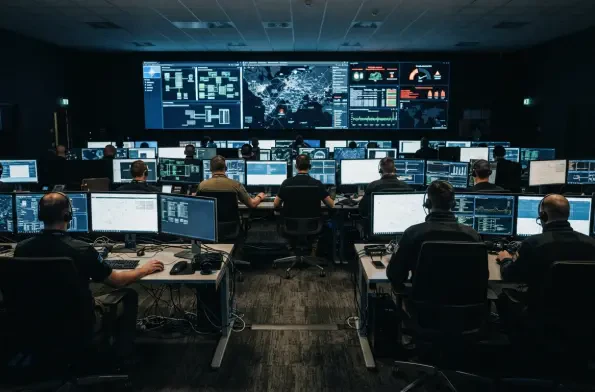
The practical utility of these automated tools was recently demonstrated during the Crossed Swords 2026 exercise held in Tallinn, Estonia, where theory met operational reality. This event involved over 250 specialists from more than 40 nations who tested the deployment of AI agents in both offensive and defensive military cyber operations. By using both locally hosted models and the OpenAI Daybreak platform, participants simulated high-stakes scenarios involving the protection of critical infrastructure from coordinated attacks. The exercise provided a unique environment to observe how AI handles the fog of war in the digital domain, where information is often incomplete or intentionally misleading. Specialists were tasked with integrating AI outputs into their tactical decision-making processes, bridging the gap between machine-speed data processing and human-led strategic maneuvers. This simulation proved that AI can effectively augment the capabilities of human operators during intense periods of digital conflict, providing a significant edge in speed and accuracy.
Beyond simple automation, the exercise underscored the complexity of coordinating machine-speed digital actions with traditional military maneuvers and kinetic force. Participants discovered that while AI can identify and neutralize threats in milliseconds, the broader implications of these actions must be synchronized with ground and air operations. This synchronization requires a sophisticated command and control structure where AI agents act as specialized advisors to human commanders. The Crossed Swords 2026 simulation also highlighted the importance of interoperability, as different member states brought various AI tools to the table that needed to function within a single cohesive framework. This testing ground allowed for the identification of technical bottlenecks and communication gaps that could hinder real-world response times. By refining these workflows in a controlled setting, the alliance ensures that its personnel are prepared to manage the high-velocity nature of modern digital warfare, where the ability to react quickly is often the primary currency for success.
Validating Efficacy: Navigating the Future of Digital Warfare
Despite the rapid integration of automated tools, NATO remains committed to a human-in-the-loop philosophy regarding the ethical and tactical conduct of digital warfare. Recent studies by agencies such as ENISA and CERT-EU confirmed this necessity, as their joint assessment of software codebases found that while AI identified 220 potential issues with 95% precision, it often assigned higher severity ratings than human researchers would. This discrepancy highlights why human experts must remain responsible for final decision-making and for contextualizing threats based on real-world impact. Without human intervention, the alliance risks wasting resources on technical flaws that pose little actual risk to mission success. Specialists are trained to treat AI recommendations as one of several data points, applying their situational awareness to verify conclusions. This approach balances machine efficiency with expert intuition, ensuring that defensive efforts are focused where they are needed most. Maintaining this synergy between man and machine avoids the pitfalls of overreliance on automation.
Ultimately, the strategic shift toward AI-enhanced operations provided the alliance with a necessary evolution in its collective defense posture. The partnership with OpenAI and the rigorous testing conducted during field exercises established a new standard for how international coalitions managed digital risk. Moving forward, the alliance focused on refining procurement strategies to account for the massive scale of data processing required for these systems. Leaders realized that the future of collective security depended on the ability to leverage processing power while managing associated costs effectively. To maintain this momentum, experts recommended the development of decentralized AI nodes capable of operating independently during network outages. They also emphasized the need for standardized AI-testing protocols across all member nations to ensure seamless integration during crises. These actions proved that a balanced integration of machine efficiency and human intuition was the most effective way to counter modern threats. This era of transformation set the stage for a resilient security framework.