Malik Haidar has spent years in the trenches of corporate defense, bridging the gap between high-level business risk and the granular details of cyber espionage. As an expert who has seen the inner workings of multinational security operations, he offers a unique vantage point on the shifting tides of threat intelligence in the modern era. Today, we delve into the aggressive resurgence of a sophisticated threat actor known as Silent Lynx, whose recent campaigns have sent ripples through the Commonwealth of Independent States. Our conversation explores the group’s transition from standard phishing to sophisticated exploit-driven attacks, their strategic fixation on critical resources like water and energy, and the broader implications for regional stability as they weaponize local infrastructure.
How has the operational landscape for Silent Lynx evolved as they have expanded their reach across Central Asia and the CIS region over the past year?
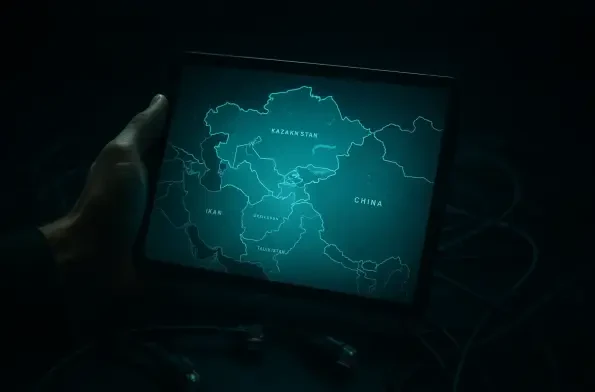
The evolution we are seeing is both methodical and chillingly efficient, moving far beyond the simple phishing lures of the past. Between June 2025 and August 2026, we observed Silent Lynx—also tracked as UAT-6275—broaden its scope to encompass nine specific countries, including Kazakhstan, Kyrgyzstan, Uzbekistan, and even as far as Armenia and Azerbaijan. They aren’t just firing off generic emails; they are utilizing compromised government accounts to send out official-looking documents, which gives their social engineering a devastating veneer of credibility. This high level of trust allows them to bypass traditional skepticism, making their four distinct infection chains incredibly effective against high-value targets. It is a calculated expansion that suggests they have intimate knowledge of regional diplomatic ties and are willing to exploit those relationships to gain a foothold in sensitive government networks.
The recent weaponization of the WinRAR flaw marks a significant shift in their methodology; what does this tell us about their growing technical sophistication?
The move to exploit CVE-2025-8088 in April 2026 represents a major turning point for Silent Lynx, as it’s the first time we’ve seen them weaponize a specific security flaw rather than relying on user interaction with macros. By using a crafted RAR archive, they can drop their custom PickleShell malware directly into the Windows Startup folder, ensuring that the infection remains persistent every time a user logs in. This shift away from macro-enabled Word documents and PS2EXE downloaders indicates a group that is becoming more comfortable with vulnerability research and exploit delivery. They are no longer just “script kiddies” using public tools; they are a maturing threat actor capable of integrating zero-day-like capabilities into their workflow to maintain access to critical CIS government hosts. It shows a level of technical confidence that should make every IT administrator in the region rethink their reliance on legacy software versions.
The group’s focus on water resources and energy infrastructure suggests a deeper strategic motive; how are they leveraging these specific sectors for intelligence?
There is a very clear and alarming obsession with resource management, particularly through the sub-cluster we track as Hydra Saiga. This group has compromised at least 34 organizations since late 2024, but their reconnaissance efforts have touched over 200 additional targets globally, focusing heavily on infrastructure linked to water and energy. For instance, we’ve seen them use business proposals concerning Russia’s Orsk Oil Refinery and Turkmenistan airspace application forms as lures to get inside the room where decisions are made. This isn’t just about stealing data; it’s about understanding the “levers of power” in Central Asia, where water rights and energy exports are the lifeblood of national security. By gaining interactive remote access through shells like Chvost and Laplas, they can sit silently on these networks for months, harvesting intelligence on regional diplomacy and environmental management that could be used for long-term geopolitical leverage.
With the discovery of staging directories containing Linux tools and SQL injection exploits, what can we infer about the expansion of their future operational capabilities?
The discovery of three publicly accessible staging directories is a treasure trove of intelligence that reveals they are preparing for a much broader theater of operations. We found Linux-compatible tooling alongside a proof-of-concept exploit for CVE-2025-25257, which targets Fortinet FortiWeb through SQL injection, suggesting they are looking to move beyond simple endpoint compromise and toward attacking edge gateway devices. Their toolset is also becoming more diverse, utilizing a mix of custom implants written in Rust, Go, and Python, which makes detection significantly harder for standard antivirus solutions. By hosting PowerShell scripts on GitHub and using Living-off-the-Land techniques, they are blending in with legitimate developer activity to stay under the radar. This diversification of their arsenal tells me they are gearing up for a sustained, multi-platform assault that will target not just Windows workstations, but the very backbone of corporate and government infrastructure.
What is your forecast for the security situation in the CIS region as we look toward the remainder of the year?
I expect the frequency and complexity of these attacks to escalate as Silent Lynx continues to refine their delivery methods and expand their target list. The success of their eight campaigns identified between January 2025 and May 2026 has likely emboldened them to pursue even higher-stakes targets within economic ministries and environmental agencies. We will likely see them move toward more automated exploitation of edge vulnerabilities, similar to the Fortinet flaw we discovered, to gain initial access without needing a user to click a link. The intelligence value of regional resource management is too high for them to stop now, so organizations must prioritize patching and move toward a zero-trust architecture. If the current trend holds, the line between traditional espionage and infrastructure subversion will continue to blur, making the defense of these networks a matter of national survival.