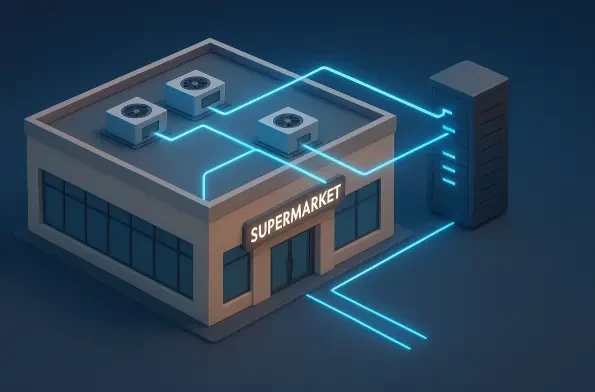
The quiet humming of a supermarket refrigeration unit usually signifies stability, but recent catastrophic failures have proven that these mechanical pulses are increasingly vulnerable to silent digital disruption. This vulnerability was thrust into the spotlight following a major cyber-attack on October 11, 2025, which compromised the cooling systems of hundreds of French supermarkets. As we navigate 2026, the incident serves as a definitive case study in the fragility of critical infrastructure. Industrial Control Systems (ICS), once isolated and obscure, have become primary targets for threat actors seeking to disrupt the global food supply chain. This review examines the current state of ICS security, focusing on the technological gaps that allow such systemic failures to occur.
Evolution and Fundamentals of Industrial Control Systems
Modern industrial control technology has undergone a radical transformation, moving from isolated, local-loop controllers to integrated, cloud-compatible assets. Historically, these systems relied on physical security and specialized protocols to prevent tampering, but the drive for operational efficiency has pushed them toward the public internet. This evolution has bridged the gap between operational technology and information technology, yet it has also introduced a massive attack surface that many legacy frameworks were never designed to manage.
The core principles of ICS prioritize availability and reliability over data confidentiality, which often leads to a conflict when implementing modern security protocols. In the context of refrigeration, this means that controllers must maintain precise temperatures to ensure food safety, regardless of the network environment. However, as connectivity became a standard requirement for remote monitoring and energy management, the inherent trust within these protocols became a significant liability rather than a functional strength.
Core Components and Vulnerability Vector Analysis
Embedded Control Units and StoreView Interfaces
At the heart of modern refrigeration management lies the Danfoss AK series of controllers, which function as the primary intelligence for cooling cycles. These units are sophisticated embedded systems that regulate compressors and evaporators to maintain strict environmental parameters. To facilitate human oversight, they utilize interfaces like StoreView, a control panel that allows technicians to monitor performance and adjust settings remotely. While these interfaces offer high operational value, they frequently lack robust authentication measures, making them a vulnerable entry point for unauthorized users.
The significance of these interfaces cannot be overstated, as they provide a centralized hub for system oversight across multiple locations. If an attacker gains access to a StoreView instance, they essentially hold the keys to the entire thermal environment of a facility. The reliance on web-based access for these controllers has inadvertently created a roadmap for exploitation, where the convenience of a browser-based dashboard outweighs the security requirements of the critical hardware it manages.
Protocol Vulnerabilities and Remote Code Execution
The technical architecture of the 2025 incident centered on specific chained vulnerabilities, notably CVE-2025-41450 and CVE-2025-41451. These flaws demonstrated how easily an attacker could bypass traditional defenses to achieve remote code execution. By exploiting the way these controllers process external commands, adversaries were able to gain root access to the underlying operating system. This allowed for the total hijacking of the controller’s logic, transforming a defensive asset into a tool for sabotage.
What made these vulnerabilities particularly dangerous was the ability to falsify telemetry data. Security researchers observed that attackers could shut down cooling systems while simultaneously sending “normal” temperature readings to the monitoring center. This type of falsification creates a dangerous lag between the physical failure and the human response, as operators remain unaware of the rising temperatures until the perishable goods are already compromised. This deception highlights a critical need for out-of-band monitoring that does not rely on the same potentially compromised controller for data validation.
Recent Shifts in Defensive Strategies and Network Exposure
In the immediate aftermath of the attacks, the industrial sector adopted a “disconnect-first” response, a stark departure from traditional gradual patching cycles. Data from the three days following the breach showed a 71% decrease in internet-exposed Danfoss controllers in France, dropping from over 1,800 hosts to just over 500. This rapid withdrawal suggests that operators finally recognized the extreme risk of public web exposure. Instead of waiting for a firmware update that might take weeks to test and deploy, the strategic priority shifted to immediate isolation.
This trend toward rapid removal from the public internet signifies a growing maturity in industrial defense. Cybersecurity experts have long advocated for network segmentation, but the scale of the recent disruption provided the necessary impetus for widespread action. By moving controllers behind Virtual Private Networks (VPNs) and firewalls, organizations are finally creating the layers of defense required to protect assets that were inherently built without modern security in mind.
Real-World Applications and Sector Impact
The real-world impact of these system failures is most visible in the global food supply chain, where refrigeration is the thin line between safety and disaster. When supermarket systems fail, the consequences extend far beyond a simple equipment repair; they result in massive quantities of perishable waste and potential public health risks. The French incident demonstrated that a coordinated digital attack could effectively simulate a localized famine or economic crisis by spoiling essential food stocks within a matter of hours.
Furthermore, the interconnected nature of modern logistics means that a failure at a retail site can ripple back to distribution centers and producers. If a supermarket’s inventory is destroyed, the sudden spike in replacement demand can strain regional supply chains already operating at peak capacity. These implementations of ICS technology are therefore not just industrial conveniences but are foundational to the stability of urban environments and the safety of the public at large.
Persistent Challenges in Legacy Hardware and Patch Management
Despite the shift toward better network hygiene, the industry continues to struggle with the technical hurdles of maintaining end-of-life hardware. Devices like the AK-SC355 are widely deployed but no longer receive security updates, leaving them permanently vulnerable to modern exploitation techniques. Replacing this hardware is a massive capital expenditure that many supermarket chains are slow to embrace, leading to a persistent population of “zombie” assets that remain in service long after their security lifespan has expired.
Market obstacles also hinder the adoption of updated firmware for newer models like the AK-SM800A. In many cases, updating a controller requires physical access or specialized downtime that conflicts with 24/7 retail operations. Consequently, many facilities continue to run outdated versions, creating a gap between the availability of a fix and its actual implementation. Decommissioning these unpatchable assets is the only permanent solution, yet the cost and complexity of such transitions remain significant barriers to achieving a truly secure industrial landscape.
Future Outlook for Industrial Security Architecture
Looking ahead, the transition from public web exposure to hardened, private environments will likely become the standard for all industrial architecture. The development of automated threat detection specifically tuned for ICS protocols is expected to accelerate, providing a more proactive defense than simple network isolation. These systems will focus on identifying behavioral anomalies, such as unexpected command sequences or irregular telemetry patterns, allowing for intervention before a breach results in physical damage.
Moreover, heightened regulatory scrutiny will force a shift in how industrial assets are designed and maintained. We are likely to see stricter mandates regarding the lifecycle of critical hardware, requiring manufacturers to provide security support for the entire operational life of the device. This long-term impact of regulation will likely stabilize the industrial sector by ensuring that “security by design” is not just a marketing term but a mandatory requirement for any technology managing essential public services.
Conclusion and Strategic Assessment
The strategic assessment of the 2025 refrigeration crisis revealed that the industry’s reliance on legacy hardware and public internet exposure created an unacceptable level of risk for the global food supply. It was determined that the rapid “disconnect-first” strategy adopted by French operators served as the most effective immediate mitigation, highlighting the limits of traditional patch management in operational environments. The review confirmed that chained vulnerabilities allowed for both system takeover and data falsification, proving that internal telemetry could no longer be trusted without external verification.
To prevent future disruptions, the assessment recommended that organizations transitioned toward mandatory network segmentation and the aggressive decommissioning of end-of-life assets. It was concluded that the industry finally prioritized isolation over convenience, a necessary shift that improved the resilience of critical infrastructure. These lessons provided a clear roadmap for 2026, where the integration of hardened VPNs and automated anomaly detection began to define the new standard for industrial security. By reflecting on these failures, the sector moved toward a more robust architecture that accounted for the reality of modern cyber threats.