With a career built on defending multinational corporations from the digital frontlines, cybersecurity strategist Malik Haidar has a unique perspective on the convergence of physical and digital threats. He joins us to dissect the evolution of a decade-long partnership between Gallagher Security and M.C. Dean, a move that signals a major shift in how mission-critical infrastructure will be protected on a global scale. This interview explores the drivers behind creating unified cyber-physical security ecosystems, the practical challenges of global implementation, and why deep-seated trust between partners is becoming the most critical asset in high-stakes environments.
Since 2016, your partnership has been built on trust and technical excellence. What specific market shifts or client demands prompted this strategic evolution now, and how will it change the way you deliver security solutions on a global scale? Please provide a detailed example.
The landscape has changed dramatically since we started working together nearly a decade ago. Back then, physical and cybersecurity were often treated as separate domains. Today, our clients in mission-critical sectors see them as two sides of the same coin. The primary driver for this evolution is the demand for holistic resilience; a client running a global network of data centers can no longer accept a physical security system that doesn’t communicate instantly with their cyber defense platform. For example, under this new agreement, instead of custom-integrating solutions on a per-project basis, we can now offer a pre-validated, globally standardized security architecture. This means when a client needs to secure a new facility in the APAC region, we can deploy a system that is an exact, trusted replica of their American and EMEA operations, cutting down deployment time and eliminating security gaps from day one. It’s a shift from reactive integration to proactive, scalable security design.
The collaboration focuses on delivering integrated, cyber-physical security solutions. Can you walk me through the key components of such a solution and explain how they combine to enhance long-term performance for a mission-critical facility? Please share a step-by-step implementation process.
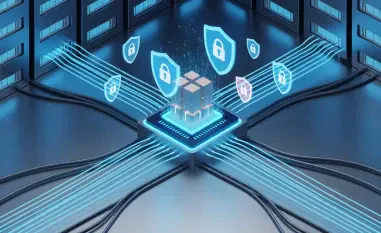
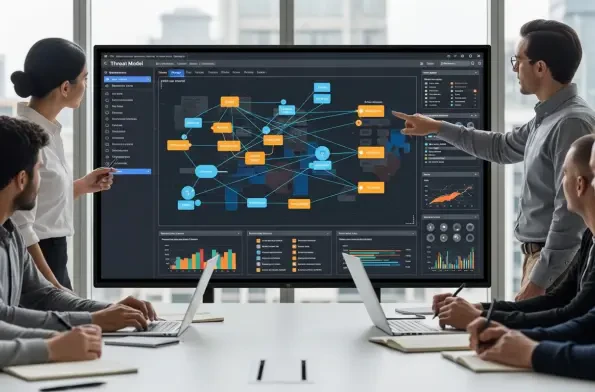
At its core, an integrated cyber-physical solution is about creating a single, intelligent nervous system for a facility. The key components are, first, the physical security layer—access control, advanced sensors, and video analytics. Second is the cyber layer—network intrusion detection, identity management, and secure communications. The magic happens in the third component: the integration and automation engine that allows these layers to act in concert. For instance, a network probe on a critical server could automatically trigger cameras to focus on the server room and temporarily revoke physical access to that area for all but the highest-level responders. Implementation begins with a joint threat modeling workshop with the client, not a technology discussion. From there, we design a unified architecture. The physical hardware is installed, followed by the logical overlay of the cyber controls. The final and most crucial stage is what we call ‘live-fire commissioning,’ where we simulate complex, multi-vector attacks to ensure the entire system responds seamlessly and reliably, guaranteeing that long-term performance and resilience our customers demand.
With this agreement supporting global operations across the Americas, EMEA, and APAC, what practical steps will you take to deepen collaboration in these diverse regions? Could you share a specific challenge you anticipate and the metrics you will use to measure success?
Deepening our collaboration globally requires more than just a handshake; it requires tangible operational alignment. The first practical step is establishing a Global Solutions Council, with technical leads from both organizations representing each region, to standardize deployment methodologies and share intelligence. We’re also co-investing in cross-training programs so an M.C. Dean engineer in EMEA is as proficient with Gallagher’s architecture as their counterpart in the Americas. The biggest challenge I foresee is navigating the complex web of regional data sovereignty and infrastructure protection regulations. A solution that is perfectly compliant in the U.S. might need significant adaptation for a site in Europe or Asia. Our success won’t just be measured by revenue; we’ll be tracking metrics like ‘time-to-deploy’ for new global sites, aiming for a consistent standard worldwide, and a unified ‘mean-time-to-respond’ for security incidents, regardless of where they occur.
In high-consequence, mission-driven settings, reliability and assurance are paramount. How does this formal partnership strengthen your ability to meet those demands, and can you share an anecdote about a time when your combined expertise was critical to protecting a sensitive environment?
In these settings, there is zero room for error. This formal partnership moves our relationship from a contractual one to an institutional one, which is a world of difference when it comes to assurance. It means our engineering roadmaps are aligned, our support teams operate from a common playbook, and our response protocols are deeply integrated. There was an incident at a highly sensitive government facility where an unusual pattern of physical access attempts was detected at an off-hours entry point. On its own, it was minor. But because our systems were integrated, this physical data was correlated in real-time with low-level network scanning activity originating from inside the facility. Our combined cyber-physical threat analysis team immediately identified it as a sophisticated, coordinated insider threat in its earliest stage. We were able to isolate the user and the network segments within minutes, preventing what could have been a catastrophic data breach. That seamless, instant response is the direct result of the deep trust and technical fusion this new agreement formalizes.
What is your forecast for the future of integrated security partnerships?
I believe the future lies in moving beyond simple vendor-integrator relationships toward true, deeply embedded strategic alliances. We’re going to see fewer companies trying to be the single-source provider for everything and more ecosystems of specialized partners who have formalized their technical and operational alignment, just as we’ve done. The complexity of threats is accelerating too quickly for any one company to master it all. The successful security models of the next decade will be defined by these powerful, trust-based partnerships that can deliver holistic, resilient, and intelligent solutions on a global scale, ensuring that the whole is far greater and more secure than the sum of its parts.