The rapid acceleration of autonomous systems has fundamentally transformed the landscape of enterprise networking, shifting the focus from human-centric operations to complex, multi-agent environments. As these AI agents move beyond simple conversational tasks to executing high-stakes infrastructure changes, a single prompt can now trigger a cascade of downstream events that lack traditional oversight. This shift creates a critical “trust gap” where the autonomy required for efficiency simultaneously introduces significant security vulnerabilities. Organizations are finding that traditional perimeter-based security is no longer sufficient when an AI agent can bypass legacy controls to modify firewall rules or reconfigure virtual local area networks without a human in the loop. The challenge lies in maintaining the speed of innovation while ensuring that every automated action is verified, authorized, and logged with the same rigor applied to human administrators.
Securing Autonomous Agency Through Protocol Innovation
The Emergence of Model Context Protocol Controls
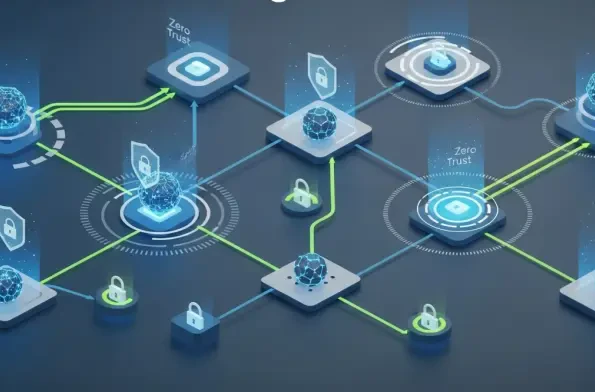
The integration of the Model Context Protocol (MCP) into modern security frameworks represents a pivotal shift in how organizations manage non-human identities. By utilizing specialized zero-trust architectures specifically designed for MCP, enterprises can now govern the interaction between Large Language Models and their underlying data sources or tools. This approach treats each AI agent as a distinct digital entity that must prove its legitimacy before accessing sensitive network segments. Instead of granting broad permissions to an AI application, security teams implement granular policies that restrict an agent’s reach to specific datasets or operational commands. This granular control is essential for preventing lateral movement, as an agent compromised by a prompt injection attack would still be confined by the restrictive boundaries of the zero-trust framework, effectively neutralizing the threat of a full-scale network breach.
Furthermore, the implementation of these controls within platforms like Versa Verbo allows for a seamless bridge between high-level AI orchestration and low-level network execution. When an agent proposes a change—such as optimizing traffic flow for a jitter-sensitive application—the zero-trust engine evaluates the request against real-time system state and identity context. This means the system does not just check if the action is technically possible, but whether the agent is currently authorized to perform that specific task under the prevailing conditions. By embedding these checks directly into the communication protocol, organizations can achieve a level of observability that was previously impossible. Every interaction is recorded with full attribution, providing a clear audit trail that links autonomous actions back to the original human intent and the specific policy that permitted the execution, thereby satisfying complex regulatory and compliance requirements.
Mitigating Risks of Implicit Trust in Automation
Implicit trust has long been the Achilles’ heel of automated systems, where a successful authentication at the gateway often leads to unfettered access within the internal environment. In the context of agentic AI, this risk is magnified because agents possess the capability to generate and execute their own workflows based on broad objectives. To counter this, advanced security platforms have moved toward a “never trust, always verify” model for every individual step an AI takes. This means that even if an agent is authenticated, its subsequent actions—such as querying a database or adjusting a routing table—are treated as new requests that require independent validation. This architectural shift ensures that no single point of failure in the AI’s logic can lead to a catastrophic system compromise, as the security layer acts as an immutable gatekeeper for every transactional event across the network.
To manage the complexity of these validations, administrators utilize sophisticated policy engines that categorize actions based on their potential impact on the business. Routine, low-risk tasks can be set to run autonomously with back-end logging, while high-impact changes, such as modifying core security policies or re-routing critical data paths, require explicit human intervention. This hybrid approach, often referred to as “human-in-the-loop” automation, allows organizations to scale their operations without surrendering ultimate control to an algorithm. By defining these boundaries within a Universal SASE platform, enterprises can enforce consistent security postures across diverse environments, from on-premises data centers to distributed cloud architectures. This proactive stance prevents the “black box” syndrome often associated with AI, where changes occur without clear visibility into the underlying reasoning or the authorized scope of the agent’s power.
Bridging Architectural Gaps in Modern Security
Evolution of SASE for Non-Human Identities
Traditional Secure Access Service Edge (SASE) and Security Service Edge (SSE) platforms were initially architected to facilitate secure connections for human users accessing remote applications. However, the rise of agentic AI has introduced a new class of “users” that operate at speeds and scales that far exceed human capacity, necessitating a fundamental redesign of these security stacks. Security leaders are now recognizing that non-human identities require a different set of behavioral analytics and access patterns than their human counterparts. Unlike a person who logs in at 9:00 AM and accesses a predictable set of tools, an AI agent might initiate thousands of connections in seconds across a global infrastructure. This requires the SASE layer to incorporate AI-driven event correlation and anomaly detection that can distinguish between legitimate high-speed automation and malicious activities like automated data exfiltration.
The transition toward AI-ready SASE involves integrating deep visibility into the specific tools and APIs that agents use to interact with the network. By treating AI agents as first-class citizens within the security hierarchy, platforms like VersaONE can apply role-based access controls (RBAC) that are specifically tuned for machine-to-machine communication. This involves not only verifying the identity of the agent but also inspecting the “context” of its requests—ensuring that the data it is accessing is relevant to the task it was assigned. As enterprise AI adoption matures from simple chatbots to sophisticated operational assistants, this specialized security layer becomes the foundational infrastructure that enables safe scaling. It allows organizations to leverage the full power of agentic AI to solve complex troubleshooting issues and optimize network performance while maintaining a rigid security posture that is resilient against both internal errors and external threats.
Strategic Integration of Open Source and Proprietary Tech
The path toward a secure AI-driven network is increasingly paved with a combination of open-source standards and robust proprietary platforms. The launch of open-source MCP Servers has provided a common language for AI agents to communicate with various enterprise systems, but the security layer must be the one to enforce the “rules of engagement.” By integrating these open standards into a commercial SASE framework, companies can avoid vendor lock-in while still benefiting from the high-grade security features required by large enterprises. This synergy allows developers to build flexible AI agents using familiar tools while the security team maintains a centralized dashboard to monitor and govern those agents. This creates a collaborative environment where innovation is not stifled by restrictive security measures, but rather enabled by a safe and predictable operational playground for autonomous systems.
Furthermore, the financial and strategic backing of major industry players highlights the critical nature of this technological evolution. With significant venture support from firms like Sequoia Capital and Verizon Ventures, the development of these zero-trust AI frameworks is being accelerated to meet the demands of a rapidly changing market. This investment is fueling the creation of more sophisticated AI-powered network operations co-pilots that can assist human teams in managing the sheer volume of data generated by modern networks. The end result is a more resilient infrastructure where AI is not a separate entity to be feared or strictly limited, but a deeply integrated and highly secured component of the overall business strategy. By focusing on policy-driven automation and rigorous identity verification, enterprises are transforming agentic AI from a potential liability into a reliable asset that drives operational excellence and competitive advantage.
Implementing Resilient Governance for the Future
Adopting a zero-trust posture for autonomous agents is not merely a technical upgrade but a fundamental shift in organizational governance that requires clear strategic planning. Enterprises should begin by auditing their existing AI deployments to identify where implicit trust might be creating hidden risks, particularly in legacy systems that lack modern API security. The first actionable step involves mapping out the “blast radius” of every AI agent to determine the maximum potential damage an agent could cause if its logic were to fail or be subverted. Once these risks are identified, security teams can implement granular access policies that limit agents to the minimum necessary permissions required for their specific functions. This process should be iterative, starting with low-stakes automation in test environments before gradually moving to mission-critical production systems as confidence in the security controls grows.
Looking forward, the success of agentic AI will depend on the ability of security leaders to maintain a balance between autonomy and accountability through continuous monitoring and adaptive policy enforcement. Organizations must invest in training their staff to oversee these automated systems, shifting the role of the network administrator from a manual operator to a strategic orchestrator of AI policies. Utilizing platforms that offer real-time analytics and detailed logging will be essential for identifying and mitigating new attack vectors, such as prompt injection or model poisoning, which specifically target the logic of AI agents. By establishing a robust framework that combines identity-centric security with AI-driven observability, businesses can ensure that their transition into the era of autonomous networking is both productive and secure, turning the complexities of AI into a structured and manageable component of the enterprise ecosystem.