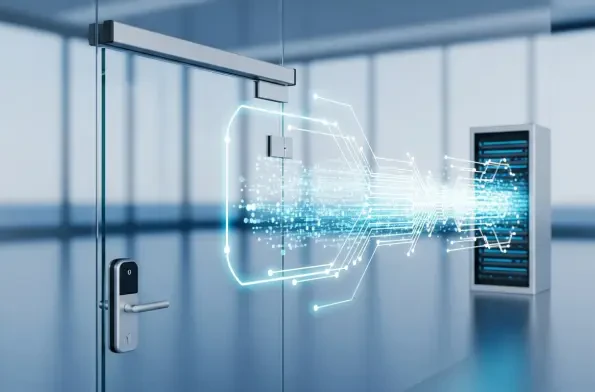
Drawing from over 50 years of heritage, the transition from a local Birmingham warehouse to a global leader in architectural hardware reflects a deep commitment to engineering excellence and life safety. This conversation explores how the integration of traditional ironmongery with cutting-edge access control creates seamless, secure environments across the globe.
We will delve into the logistical advantages of single-source procurement, the complexities of maintaining certification in bespoke luxury projects, and the evolving technological landscape of touchless and automated entry systems.
Your business has expanded from a local warehouse in Birmingham to a presence on four continents. How does your family-owned heritage influence your expansion strategy into international markets, and what specific challenges do you face when adapting traditional ironmongery to modern, high-tech security requirements?
Our 50-year heritage as a family-owned business acts as the North Star for our global expansion, ensuring that even as we scale across four continents, we never lose that personalized, hands-on approach. We believe that every time a hand touches one of our products in an iconic building, it represents a promise of quality that started in our original Birmingham warehouse. The primary challenge in modernization is ensuring that the latest access control innovations do not compromise the fundamental reliability of mechanical ironmongery. We manage this by blending highly engineered hardware with smart technology, ensuring every product meets the most stringent industry certifications while remaining flexible enough for diverse global regulations. It is about maintaining that “small business” attention to detail while executing projects on a massive, multinational scale.
Managing complex global supply chains often creates friction for large-scale developments. What are the operational benefits of utilizing a single-source provider for both hardware and access control, and how does this integration specifically reduce risks during the project lifecycle from specification to final installation?
Operating as a true single-source provider allows us to eliminate the friction that typically occurs when multiple vendors try to patch together a security solution. By integrating architectural hardware and access control into one coordinated application, we provide a unified package that simplifies the supply chain for our clients. This integration is supported by our GAI-qualified estimation and sales team, who provide expert oversight from the initial specification through to the final walkthrough. This holistic approach reduces the risk of component incompatibility and ensures that project stakeholders can maintain total confidence in the system’s performance at every stage. When the hardware and the software come from the same source, the accountability is clear, and the installation process becomes significantly more efficient.
High-end residential projects like the Palm Beach Towers require a balance between advanced security and strict aesthetic standards. When providing bespoke finishes for architectural hardware, how do you maintain rigorous certification compliance, and what steps ensure these custom materials withstand the rigors of high-occupancy use?
For a landmark like the Palm Beach Towers at the gateway of Palm Jumeirah, the hardware must be as visually striking as the building’s architecture without sacrificing any safety protocols. We provided a unified package featuring state-of-the-art access control paired with hardware in a special custom finish, which required a high level of manufacturing flexibility. To maintain compliance, we ensure that every bespoke material undergoes the same rigorous testing as our standard lines, meeting essential life safety and security certifications. We focus on the durability of these finishes to ensure they do not degrade under the constant physical contact and environmental pressures of a luxury high-rise. It is a meticulous process of marrying “designer” aesthetics with “industrial” strength to ensure long-term performance.
Selecting between standalone, networked, or mobile-based entry systems involves significant trade-offs regarding installation and scalability. What criteria should facility managers use to evaluate these technologies for multi-site facilities, and how do touchless requirements in hospitality environments impact the long-term durability of the physical hardware?
Facility managers must first look at the scale and infrastructure of their site; for instance, standalone digital locks are excellent for retrofitting older buildings where complex wiring would be too disruptive. However, for large, multi-site facilities, we always recommend networked systems because they offer real-time monitoring and centralized management, which are vital for operational control. Mobile-based entry has become a dominant trend in hospitality because it meets the modern guest’s demand for a touchless, convenient experience. While touchless systems reduce physical wear on some components, they require the underlying mechanical hardware to be even more robust to ensure the door cycles perfectly every time. We’ve found that the most successful hospitality projects are those that prioritize the user experience without neglecting the durability of the physical latching and closing mechanisms.
Public commercial spaces often face mechanical failures due to hundreds of daily usage cycles in areas like restrooms. When implementing automated, hands-free entry systems for inclusive access, what specific hardware features prevent system lag, and how can designers ensure these solutions remain low-maintenance in high-volume environments?
In high-traffic environments like those managed by Emaar ADA in Dubai, restrooms can face hundreds of usage cycles every single day, which quickly exposes any weakness in a system. To prevent the lag often found in multi-brand setups, we implement a seamless solution where the door automation and specialized ADA-compliant hardware are designed to speak the same language. This eliminates communication delays between the sensor and the strike, providing a dignified and smooth experience for the user. Designers can ensure low maintenance by choosing fully compliant, automated systems that are specifically rated for high-volume public use rather than residential-grade components. By focusing on the synergy between the electronics and the mechanical parts, we can prevent the mechanical failures that typically plague inferior, mismatched installations.
What is your forecast for the integration of mechanical hardware and electronic access systems over the next decade?
In the coming decade, I foresee a total convergence where the distinction between “mechanical” and “electronic” hardware virtually disappears, resulting in a single, unified security package for every opening. The market is rapidly shifting toward certified system performance, where customers will no longer accept fragmented solutions from multiple providers. We will see emerging technologies become even more deeply embedded into the physical fabric of the building, driven by a need for both high-level security and effortless user convenience. As regulations around life safety and building access continue to tighten globally, the demand for single-source models that can guarantee both quality and innovation will become the industry standard. Our focus will remain on ensuring that as these technologies evolve, the fundamental reliability of the hardware remains the bedrock of every installation.